Discover waterfalls, geysers, and gorges on the Golden Circle, a scenic loop drive where you can experience some of Iceland’s top natural wonders. The Golden Circle takes adventurers on a loop with stops at Þingvellir (Thingvellir) National Park, Geysir Geothermal Area, and Gullfoss. In this guide, we’ll visit these iconic locations, plus a few bonus spots for a well-rounded, self-guided tour.
The Golden Circle got its name because the last stop on the circle, Gullfoss, translates to “Golden Falls.” But each of the locations gets a gold star in my book. The route is so popular because it’s less than an hour outside of Reykjavík, making it an accessible day trip from Iceland’s capital.
If you were to drive the Golden Circle loop non-stop to and from Reykjavík, it would take about four hours. Although there’s no shortage of sunlight in the summer, start your day as early as you can, so you can make it to all the destinations before some of them close at 8 p.m.
If you plan to continue along the Ring Road after exploring the Golden Circle, it’s best to spend the night in Selfoss, a small town nearby.
You can also take a guided tour of the Golden Circle (which is advised in the winter due to heavy winds), but if you can drive it yourself, you can add all the extra stops featured in this guide.
Along with the top three spots, we’ll stop at a tomato farm, a volcanic crater, and Iceland’s oldest natural pool.
So, what do you say? Let’s get into it.
Þingvellir (Thingvellir) National Park
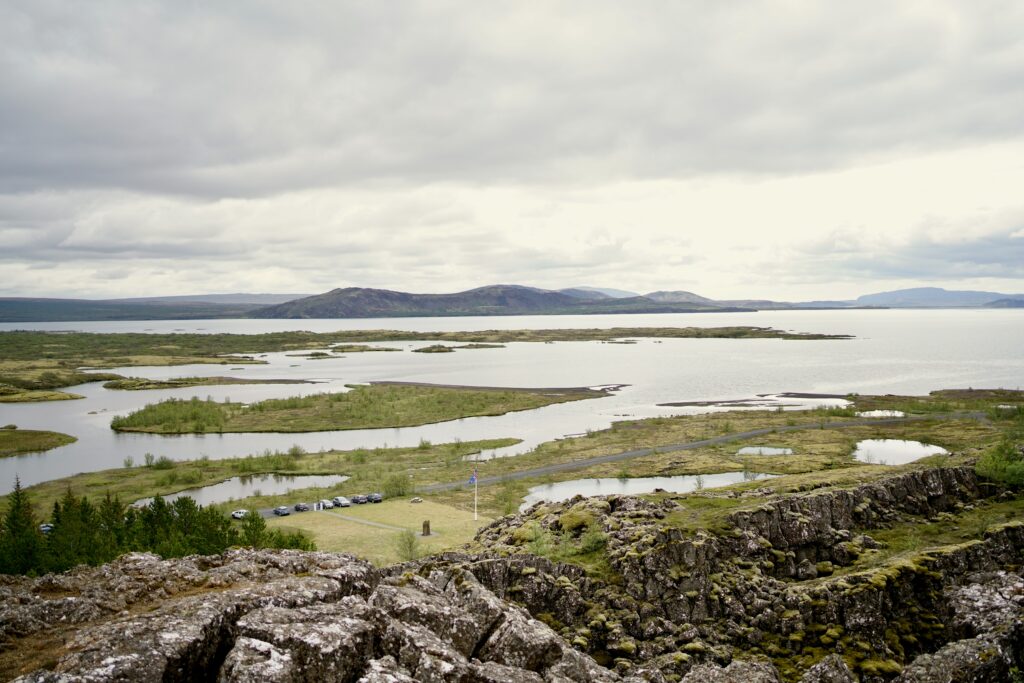
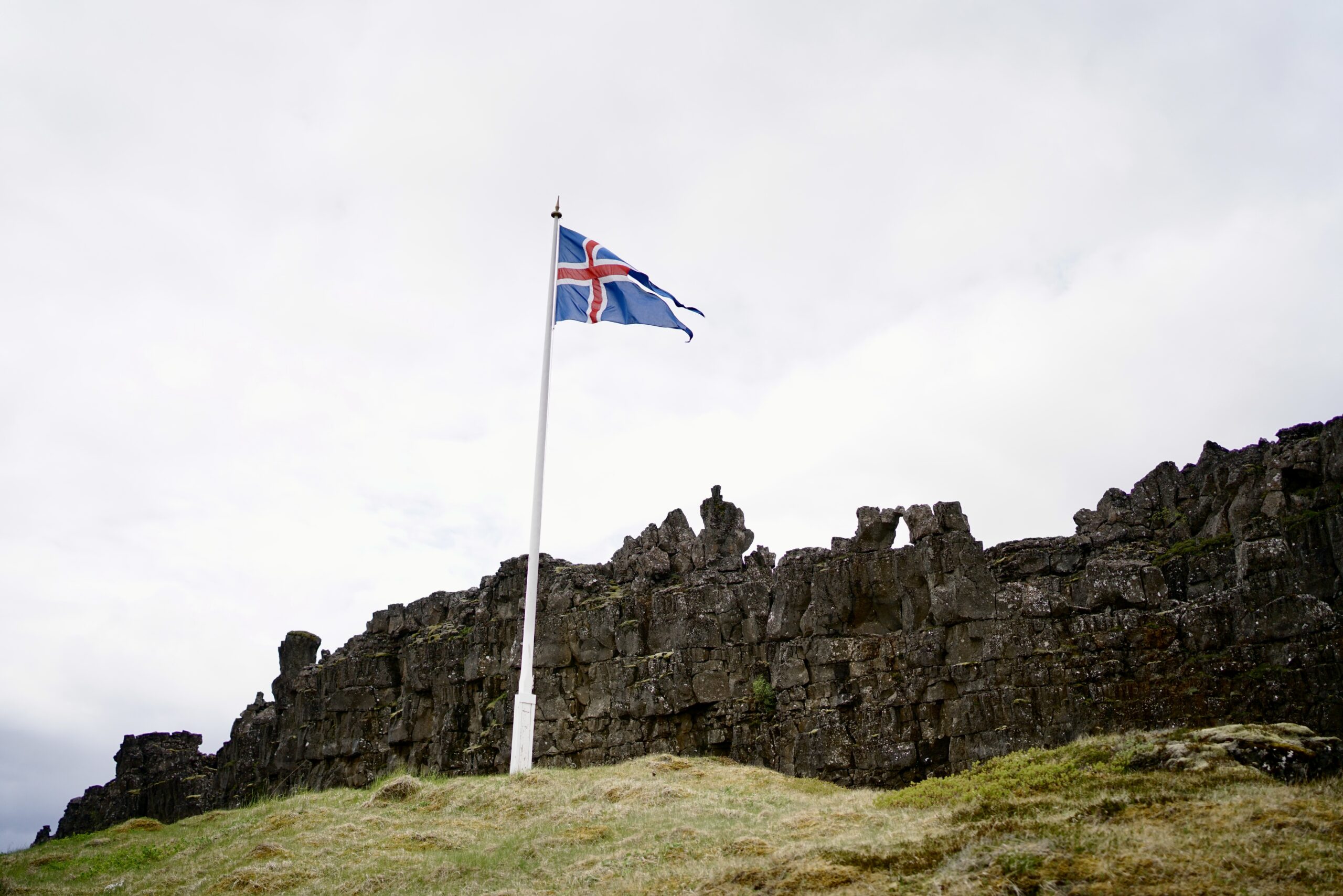
It’s rare that a national park is the meeting point of two tectonic plates and the former meeting point of parliament. Well, actually, Þingvellir may be the only national park where that’s true.
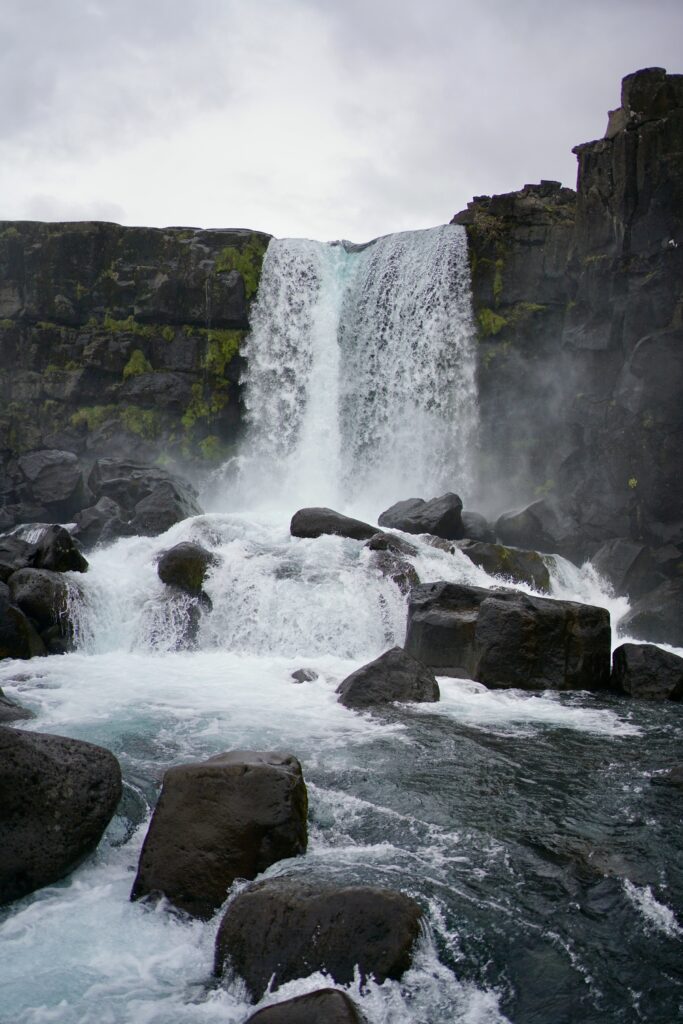
Þingvellir National Park tells the story of Iceland’s history amongst its waterfalls, hills, and canyons. A walk around the park will show you natural beauty and deeply-rooted history. All of the main attractions in the park are concentrated within one area, making it easy to walk to each spot.
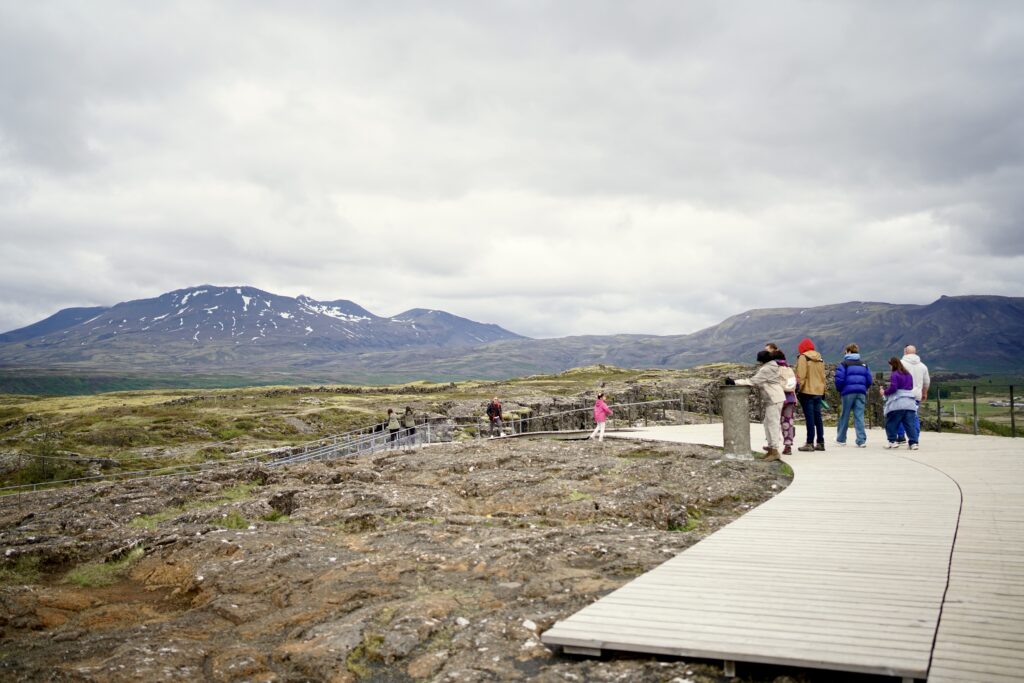
Here are the top sights:
Almannagjá: a gorge where you can walk along the Eurasian and North American tectonic plate boundary
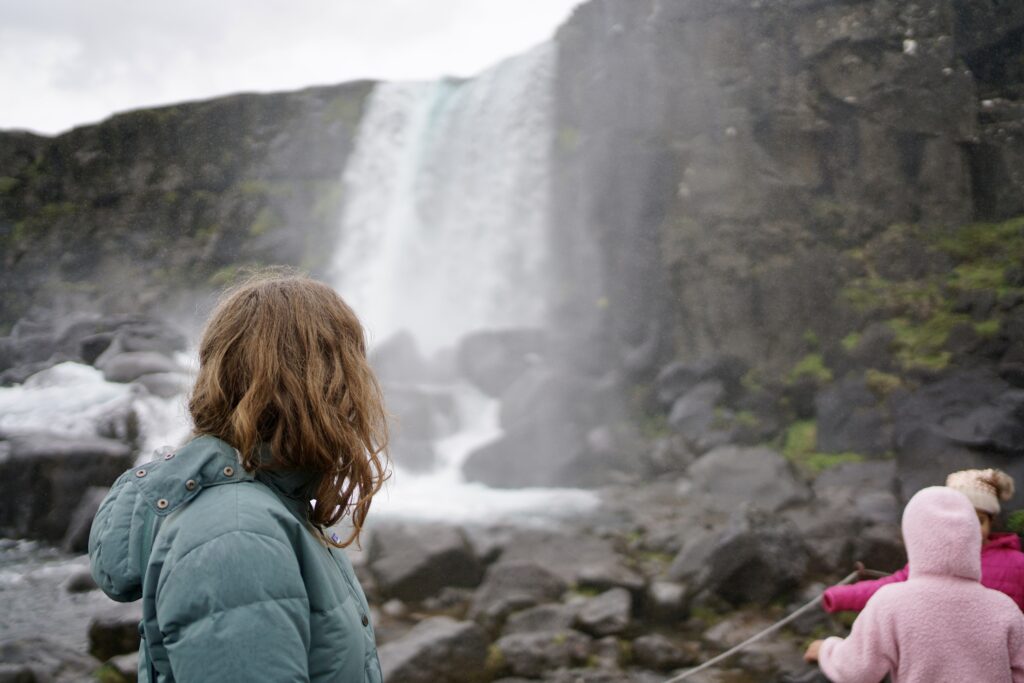
Öxarárfoss: the main waterfall
Drekkingarhylur: a drowning pool in the Öxará River where people were executed (yikes)
Þingvallakirkja: a quaint, small church within Þingvellir
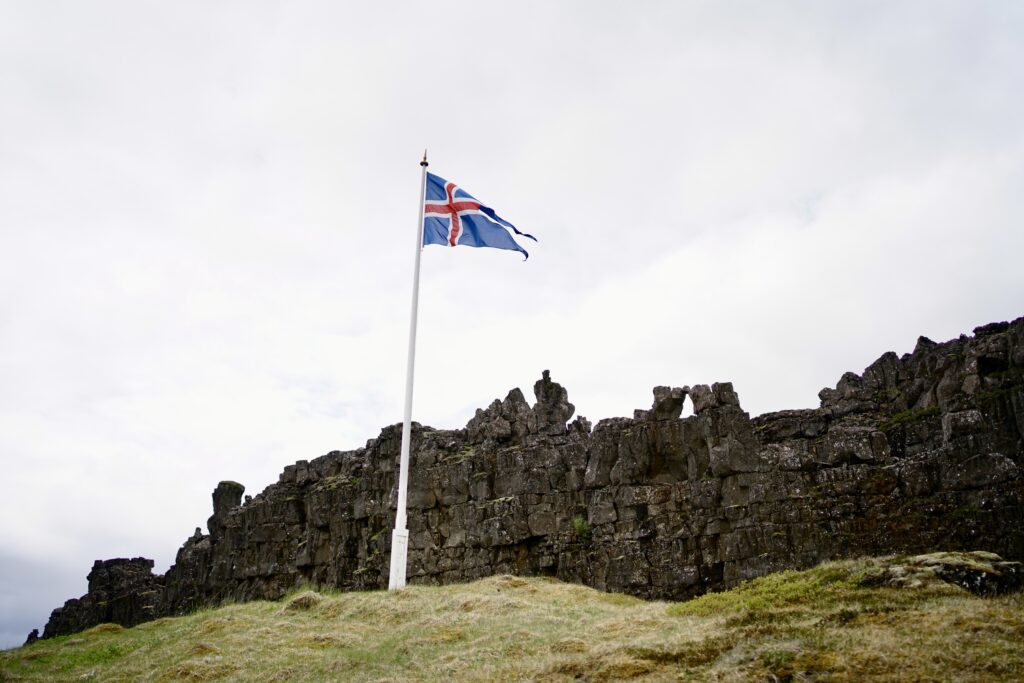
Lögberg: the meeting point for the longest-standing Parliament
Peningagjá: a fault/fissure with natural spring water
Silfra: a fault where you can dive in between the two tectonic plates (this is only possible with a guided tour)
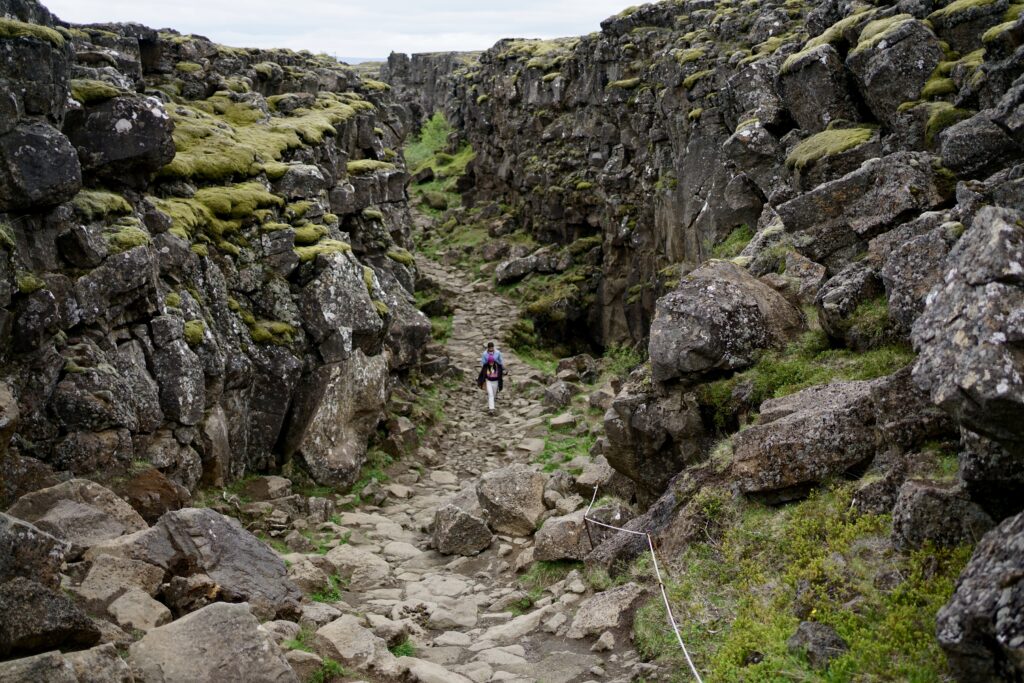
Start your journey at the Öxarárfoss P3 Parking Trailhead. From here, walk through the Almannagjá gorge between the tectonic plates to Öxarárfoss, the waterfall. If you keep walking along the trail, you’ll run into the visitor’s center.
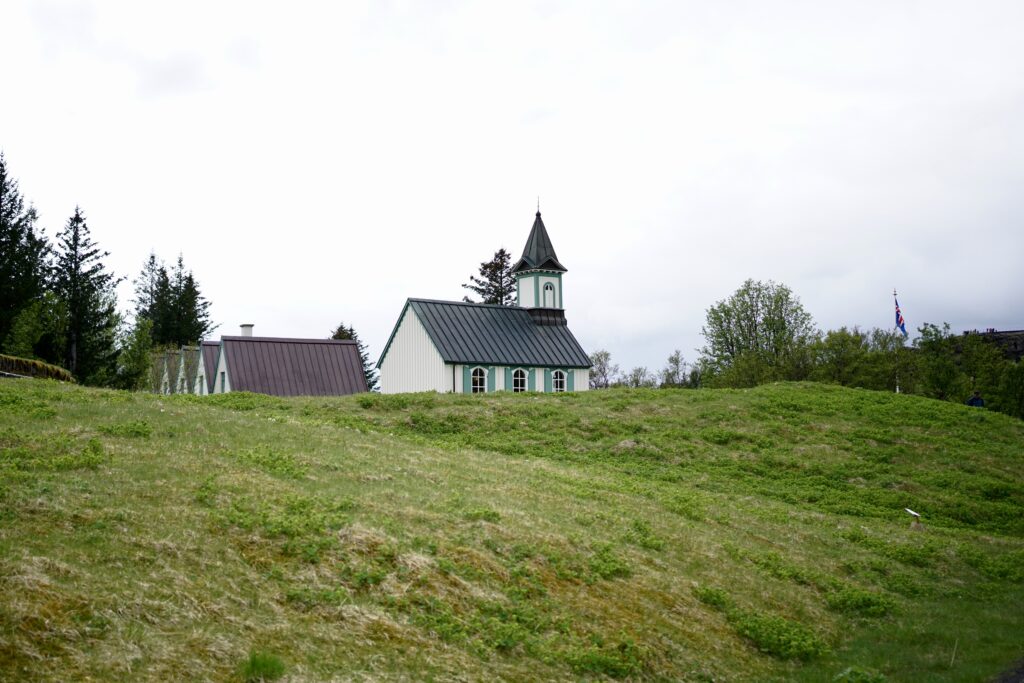
Down the hill, you’ll find the more historical parts of Þingvellir, like the church and the first meeting point of Parliament.
Visiting Þingvellir National Park is technically free, but you need to pay for parking. It’s a daily rate of 1000 ISK or about 8 USD to park. You can use the Parka app in places designated P3 or pay at the parking kiosks.
Lunch at Friðheimar tomato farm
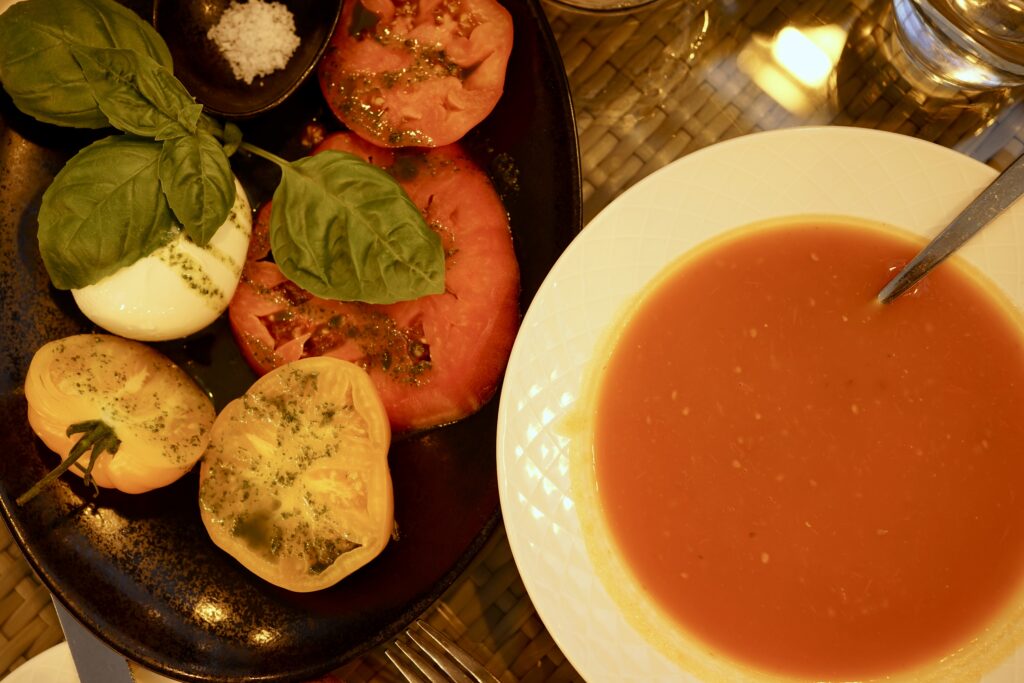
After all the walking and learning, you’ll probably work up an appetite, take a detour to Friðheimar, a tomato farm where you can enjoy tomato dishes in the greenhouse where they are grown. Friðheimar is famous for its bottomless tomato soup, but there is a variety of tomato dishes to choose from — even tomato ice cream.
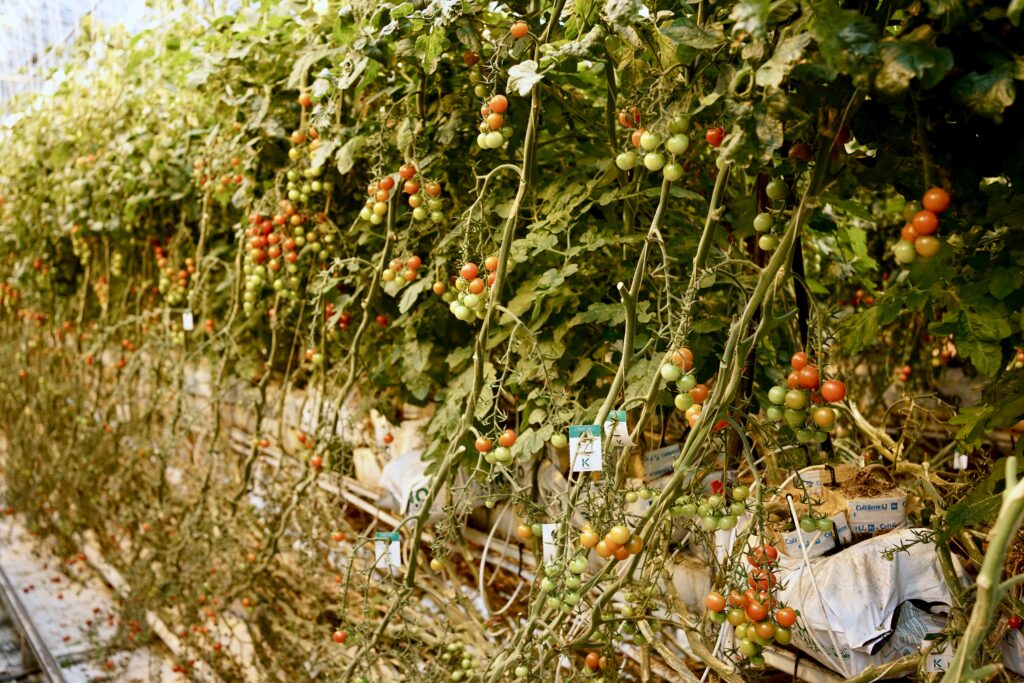
Friðheimar gets crowded during high season. Reservations are recommended for more than four people, but if you’re traveling in a pair or solo, you can get a seat at the bar. Make a reservation here.
Geysir Geothermal Area in Haukadalur Valley
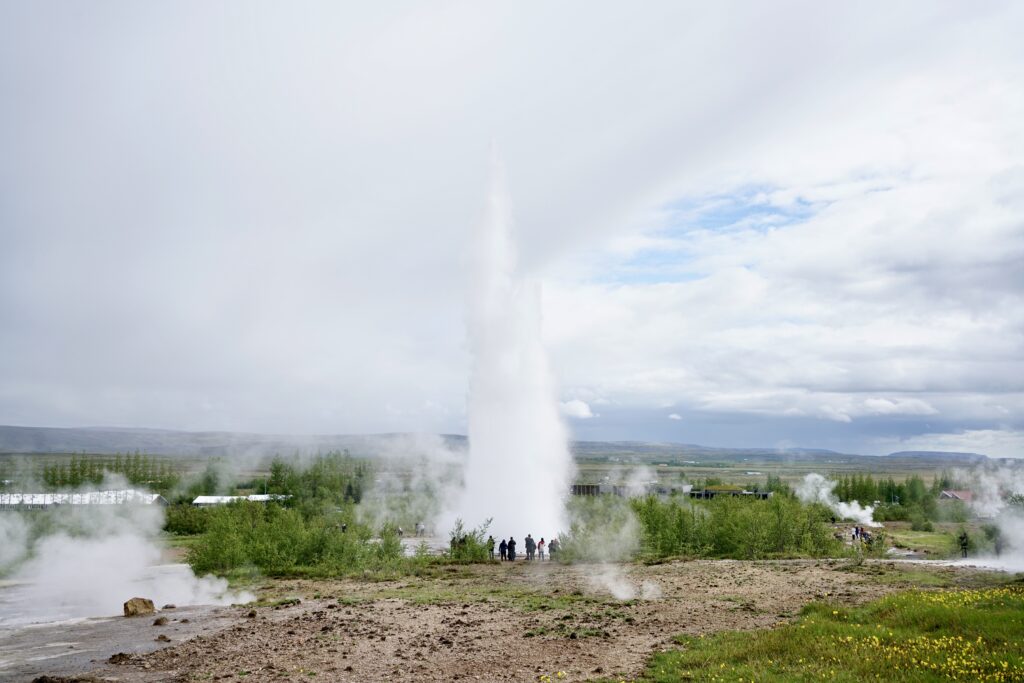
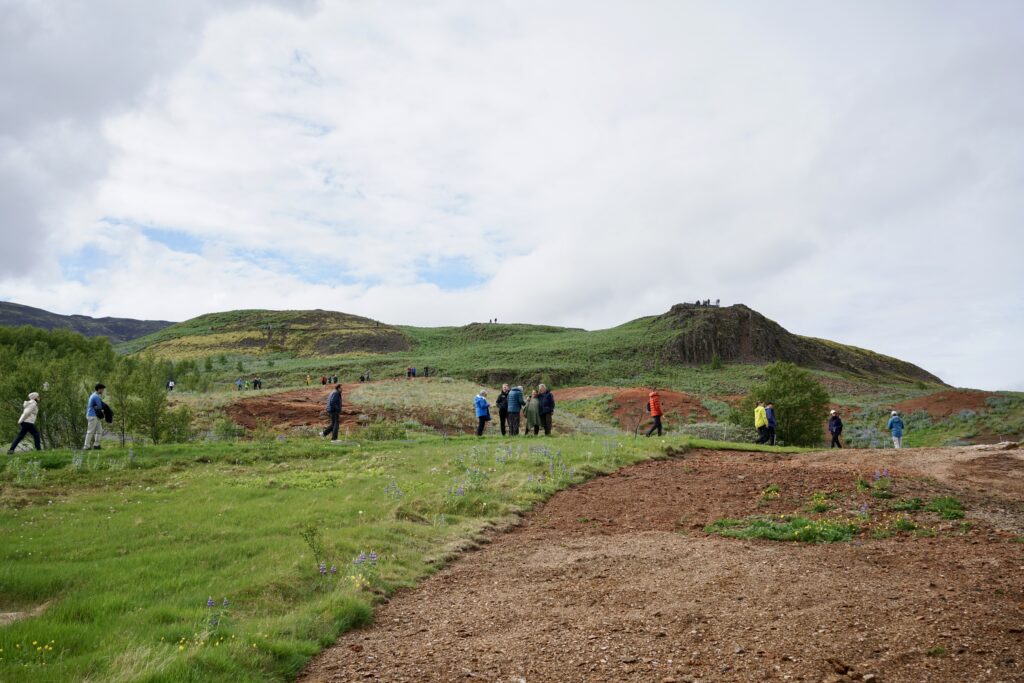
Every five minutes, the Strokkur geyser erupts in the Haukadalur Valley, shooting water into the air. The area has the name Geysir because of the formerly active geyser aptly named “Geysir.”
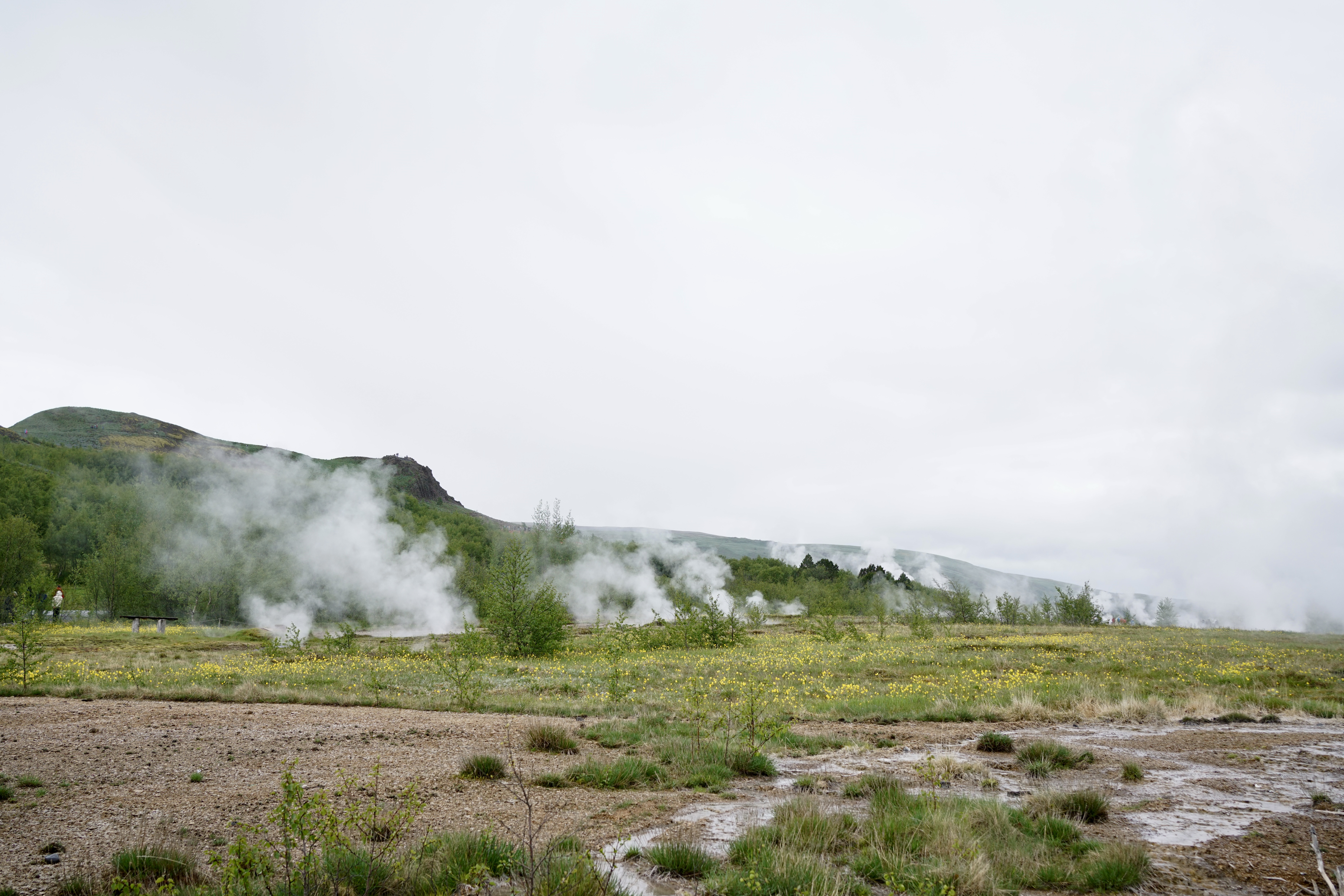
Strokkur is currently the only active geyser in the area, but you’ll see plenty of geothermal activity. The Geysir geothermal area features bubbling mud, blue chromatic pools, and steam rising from the earth.
There is a visitor’s center with shops, bathrooms, and a cafe next to the parking lot, which is free to park.
Gullfoss
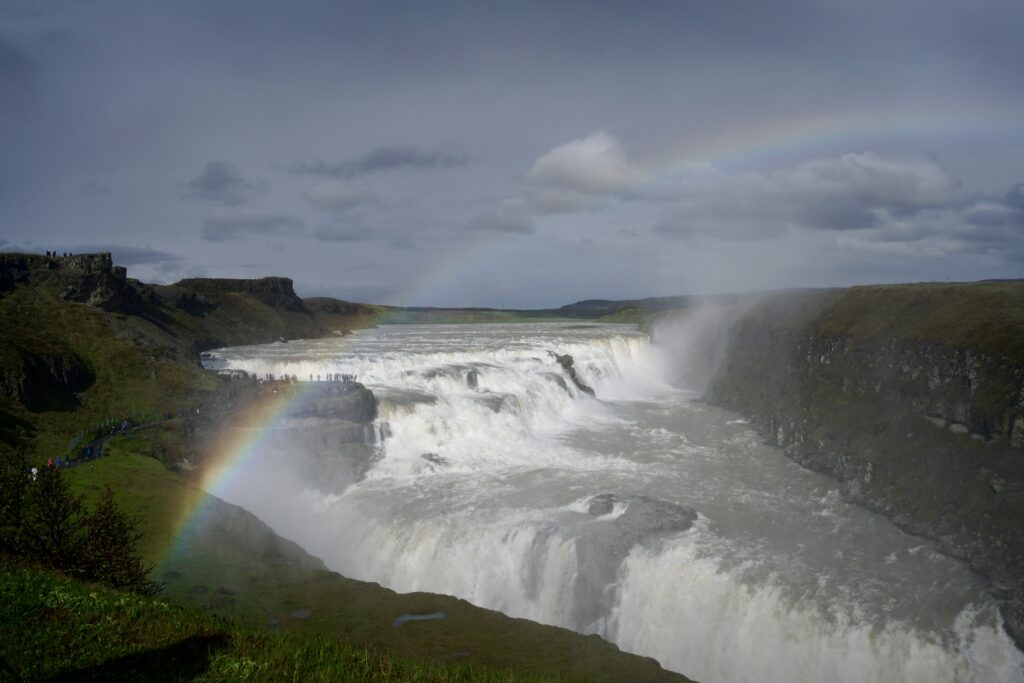
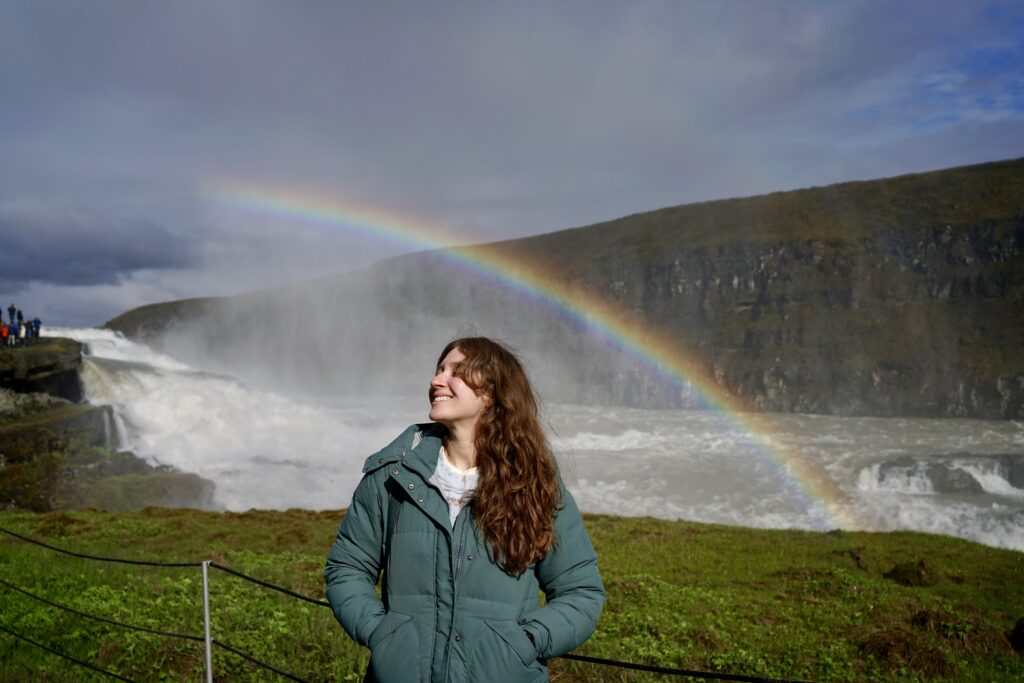
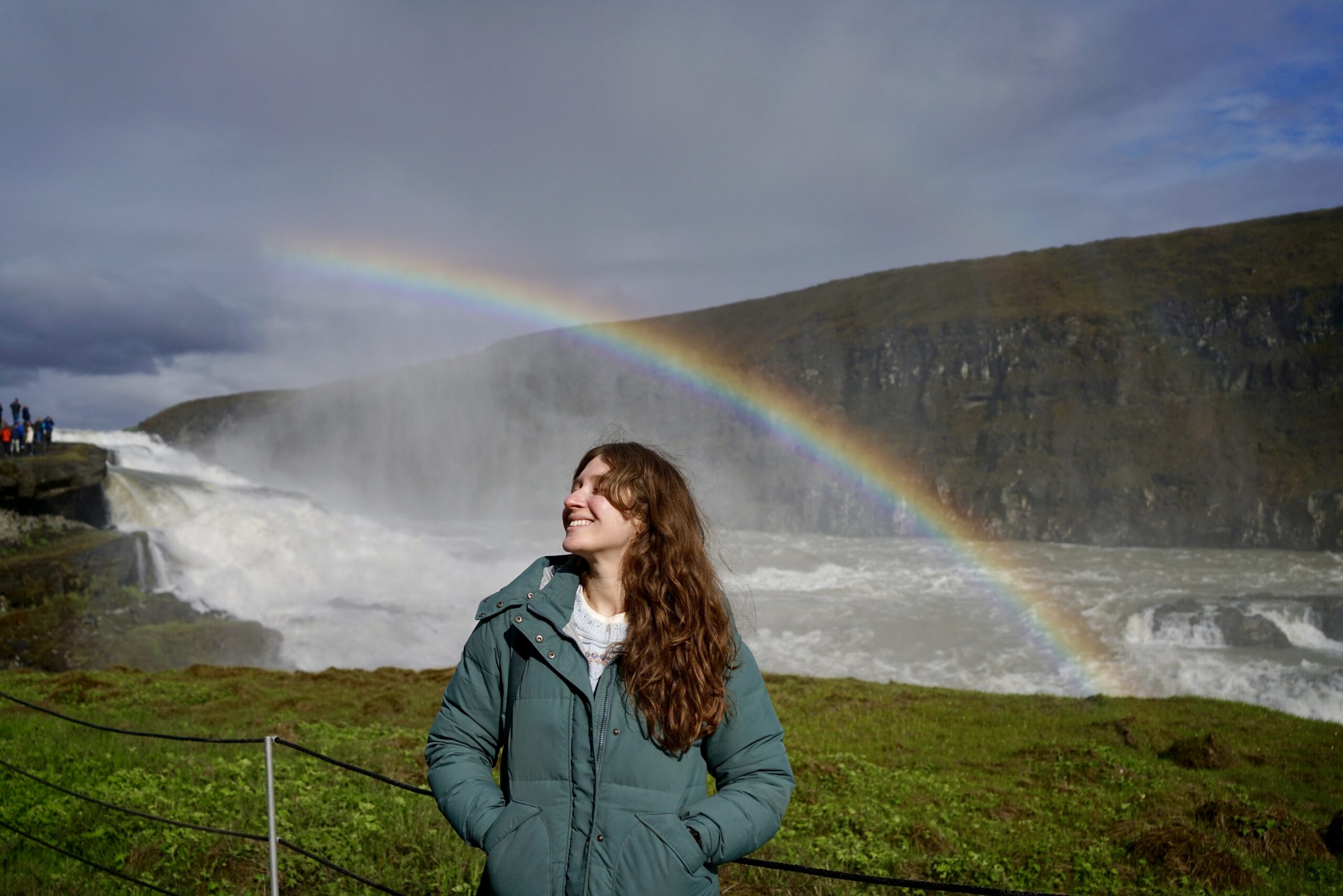
At the end of the Golden Circle is the famed Gullfoss, a huge two-tiered waterfall. It’s a short walk down stairs and on a trail to reach the falls. Expect to be sprayed by the waterfall’s mist if you get close. Hopefully, you’ll catch a rainbow on a sunny day. You’ll be rewarded with free parking after making it to the official end of the Golden Circle.
Secret Lagoon
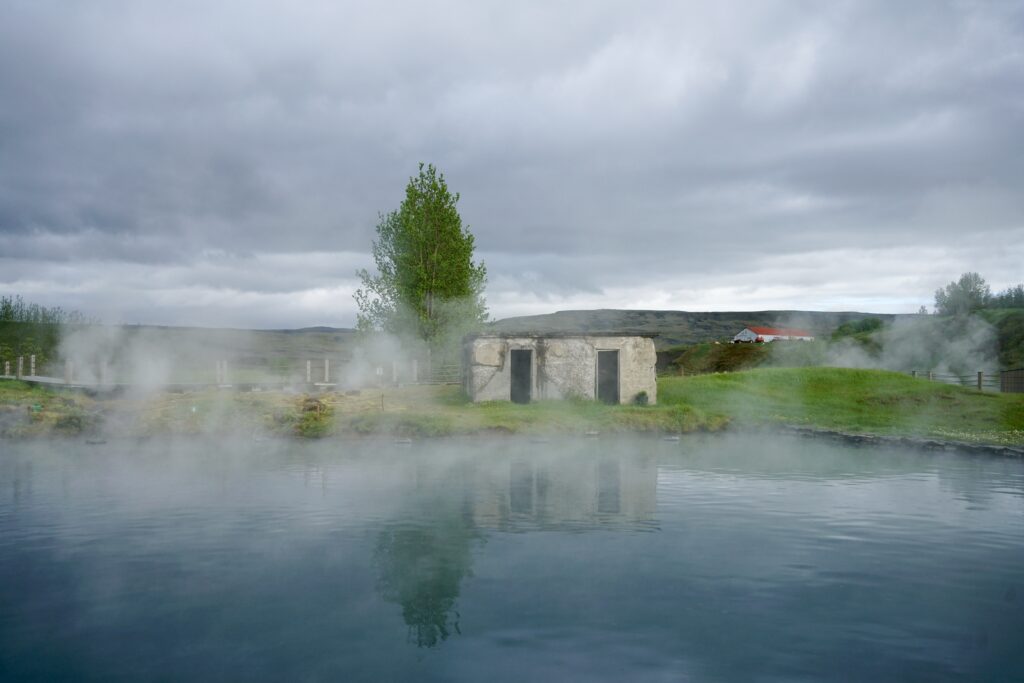
While Gullfoss is technically the end of the Golden Circle, the adventure doesn’t stop there. Unwind at the Secret Lagoon, Iceland’s oldest natural geothermal pool.
The Secret Lagoon was my favorite of Iceland’s lagoons because of its laid-back vibe. It feels like you’re actually surrounded by nature as opposed to the other lagoons.
The entrance fee costs approximately $35 per person. If you’re visiting during high season, book your reservation in advance for the Secret Lagoon here.
Kerið Crater
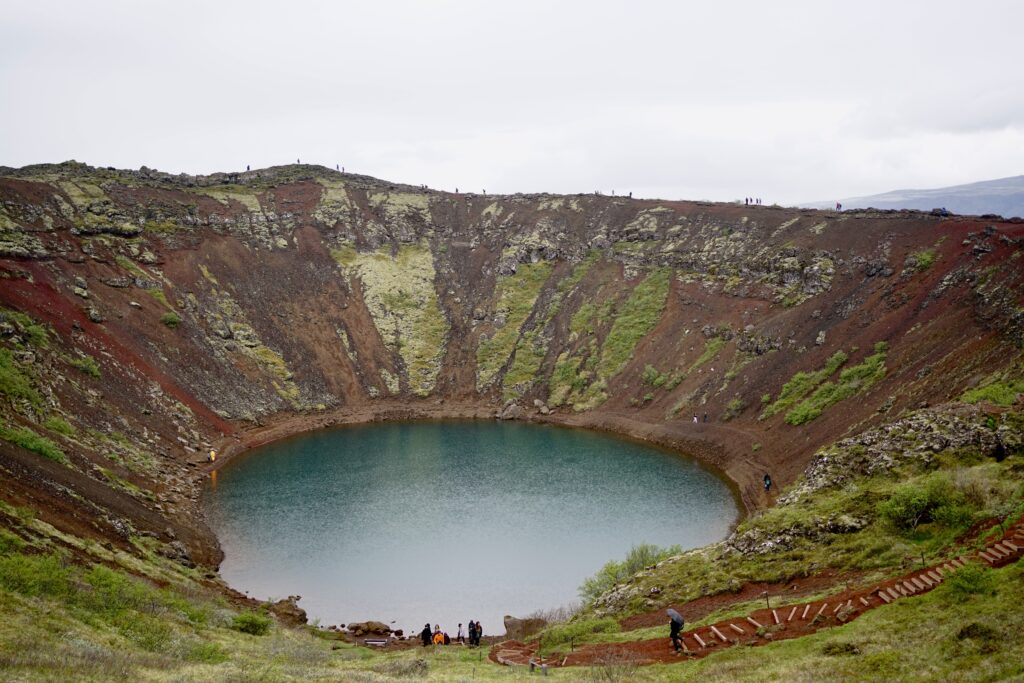
About 6,500 years ago, a volcano collapsed and created the Kerið Crater. The crater is filled with bright turquoise water that contrasts with the orange-red dirt on its edges. You can walk around the crater to view it from the top or hike down to the lake.
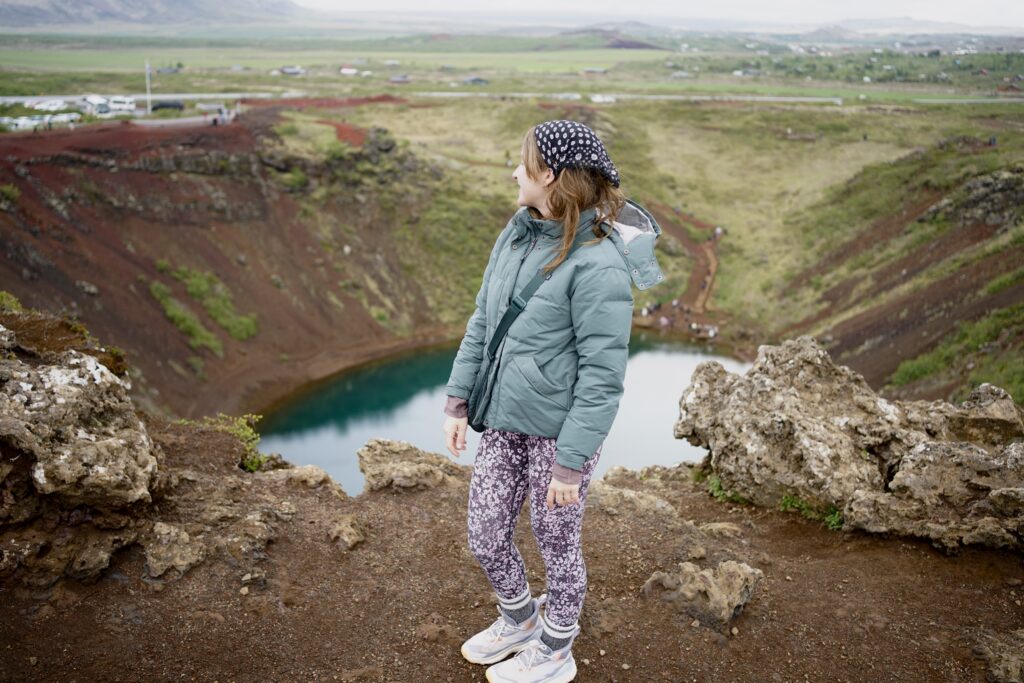
There is a 600 ISK (about 5 USD) fee per person that you pay at a kiosk at the entrance of the crater. The Kerið Crater is open until sundown, so be mindful of the time while you’re at the Secret Lagoon. If you’re spending the night in Selfoss, you can go in the morning before continuing on to the south coast.
If you have any questions about driving the Golden Circle, I’m happy to answer them in the comments below!

Reply