
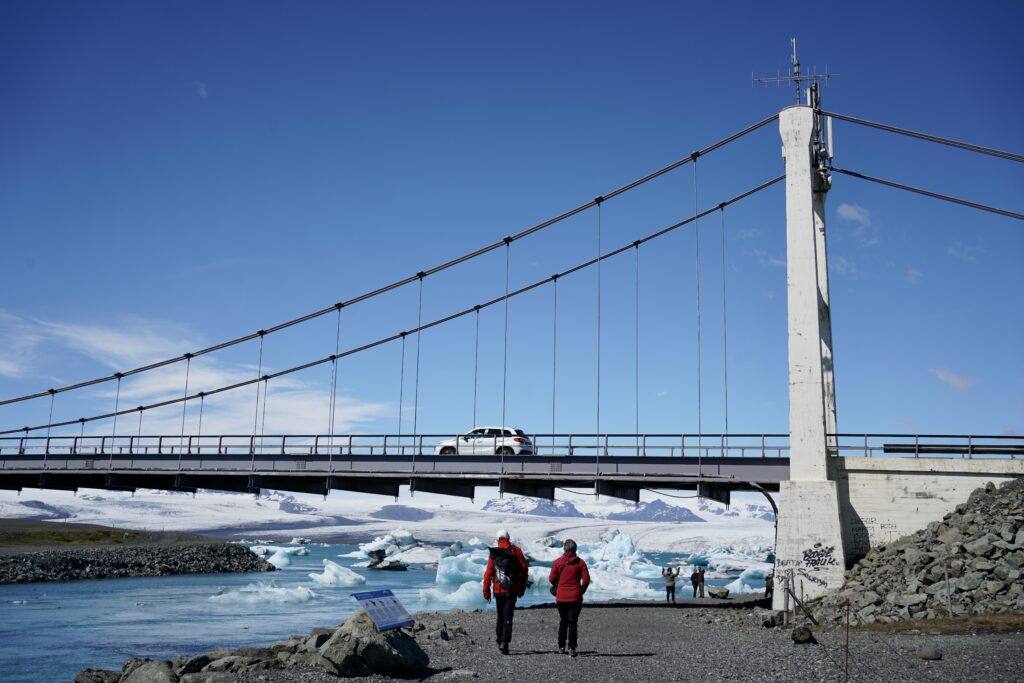
The Ring Road takes road trippers on an unforgettable journey around Iceland. Route 1 makes a perfect loop around the island through scenic landscapes, quaint villages, and a myriad of stops along the way. Driving the Ring Road is the #1 thing to do in Iceland. What I love about it is its accessibility. It gives access to people from eight months old to 80 years old the opportunity to see Iceland’s most beautiful landscapes by just taking a few steps out of their car.
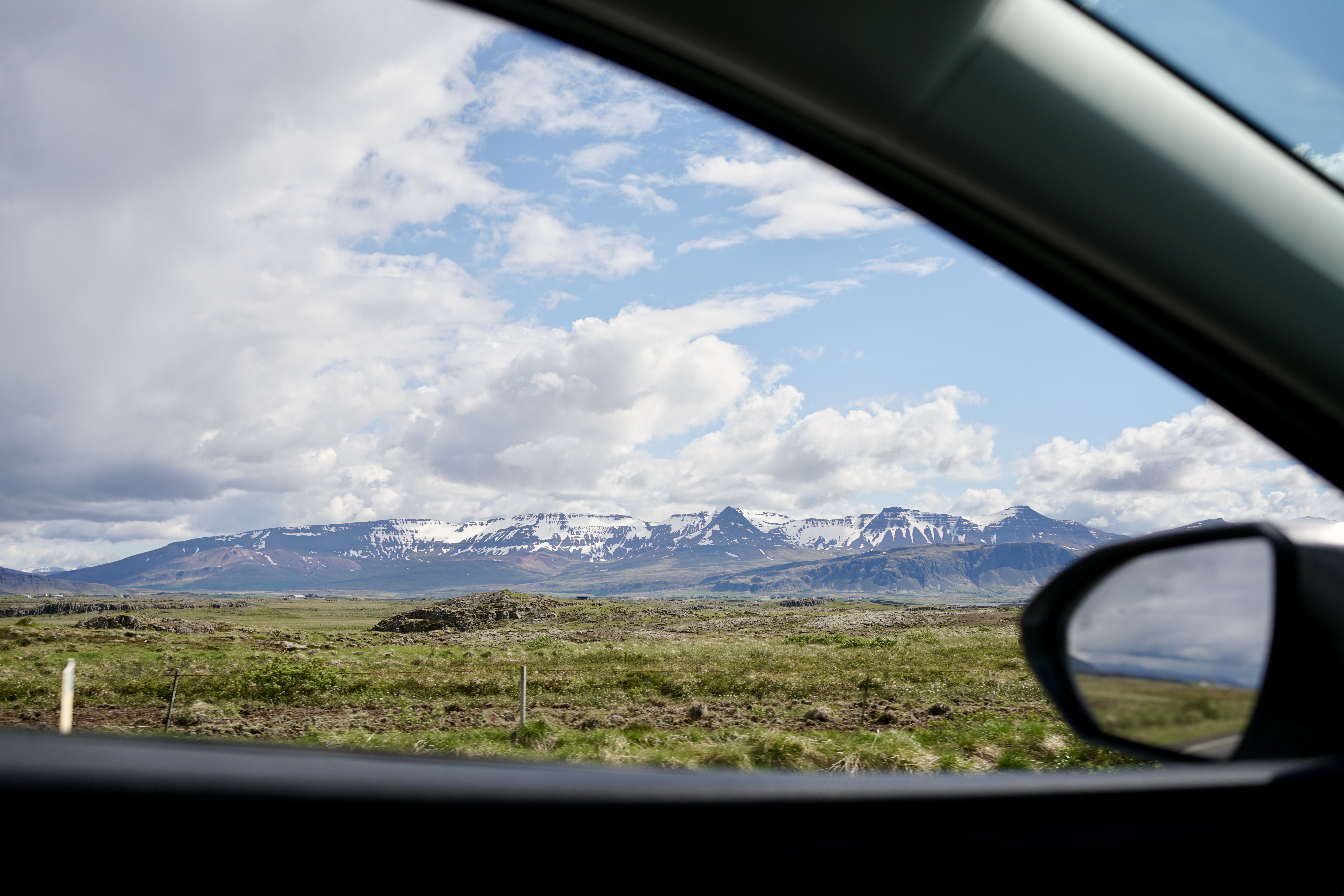
It takes about a week to drive the Ring Road in its entirety, staying at a different village every night. This guide specifically goes into 8 days but a good rule of thumb is 7-10 days to see Iceland. The Ring Road is only fully drivable in the summer when the snow has melted. High wind speeds during the winter can make it very dangerous and even make roads impassable. Shoulder season during April-May and September-October is also a great time to visit for fewer crowds. All the photos you see are Iceland in the last week of May (one of the driest seasons in terms of rainfall).
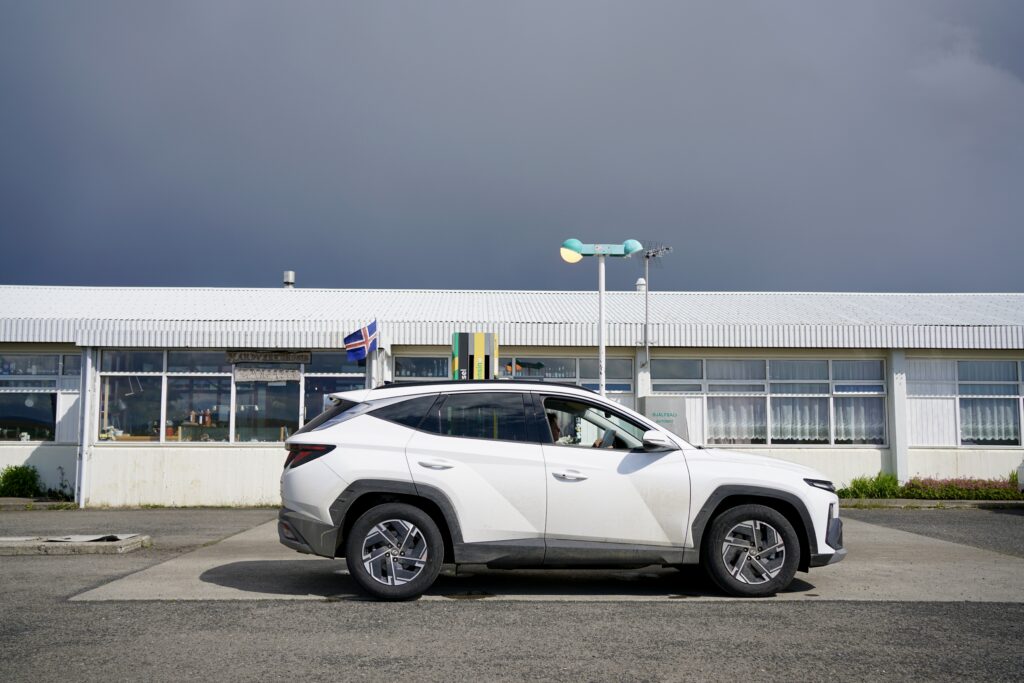
In an effort to make this guide as easy to digest as possible, I’ve included drive times and where to stay at the top of each section. You’ll find a list of where to stop on each day below that and links to other blog posts that go into more detail.
At the end of the guide, we’ll talk logistics to make your road trip run smoothly, so you can focus on soaking up all the natural beauty.
Day 1: Welcome to Reykjavík
Estimated drive time: 45 minutes (from the airport to downtown)
Where to stay: Central Reykjavik
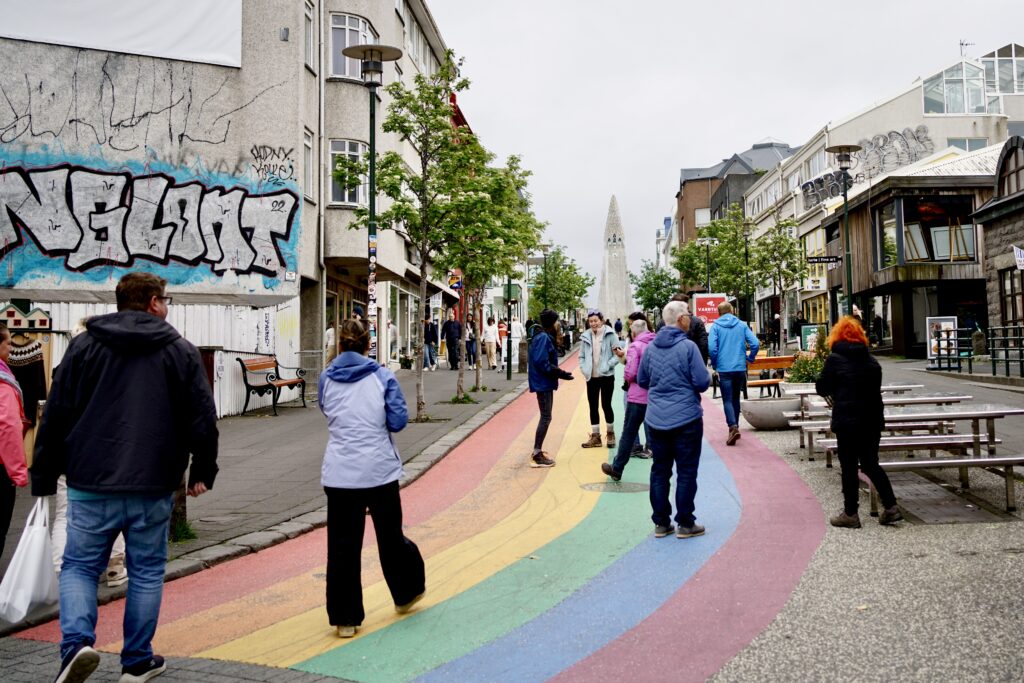
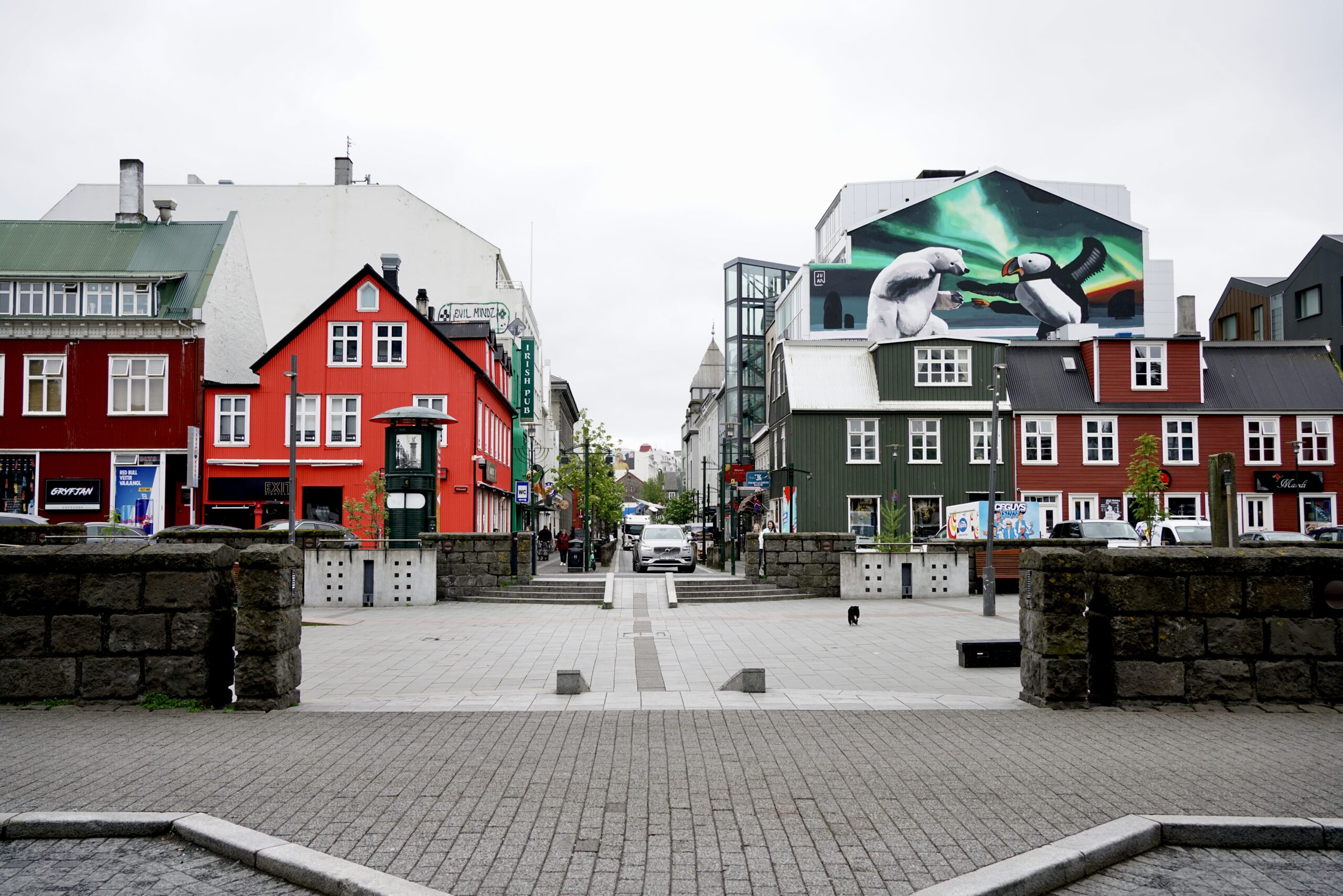
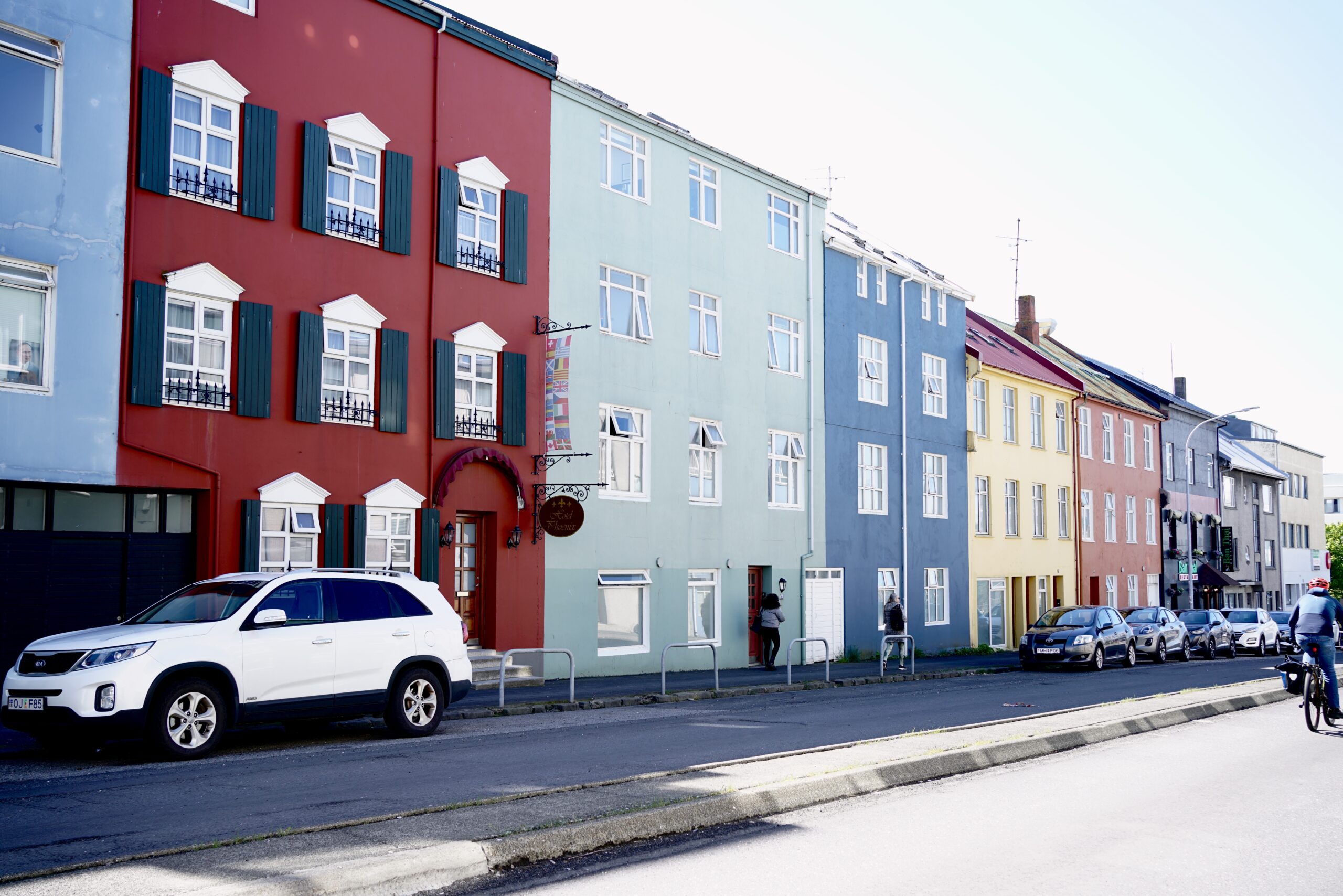
Reykjavík welcomes you to Iceland with colorful houses, delicious food, and walkable streets. If you’re asking yourself, “Is one day in Reykjavik enough?” Trust, it’s plenty. The capital city is smaller than you’d expect, making it easy to explore in a few hours.
Here’s what you’ll do in Reykjavík:
Bakery crawl: Taste cinnamon rolls and sweet treats at Sandholt Bakery and Braud & Co.
Skólavörðustígur: Rainbow-painted street in the middle of town.
Hallgrimskirkja: The giant church at the top of the hill that you can’t miss.
Hot dogs for lunch: Icelandic hot dogs are a thing. Go to Bæjarins Beztu Pylsur for a classic and Víkinga Pylsur for gourmet.
Shop along Laugavegur: Stroll down the main street of Reykjavík.
Dinner at Skal: Order the tasting menu that features local, seasonal ingredients (reservations strongly encouraged).
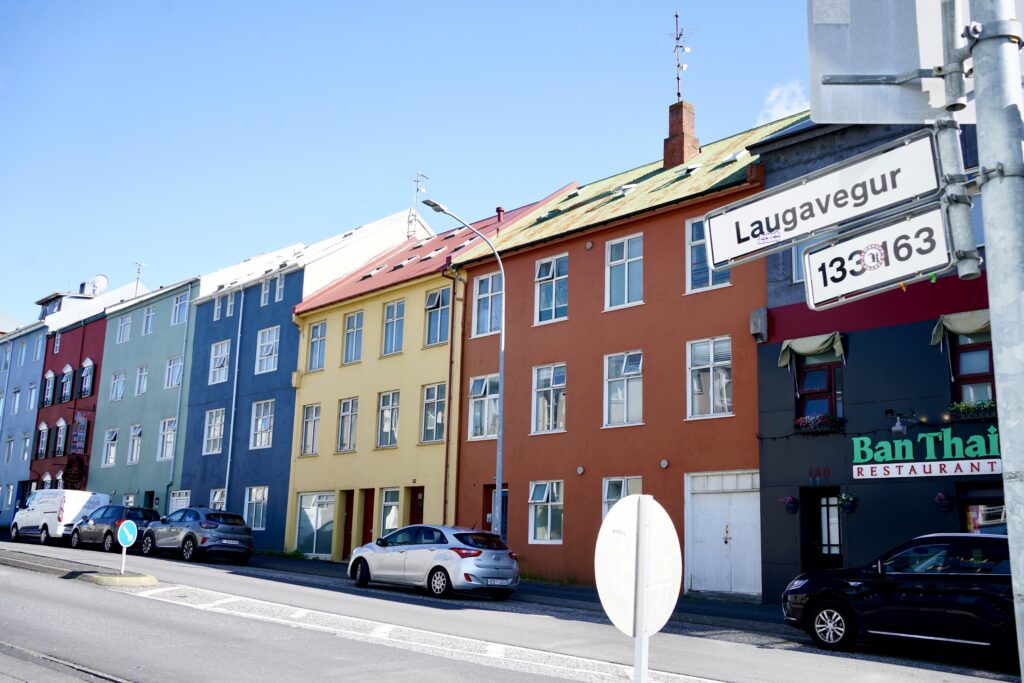
You’ll spend the night in Reykjavík, then hit the road to start your Ring Road adventure in the morning. I recommend staying in central Reykjavík on the eastern side of Laugavegur, closer to the harbor. You’ll likely need to pay for parking, but you’ll be closer to the action (and parking isn’t that expensive).
For a full guide on Reykjavík (and parking in the city), check out this mini guide. You can also find a more detailed Reykjavik itinerary here.
Day 2: The Golden Circle
Estimated drive time: 4 hours (with multiple stops)
Where to stay: Selfoss
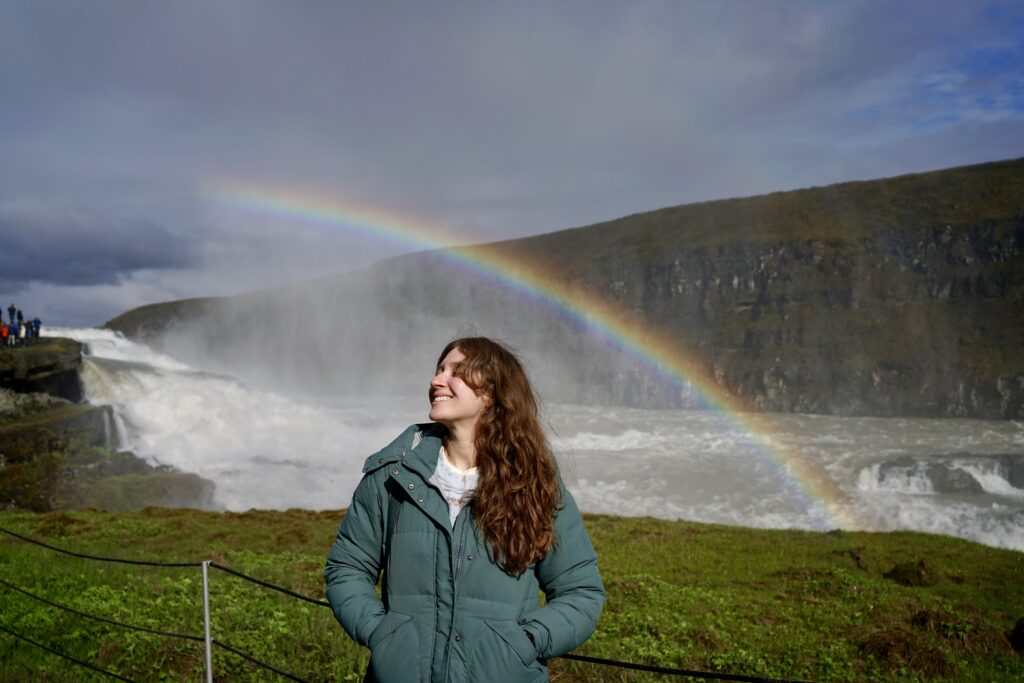
Rise and shine to hit the Golden Circle, a scenic loop drive stopping at some of Iceland’s must-see natural wonders. While the Golden Circle isn’t technically on the Ring Road, it’s only 45 minutes from Reykjavík, making it an easy and essential detour. Don’t let the four-hour drive time scare you; you won’t go more than 45 minutes without hitting an attraction.
Here’s where you’ll stop:
Þingvellir (Thingvellir) National Park: A national park rich with Icelandic history and geological wonders.
Lunch at Friðheimar tomato farm: Enjoy bottomless tomato soup in a greenhouse surrounded by tomato vines.
Geysir Geothermal Area: Watch water shoot out of a geyser every five minutes.
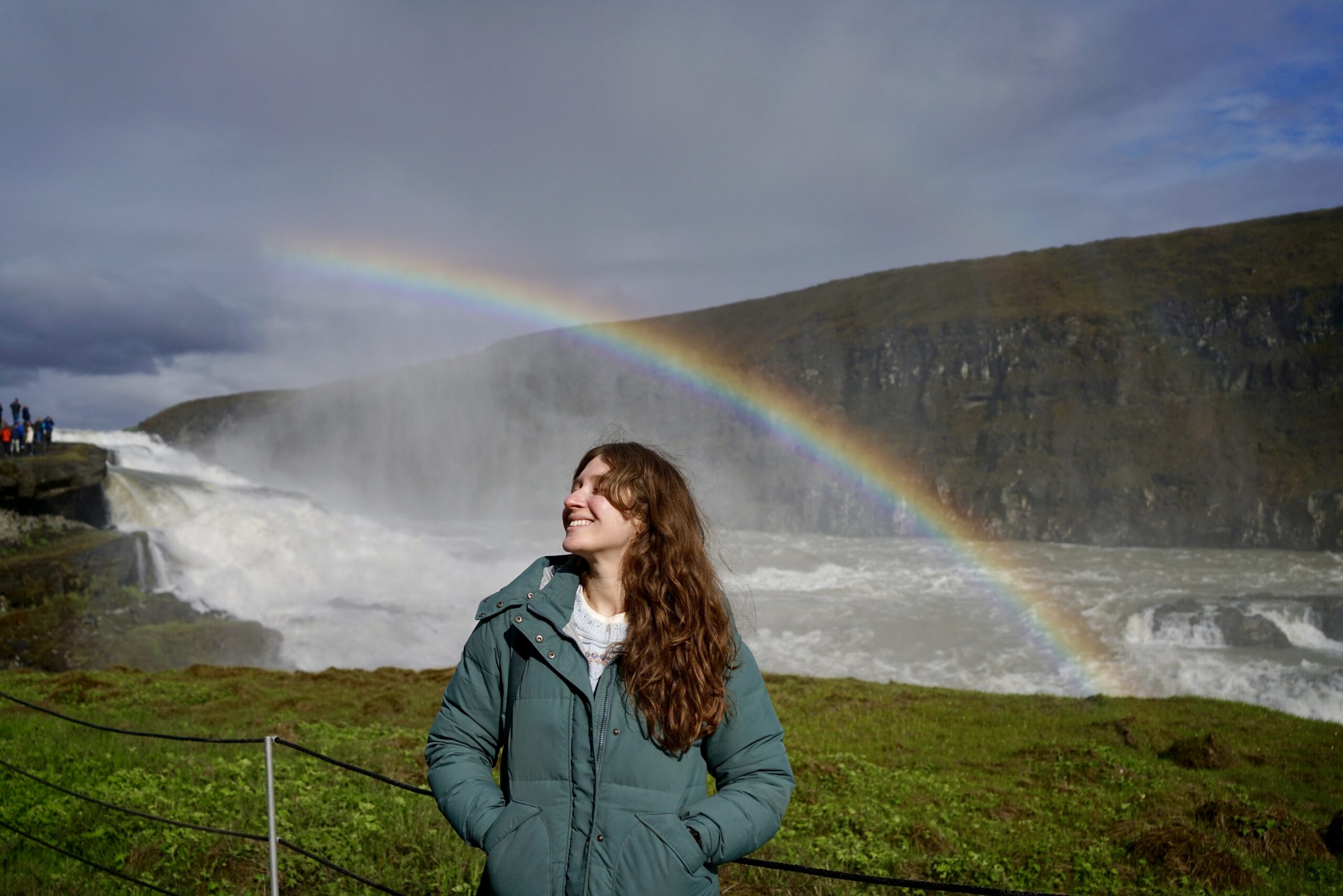
Gullfoss: A giant double waterfall and arguably the most photogenic in Iceland.
The Secret Lagoon: A geothermal-heated spa in a serene natural setting.
The Kerið Crater: A volcanic crater with striking blue water.
To hit all these destinations in one day, you’ll need to leave Reykjavik by 8 a.m., but if you don’t get to all of them, you can always backtrack after spending the night in Selfoss.
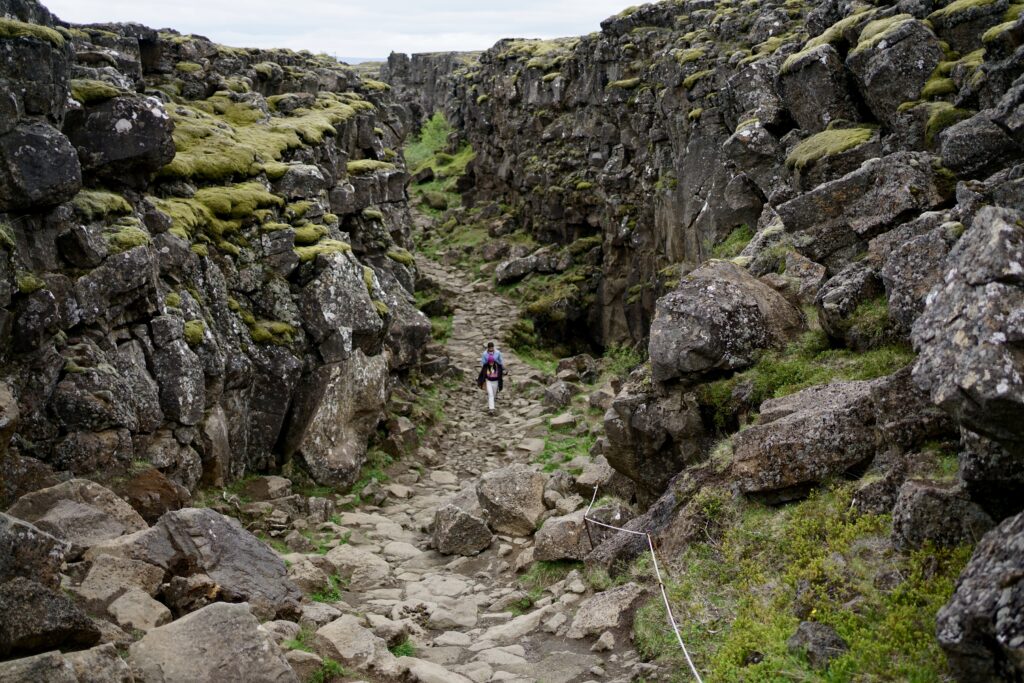
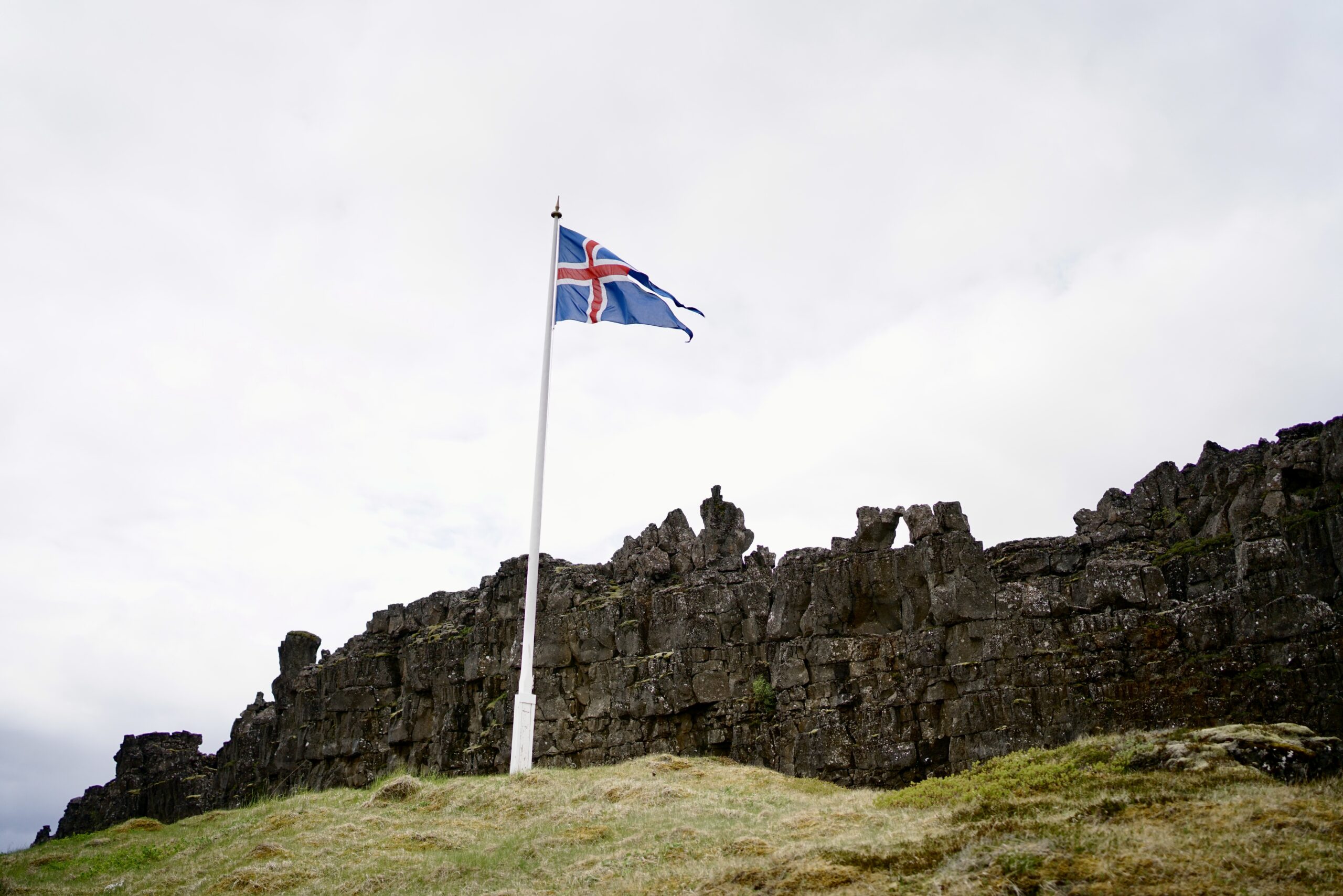
Within Þingvellir National Park, you can’t miss Almannagjá. It’s a gorgeous gorge where the Eurasian and North American tectonic plates meet. Other landmarks include the meeting point for the world’s longest-standing parliament, historic churches, and the Öxarárfoss waterfall.
For a more detailed guide on a day exploring the Golden Circle, read The Self-Guided Tour of the Golden Circle.
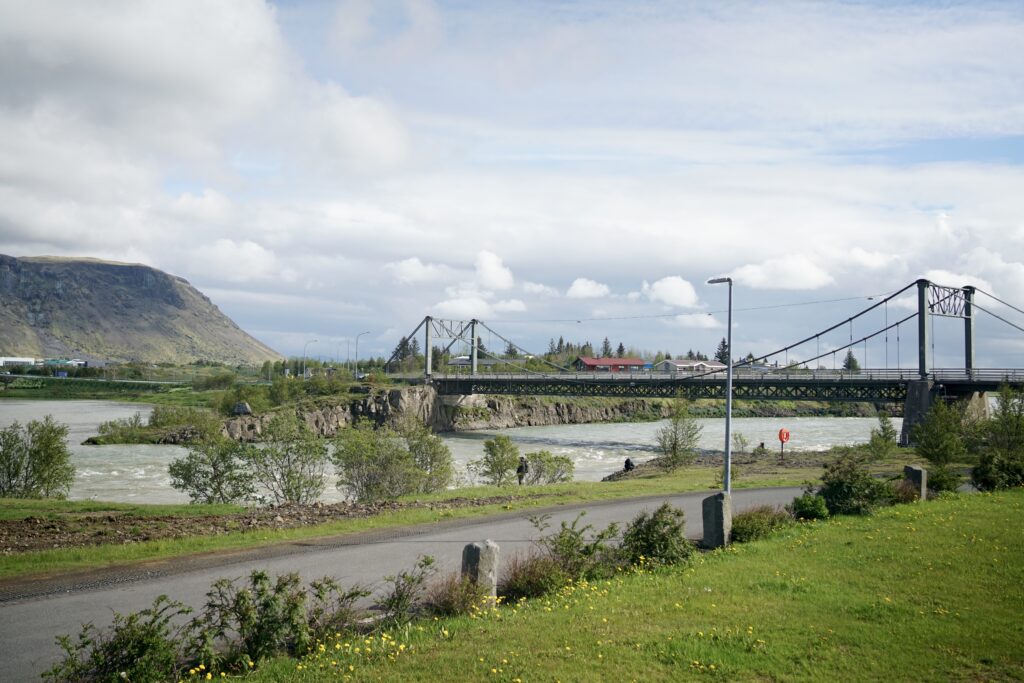
At the end of the day, you’ll enjoy dinner and stay in Selfoss. Most places close at 9 p.m., so make sure you’re in town by 8. For dinner, you can keep it casual at the Old Dairy Food Hall, which has a variety of options and cuisines. For something fancier, splurge on a seafood dinner at MAR Seafood for the catch of the day.
I recommend Hotel Selfoss in the center of town. Free breakfast is included, and there’s a great view of the bridge from the breakfast room.
Day 3: South Coast Waterfalls and Canyons
Estimated drive time: 2.5 hours
Where to stay: Kirkjubæjarklaustur
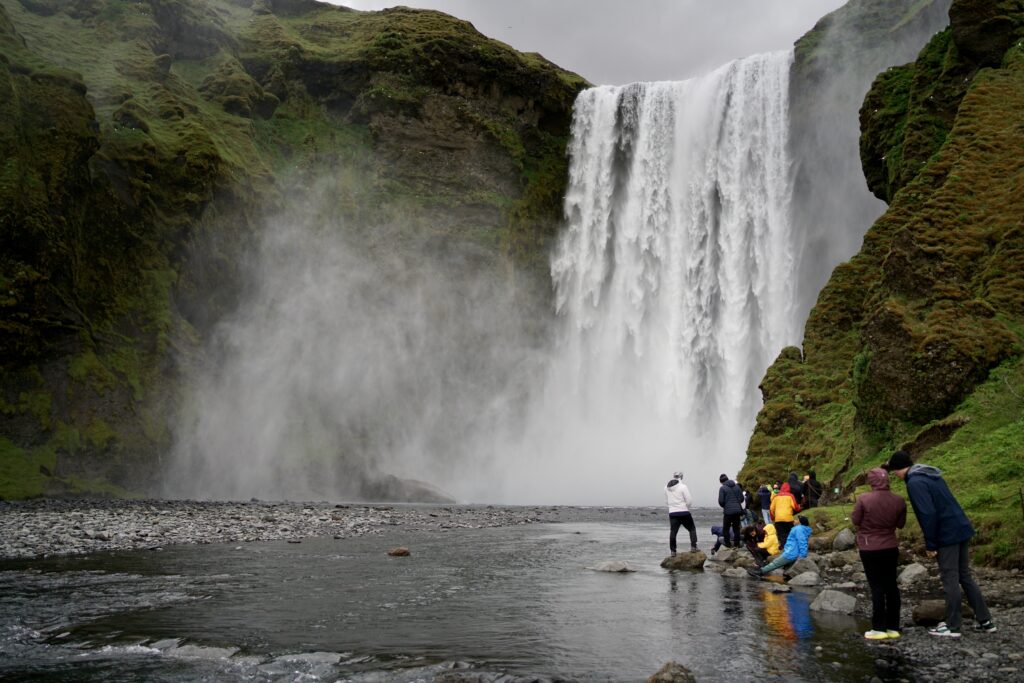
Now, we’ll get the party started along the Ring Road, officially route 1. On your drive along the south coast, you’ll see waterfalls, canyons, and waterfalls in canyons.
Here’s where you’ll stop:
Seljalandsfoss + Gljufrabui: Two waterfalls in one stop. Seljalandsfoss is a big one you’ll see from the highway, while Gljufrabui is hidden in a canyon at the end of a trail.
Skógafoss: One of the most popular waterfalls, where you can hike to the top to see the river that powers it.
Dyrhólaey Viewpoint: Panoramic views of black sand beaches. It’s also a great birdwatching spot for seagulls and, if you’re lucky, puffins.
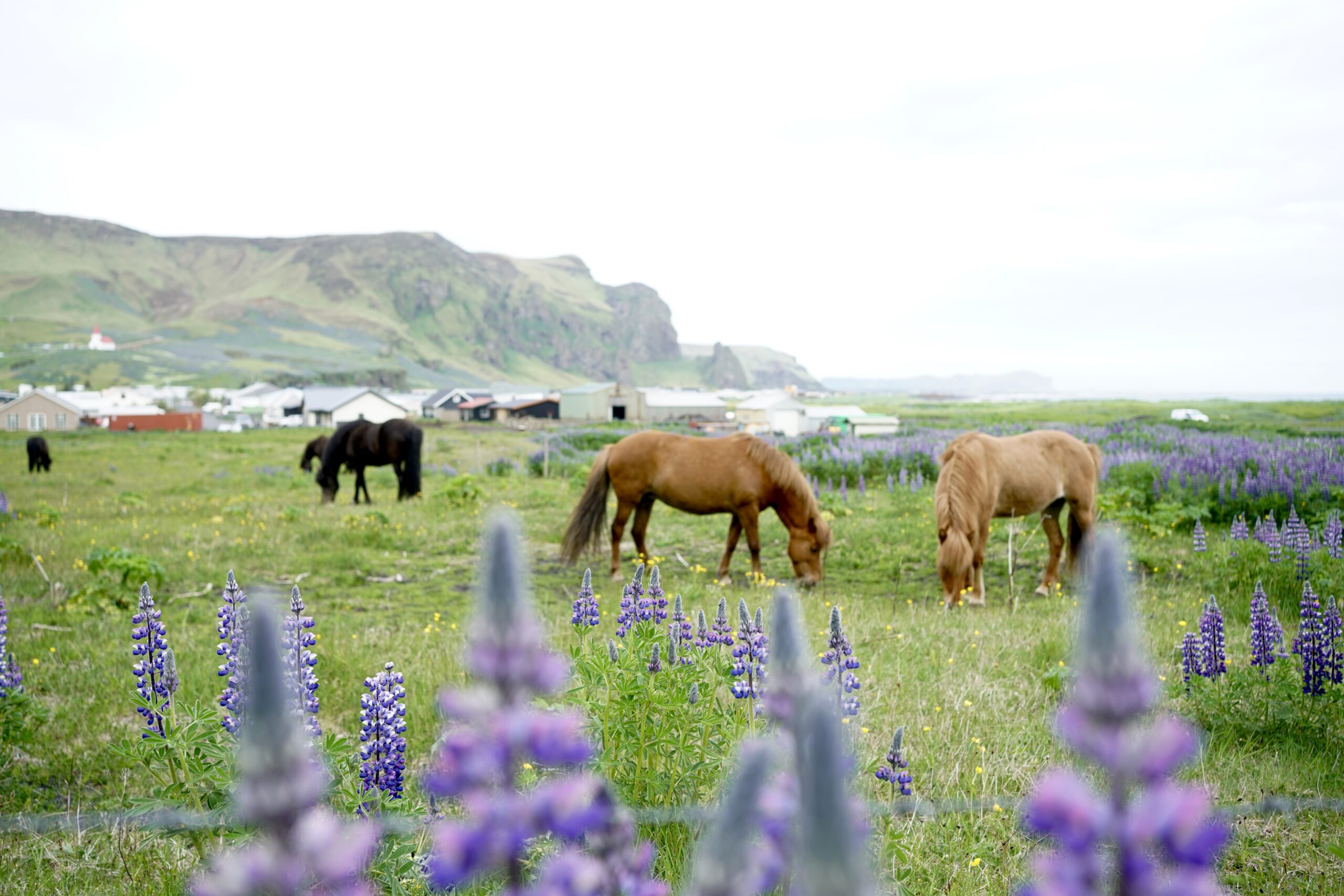
Black sand beach of Vík + Reynisdrangar: Walk on the black sand beach and gaze out at the sea stacks offshore. There’s also a great field of lupine flowers near the beach in the late spring and summer.
Eldhraun Lava Field: Expansive lava field covered in a blanket of thick green moss.
Fjaðrárgljúfur Canyon: Deep canyon with waterfalls that you can explore from above.
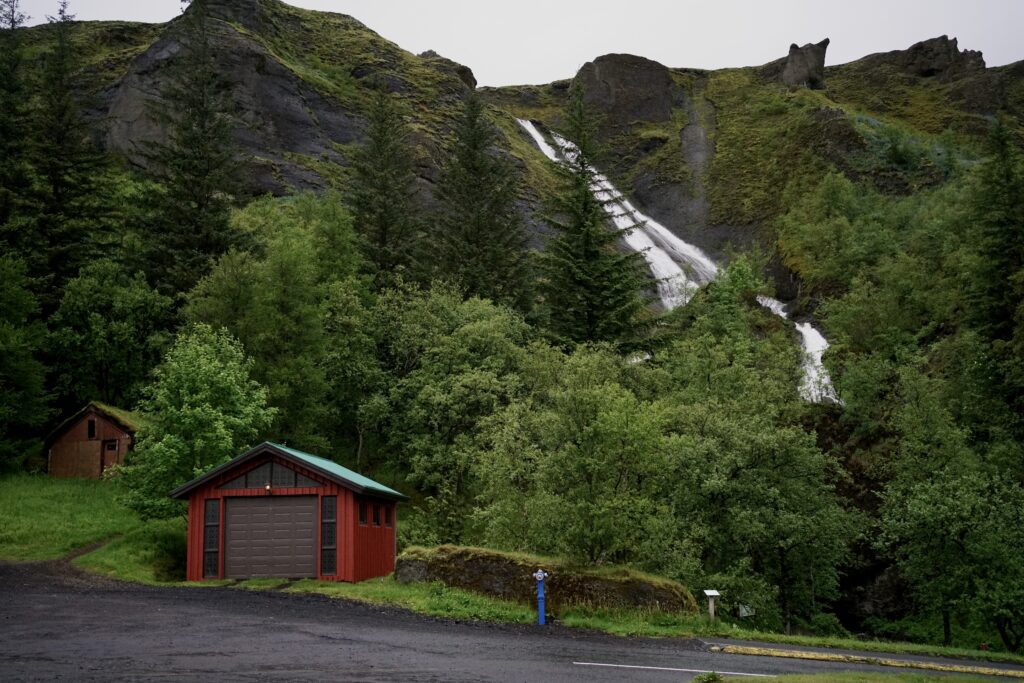
You’ll end your day at Kjarr, a delicious local restaurant in Kirkjubæjarklaustur with a view of yet another waterfall. I recommend staying in Kirkjubæjarklaustur, but if you want to get a little further down the road the Fosshotel Nupar is a good option.
For a more detailed guide on the south coast, read Where To Stop and Stay on Iceland’s South Coast.
Day 4: Glaciers
Estimated drive time: 2.5 hours
Where to stay: Höfn
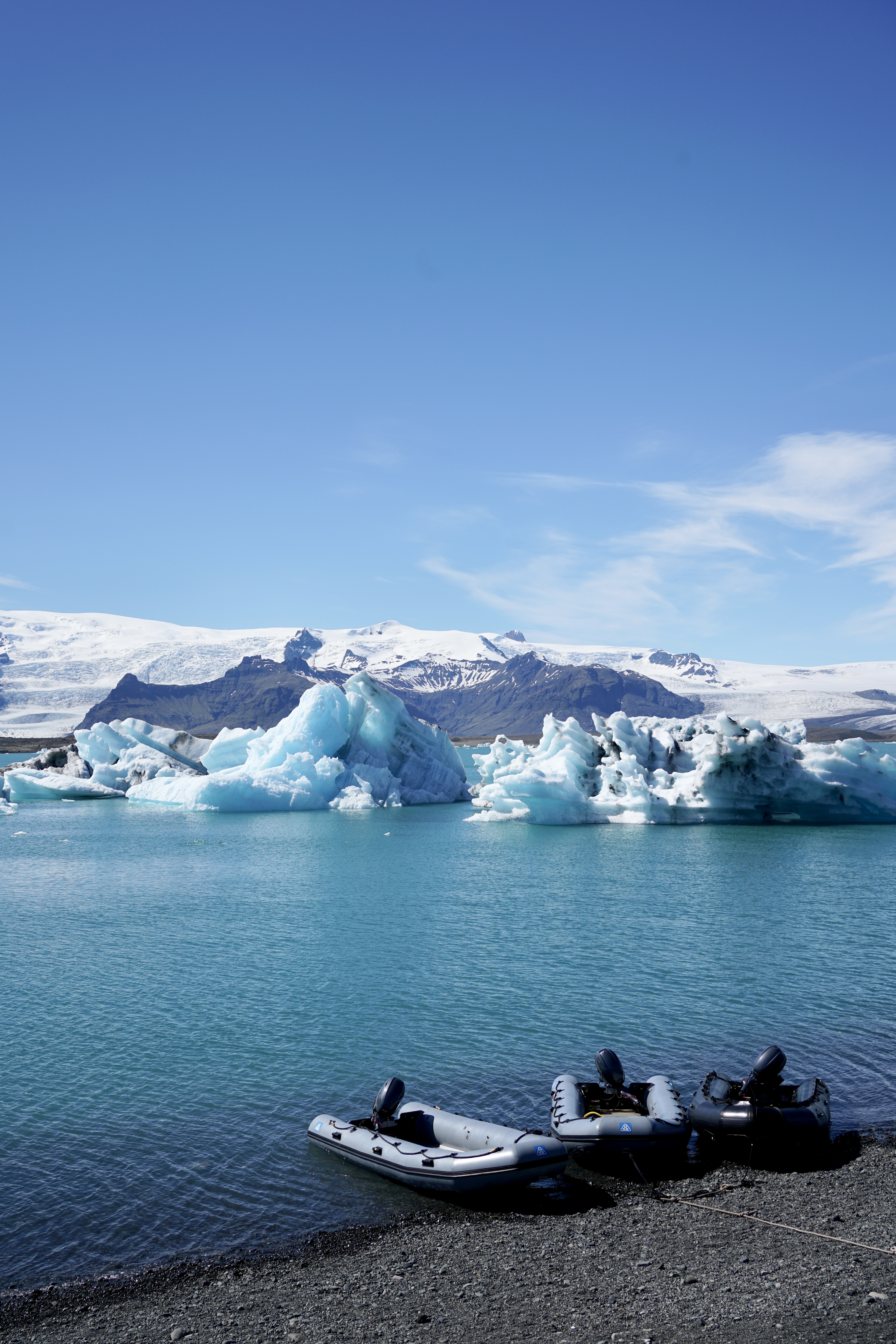
Pack your puffer because we’re going to the glaciers of Iceland.
Here’s where you’ll stop:
Svínafellsjökull Glacier: Walk to the mouth of the glacier in under 15 minutes.
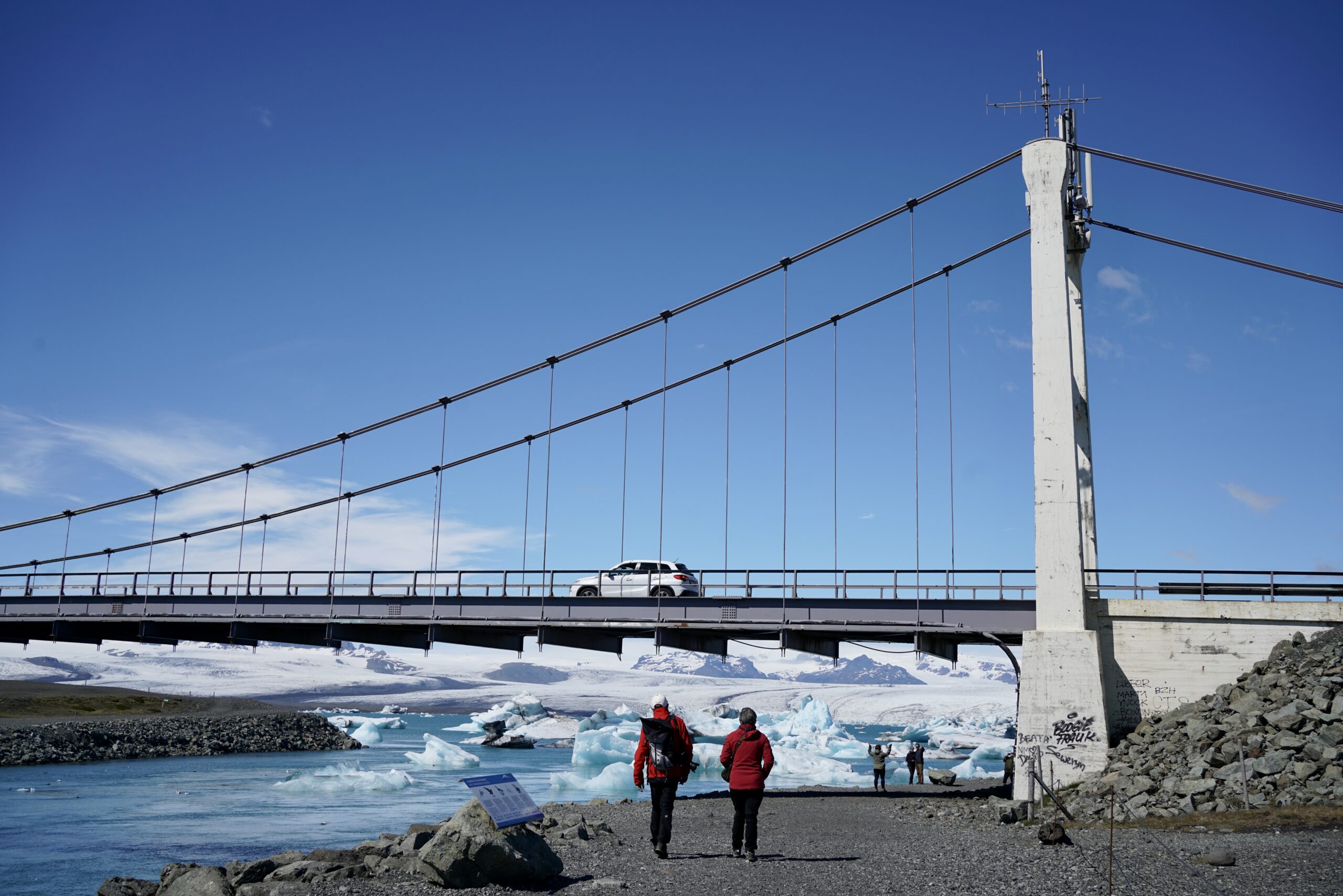
Jökulsárlón Glacier Lagoon: An arctic blue lagoon with floating ice caps.
Diamond Beach: The ice caps from the glacier lagoon float into the ocean and wash up on shore, looking like diamonds on a black sand beach. This is technically at the same stop as the lagoon, but you need to walk to a different spot.
Höfn: Explore the small fishing village and get a view of Europe’s largest glacier.
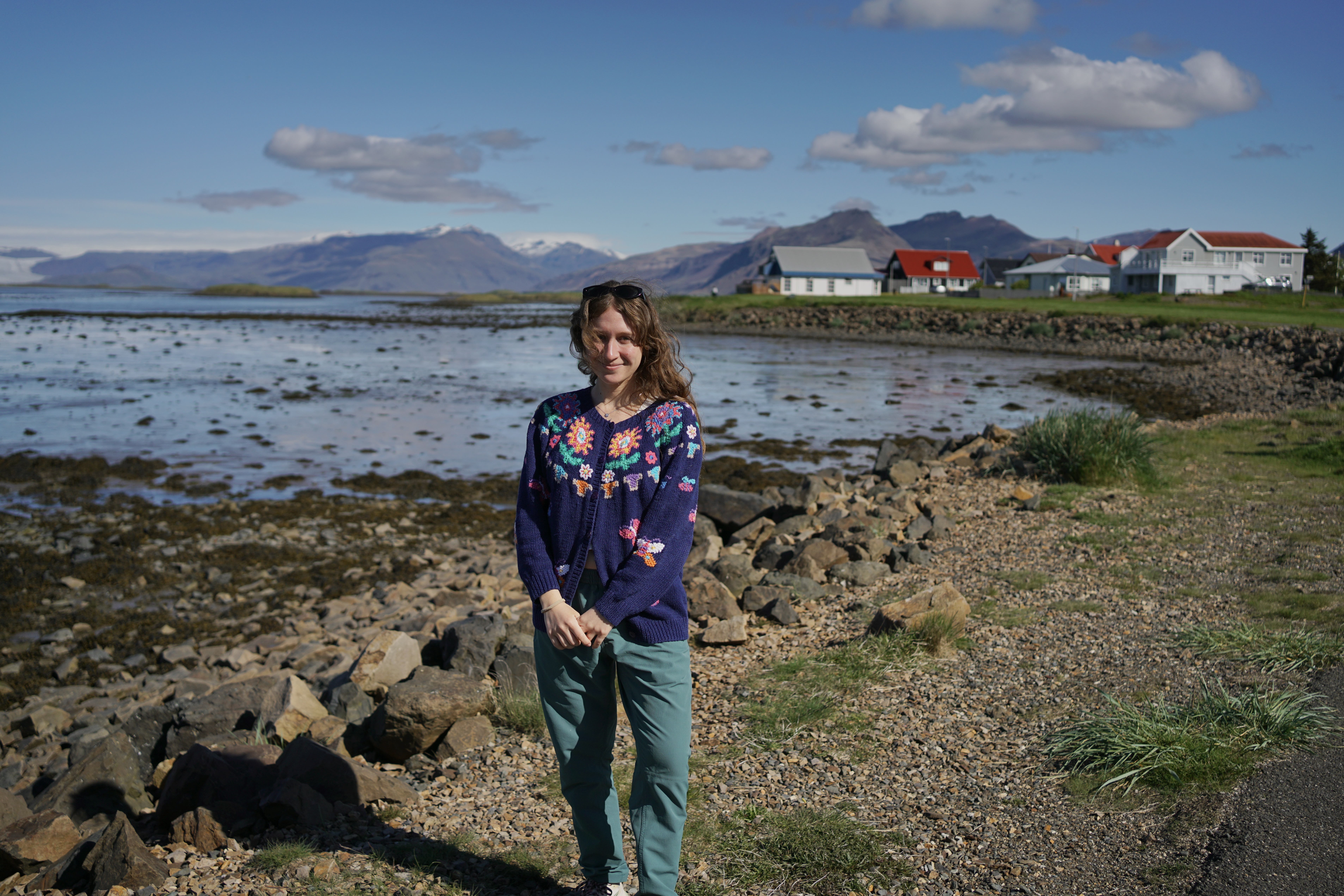
This day is shorter than most, so you can always back track to the canyon if you didn’t have time on the day before. I recommend staying at Hotel Höfn because you can rent bikes to explore the town. I wouldn’t call Höfn picturesque like Reykjavík, but the views from the shore are beautiful. There is a trail by the ocean that you can run, bike, or walk.

Enjoy a casual dinner at Nailed It Fish & Chips for the best fried cod in town.
Day 5: Easter Fjords Puffin Excursion
Estimated drive time: 5-6 hours
Where to stay: Egilsstaðir
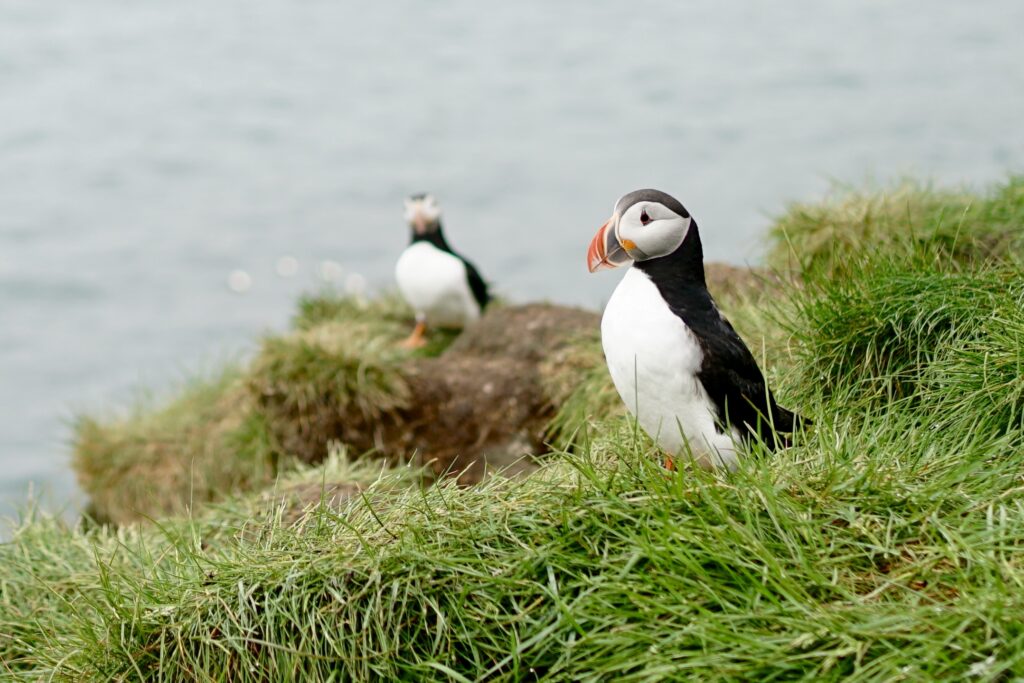
Explore the eastern fjords and go on a quest to meet puffins. On this day, we’ll cover a lot of ground, driving along the Ring Road and to and from fjords. You can think of visiting fjords as an out-and-back trail on a hike. There’s only one way to drive in and out.
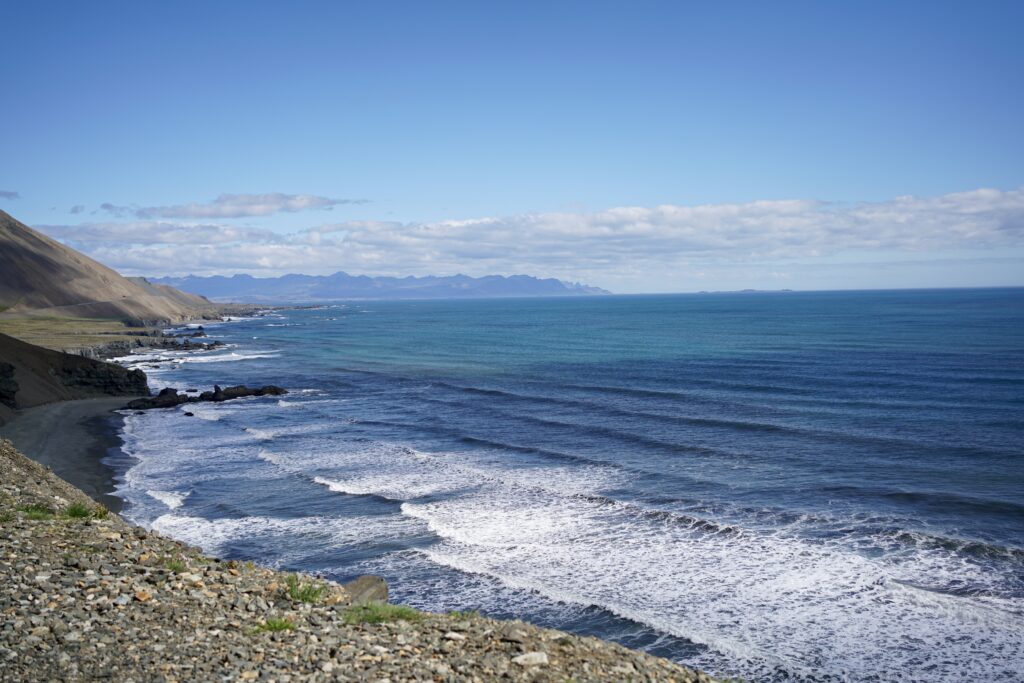
The drive from the south to the northeast is beautiful. There are sweeping ocean views that are reminiscent of the Pacific Coast Highway in California, and the journey to the fjords will take you through glaciers.
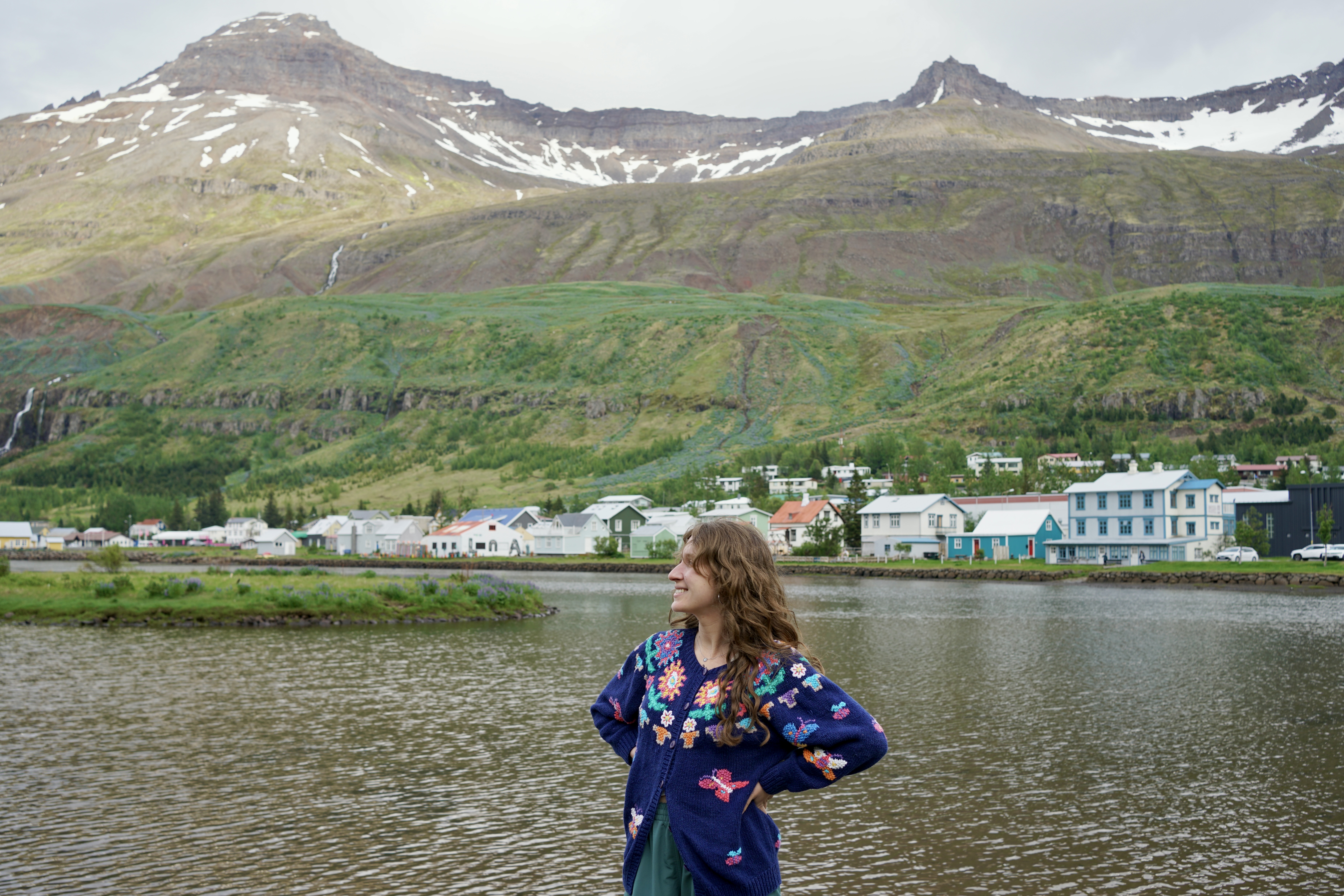
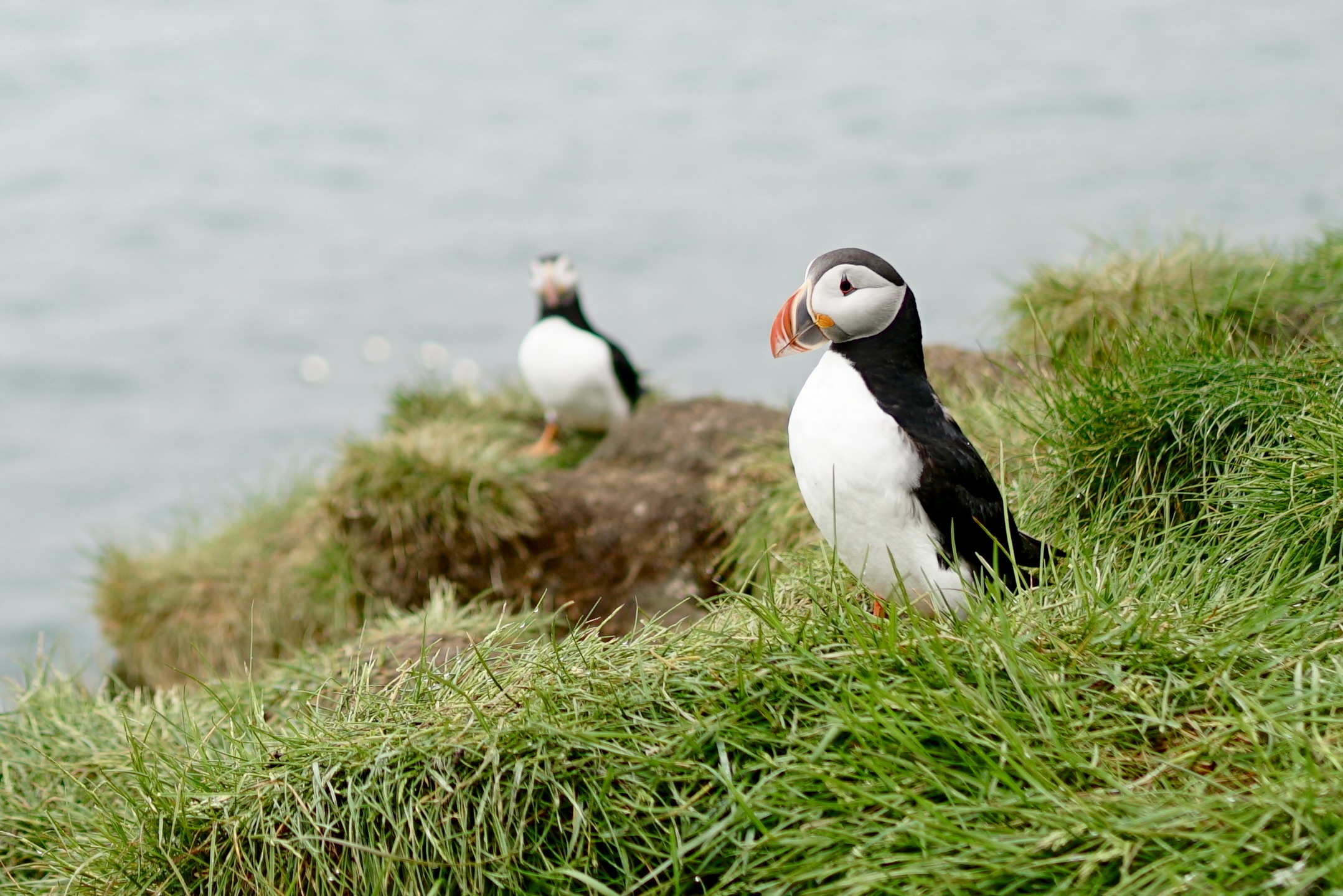
We’ll start by driving to the furthest point and work our way back. It’s an almost four-hour drive to Borgarfjarðarhöfn, the place where you’ll see the puffins. On the way there (or on the way back), you can take an hour detour to Seydisfjordur, a quaint fjord town.
Making the trip to see the puffins in Borgarfjarðarhöfn was the highlight of my trip to Iceland. Yes, it’s a two-hour round-trip detour off the Ring Road, but nowhere else in the world can you get so close to so many puffins at once.
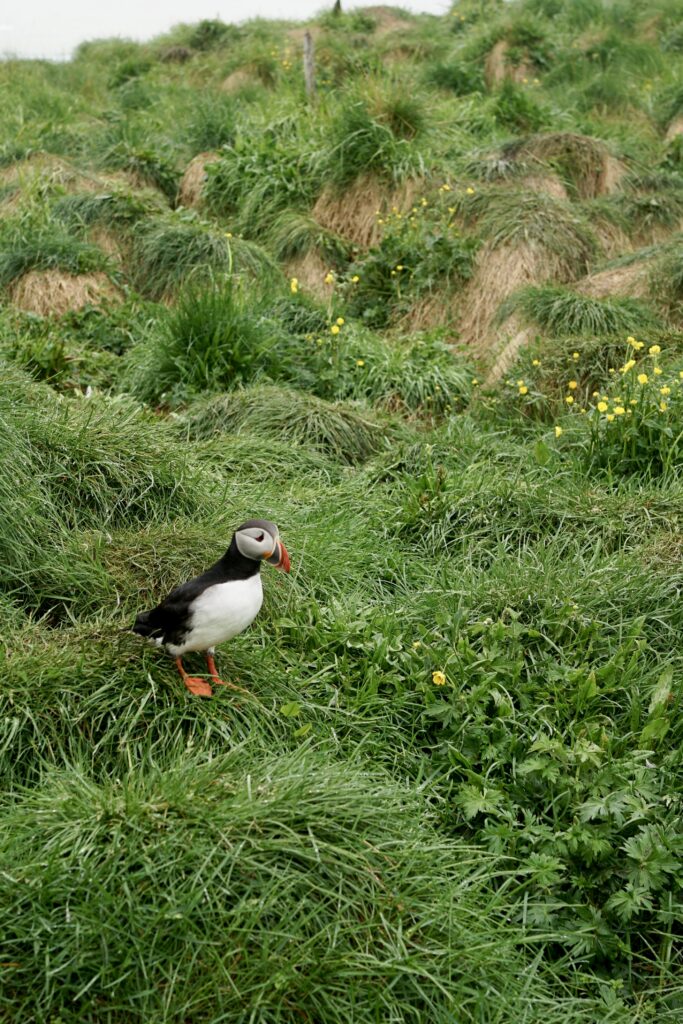
For a comprehensive guide to seeing the puffins in Borgarfjarðarhöfn, read The Best Place to See Puffins in Iceland: Borgarfjarðarhöfn Guide.
After seeing the puffins, it’s a one-hour drive to Egilsstaðir, where you’ll spend the night. Egilsstaðir is the biggest town in the Eastern Fjords, but it feels more like a suburb with strip malls than a little Icelandic village.
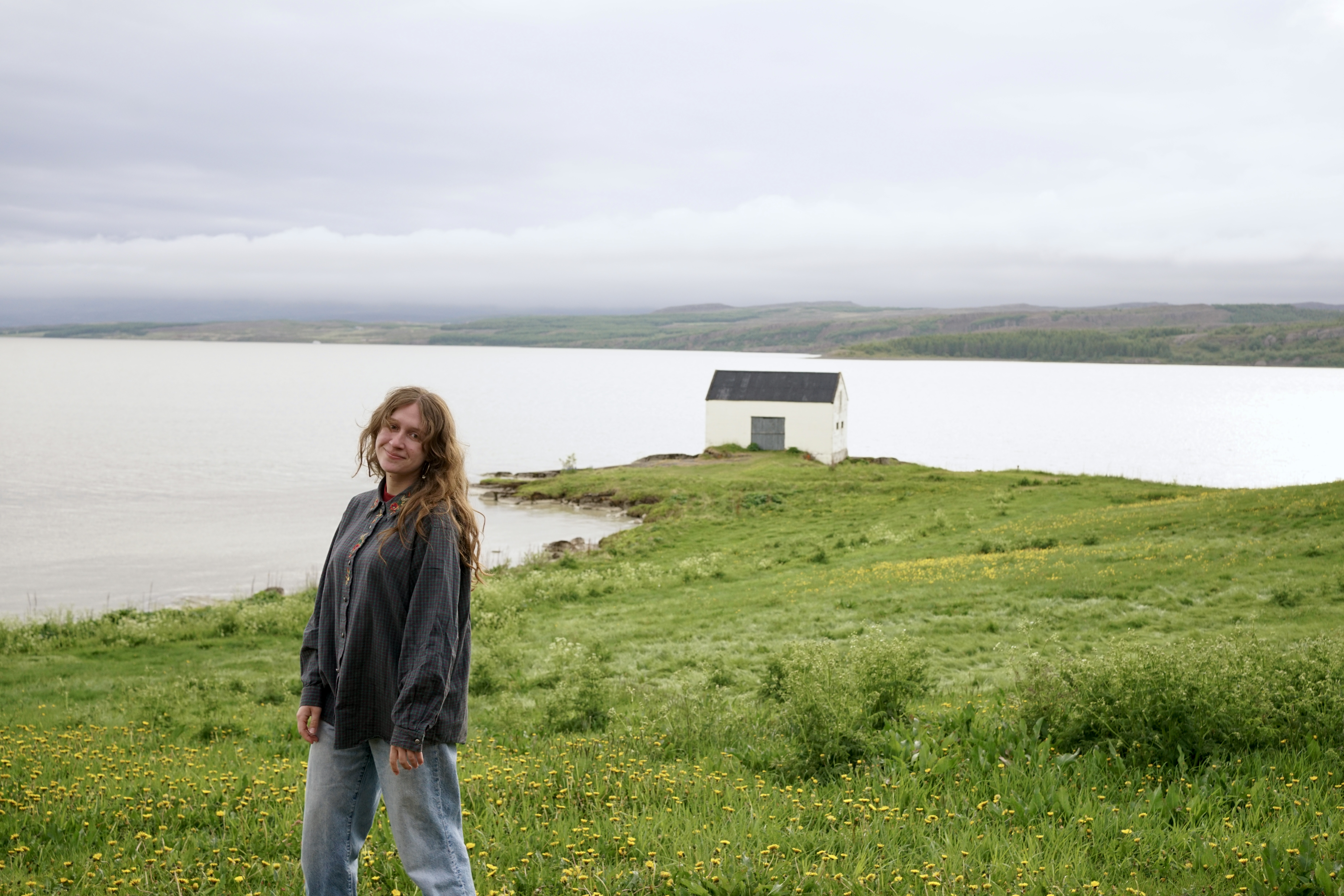
We stayed at the Hérað, a part of the Berjaya Iceland Hotels group. Grab dinner across the street at the fancier Gistihúsið (Lake Hótel). The dining room here is pretty and cozy. After dinner, you can explore the hotel grounds and get a view of the lake.
Day 6: The Otherworldly North
Estimated drive time: 4 hours (with many stops)
Where to stay: Akureyri
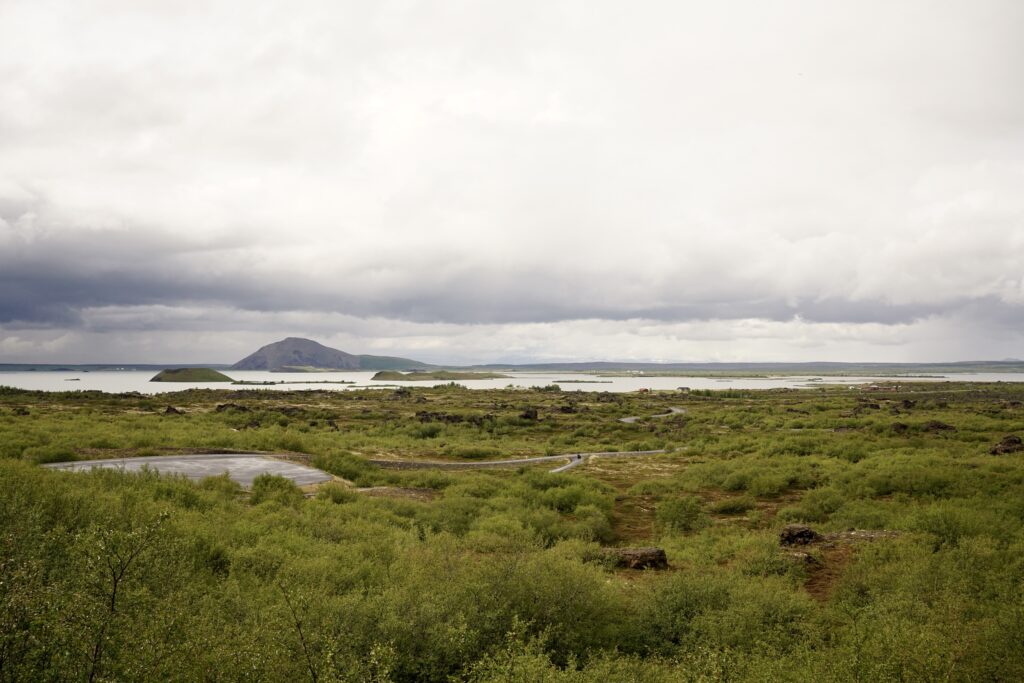
The northern part of Iceland feels like you’ve stepped onto another planet with bubbling sulfur hotbeds, volcanic craters, and Star Wars-sized lakes (it was featured in the movies!).
Here’s where you’ll stop:
Dettifoss: The second-most powerful waterfall in Europe, powered by glacier runoff.
Hverir Geothermal Area: a Mars-like geothermal area with bubbling earth cauldrons, steam rising, and a sulfuric stench.
Lake Víti: A volcanic crater that made a small lake.
Lake Mývatn: A big lake known for mývatn, small swarming bugs that will pester you, but don’t worry, they don’t bite. Get out of the car at your own risk. The lake is scenic to drive around.
Dimmuborgir Lava Field: Explore an unusually shaped lava field with tall rock formations.
Goðafoss: A lowkey waterfall with an arctic blue hue.
Akureyri: The largest city in Northern Iceland with bars, restaurants, and a shopping street.
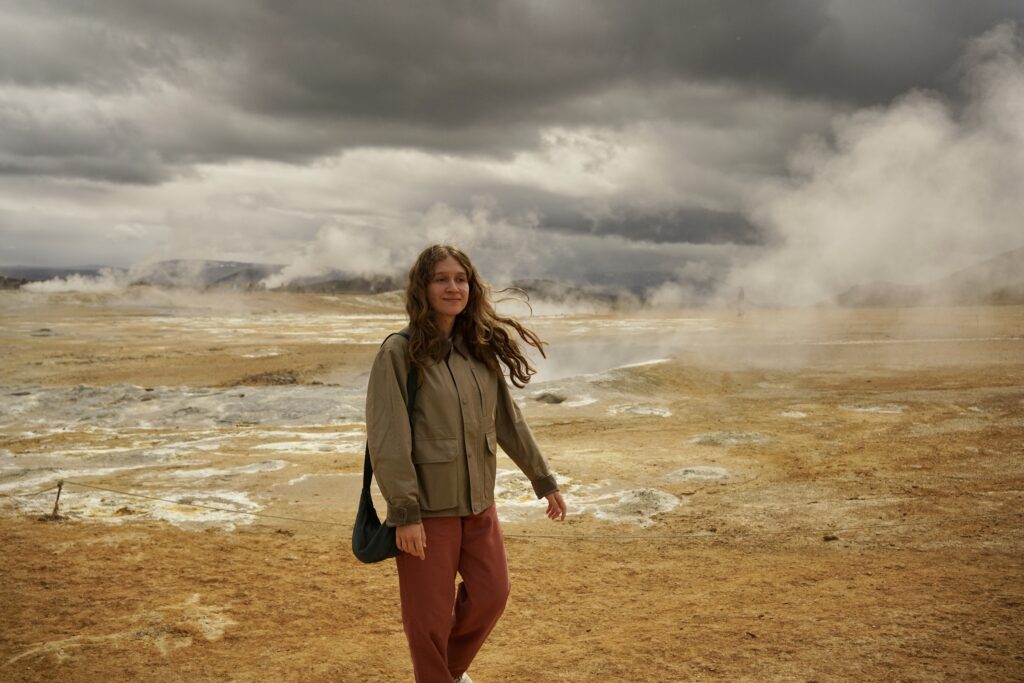
From the above list, Hverir is the most important stop. It’s the area that really makes you feel like you took a trip to Mars. Candidly, I was a little underwhelmed with the Lake Mývatn region otherwise, so if you feel like you need more of a chill day, don’t break your back visiting every spot on the list.
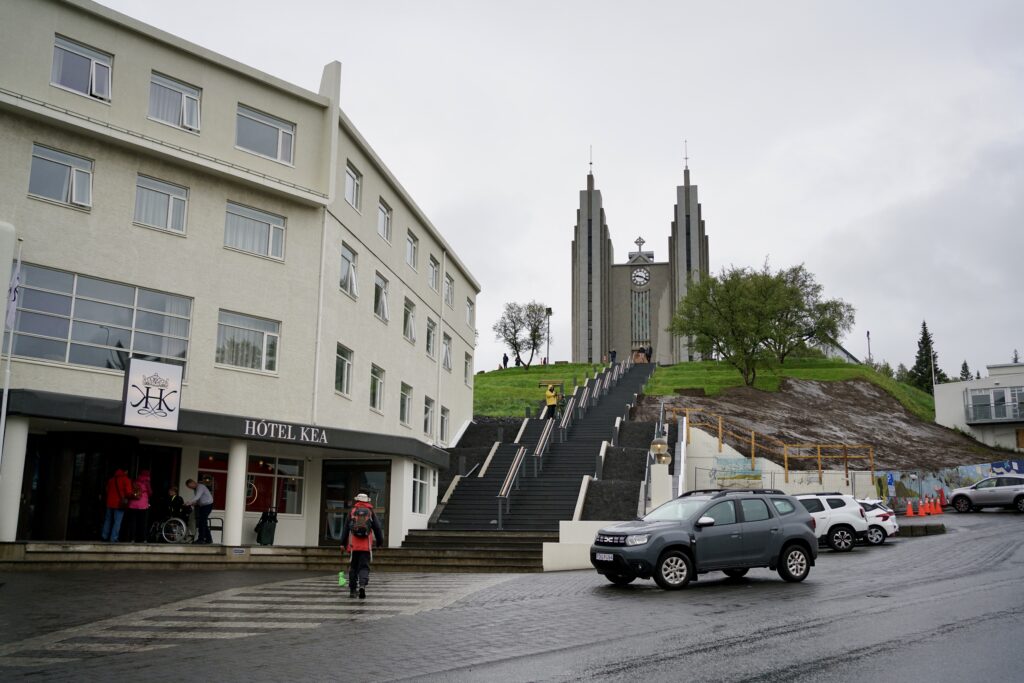
You’ll have plenty of time to relax at Akureyri. Oddly enough, Akureyri is a cruise ship destination, so there’s a lively main street with shops, restaurants, and bars. The main drag is called Hafnarstræti.
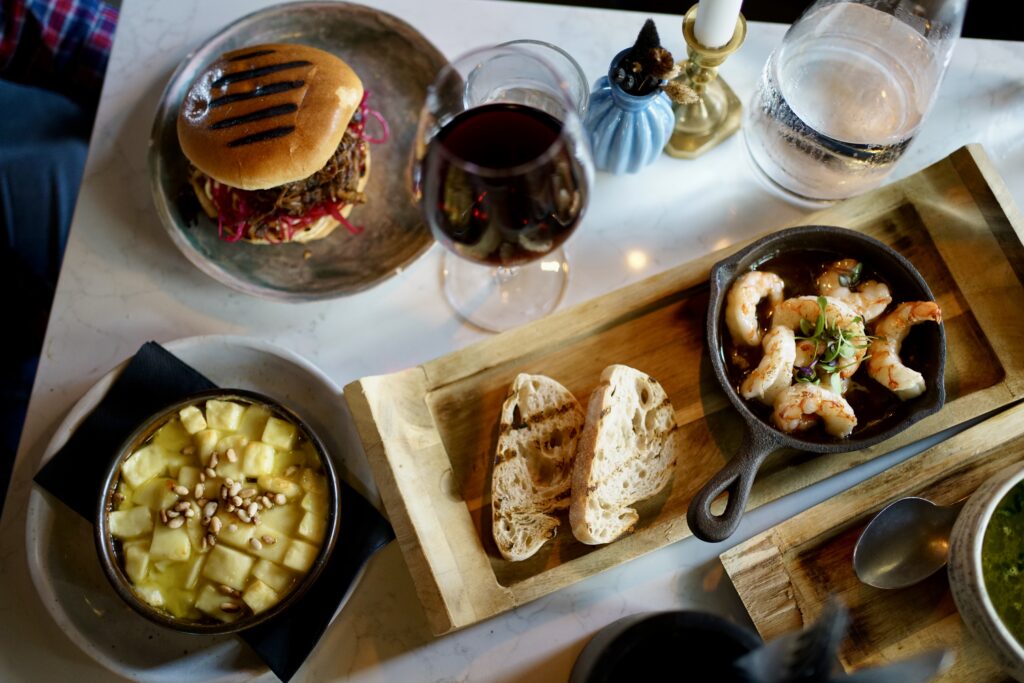
There are many dining options, but we had dinner at Eyja, a locally owned wine bar and bistro. I recommend staying at Hotel Kea right in the middle of downtown. It’s next to the Akureyrarkirkja (Akureyri church), which is the main tourist attraction in the city.
Hotel Kea has a good happy hour in the lobby, but it ends early. To keep the party going, go to Götubarinn, a fun and laid-back bar, for an extended happy hour that lasts until 9 p.m.
Day 7: Northern Stops + Snaefellness Peninsula
Estimated drive time: 5 hours
Where to stay: Arnarstapi
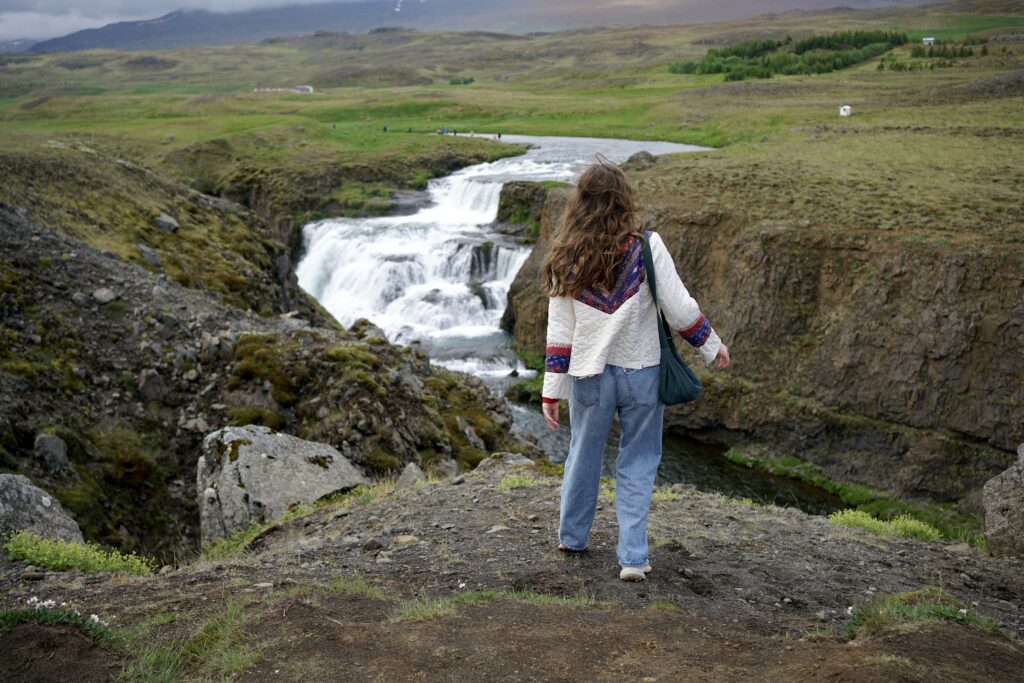
Most of the seventh day is spent on the road with a couple of stops along the way. This is the longest drive of your trip. You’ll be driving from Akureyri to almost the furthest point on the Snæfellsnes Peninsula. The Snæfellsnes Peninsula is a picturesque peninsula on its own road (not the Ring Road). It’s well worth the detour and a spot on your itinerary.
Before you leave Akureyri, grab a hearty breakfast at Ketilkaffi, located inside the Akureyri Art Museum. Ketilkaffi is a cute cafe with delicious plates like eggs benedict or simple pastries.

Here is where you’ll stop in Northern Iceland along the Ring Road before heading west to the Snæfellsnes Peninsula:
Reykjafoss: A waterfall with a thermal hot spring near it. There is also an opportunity to go horseback riding to the waterfall through Hesta Sport, but it’s an easy walk. Parking here is based on an honor system.
Kolugljúfur Canyon: A canyon with a roaring waterfall.
When you get close to the town of Borgarnes, you’ll veer off the Ring Road onto Road 54 to reach the Snæfellsnes Peninsula. On your way to your hotel in Arnarstapi, you’ll stop at most of the main sights on the peninsula.
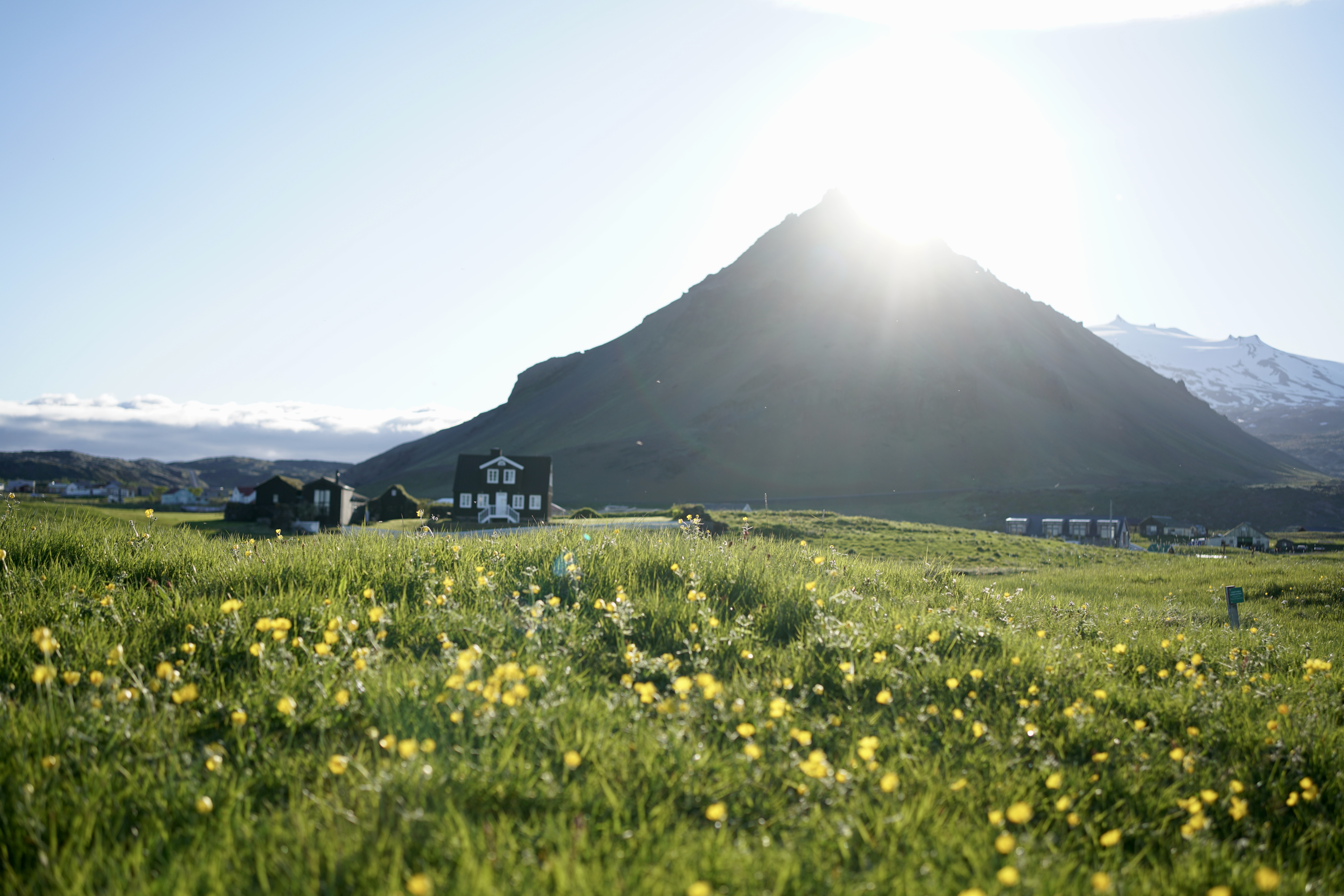
Here’s where to stop along Road 54 in the Snæfellsnes Peninsula on the first day:
Ytri Tunga (Seal Beach): A beach with seals sunbathing and swimming.
Búðakirkja: An all black church that makes for a picturesque backdrop.
Arnarstapi Cliff Walk: A trail along the cliffs of Arnarstapi with views of the village, town, and rock formations.
I recommend staying at the Arnarstapi Hotel. They have a great casual restaurant to enjoy dinner with a view. You can’t go wrong with any of their lamb dishes.
For a full guide to exploring the Snæfellsnes Peninsula, read Iceland Guide: An Adventure on the Snæfellsnes Peninsula.
Day 8: The Snæfellsnes Peninsula + Blue Lagoon
Estimated drive time: 4 hours
Where to stay: Sleep on the plane
On the last day, you’ll say goodbye to Iceland by seeing the rest of the Snæfellsnes Peninsula and relaxing at the Blue Lagoon before your flight.
If you’re a planner like me, driving straight from a peninsula to the airport sounds like a disaster. Well, you’re not going to like it when I tell you that before going to the airport, you should stop at the Blue Lagoon, too.
Could you spend another night in Reykjavík? Yes, but you’ve likely seen the entire city on the first day. I did the safe thing and spent the night in Reykjavík and regretted it. I wish I did what I’m about to tell you to do.
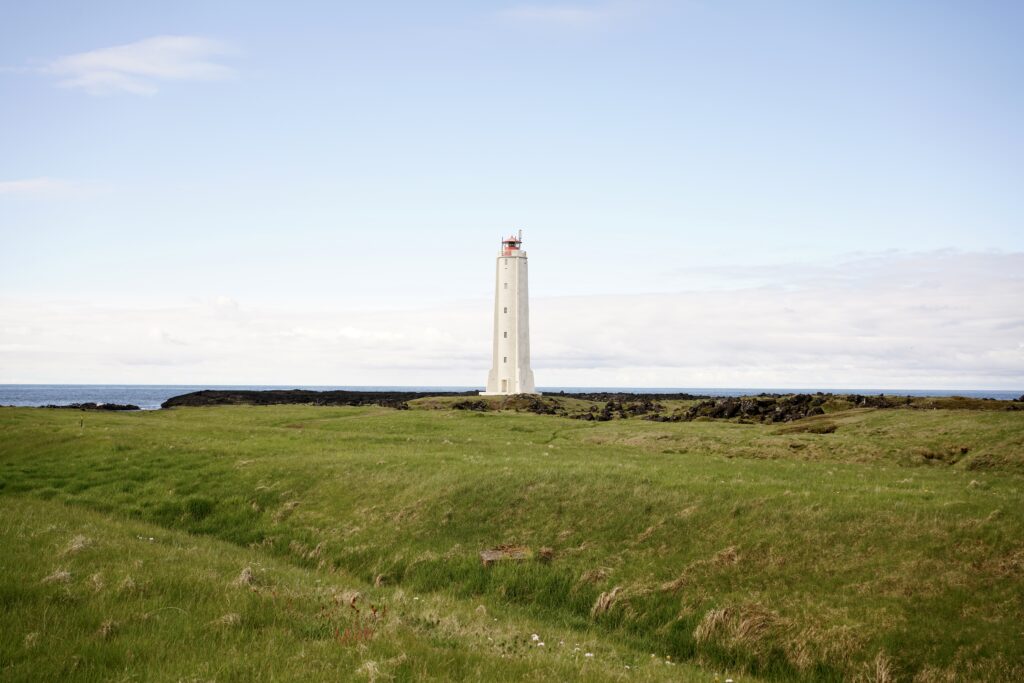
So, as soon as you check out of your hotel in Arnarstapi, go deeper into the peninsula and drive through Snæfellsjökull National Park. Road 54 will take you on a loop around the glacier. You can stop at the Malarrif Lighthouse to marvel at the Icelandic design or the lighthouse, but you’re really stopping here in hopes of seeing an arctic fox. They’re known to be spotted around the national park.
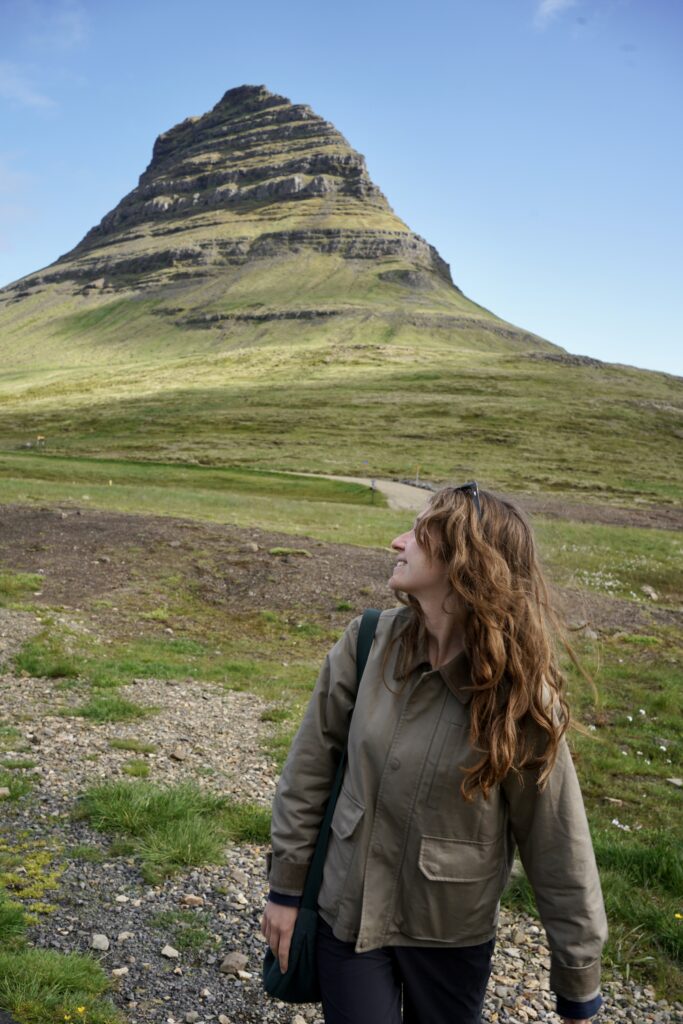
Keep following Road 54 until you reach Kirkjufell, a hill made famous by Game of Thrones. This is the last real sight on the peninsula, but if it’s still before noon, make a stop at a local bakery in Stykkisholmur. Nesbrauð ehf has the best cinnamon rolls and delicious pastries for the road. From here, it’s about a three-hour journey to the Blue Lagoon.
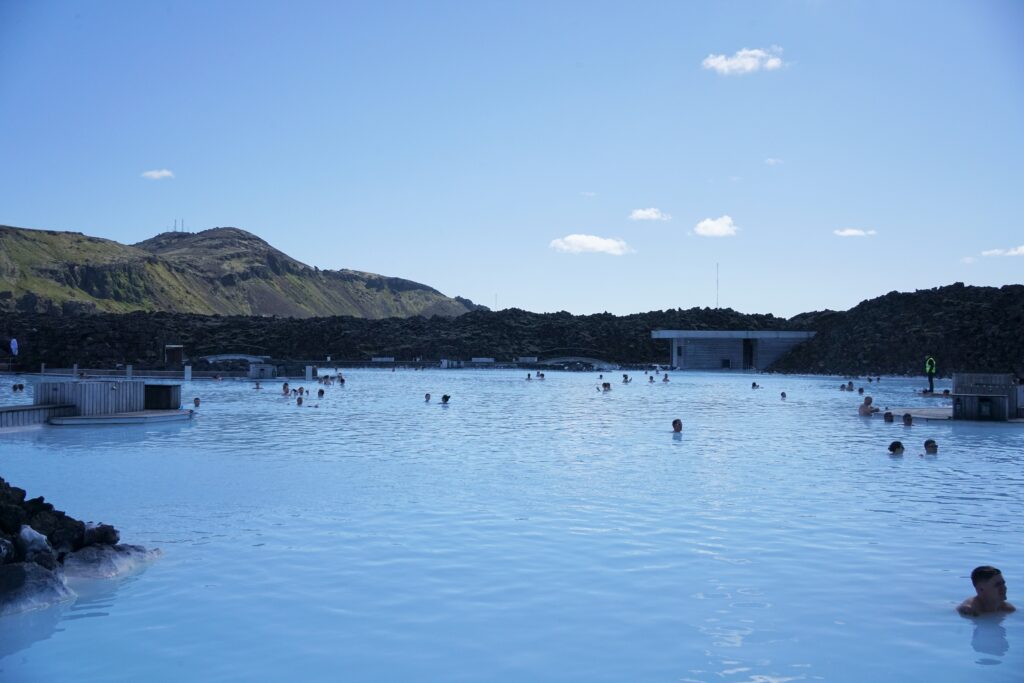
Many people recommend going to the Blue Lagoon right when you land in Iceland, but going to a spa jet lagged might send me into a coma. You should go to the Blue Lagoon before your flight out, so you can feel refreshed and ready to nap on the plane.
To go to the Blue Lagoon, you need to buy a timed ticket at least a month in advance. It costs about 120 USD per person, and although I begrudgingly got tickets, it’s worth the money. A face mask and drink are included in your entrance ticket. After you go into the lagoon, there are personal showers so you can get clean before your flight.
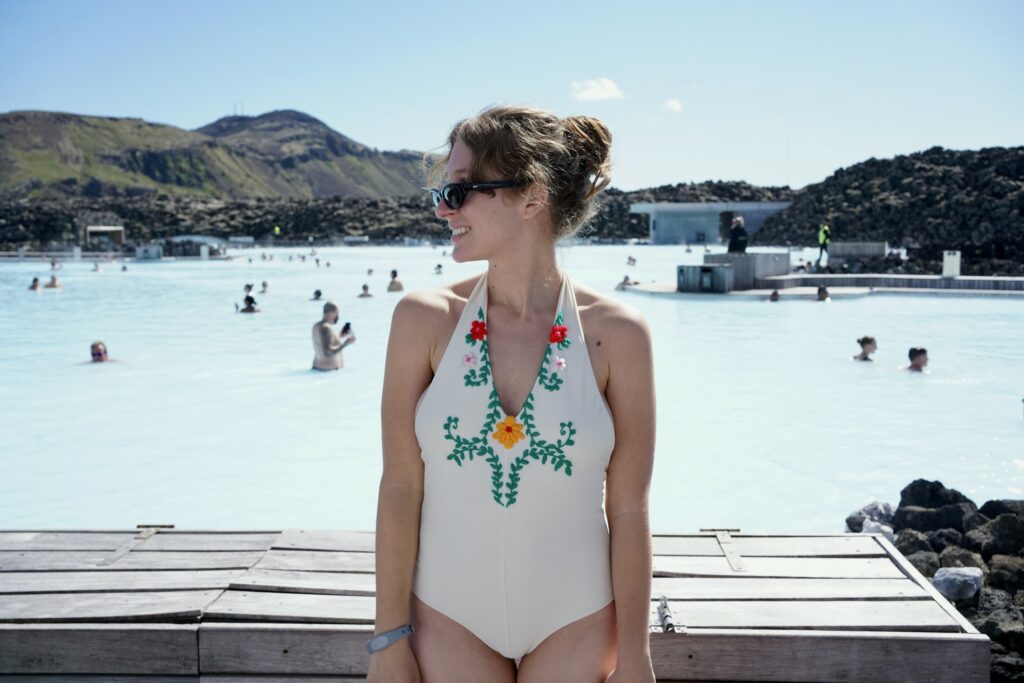
You need at least two hours to fully enjoy the Blue Lagoon. So, if you’re using this itinerary as your Iceland trip guide, I recommend flying out of Iceland around 9 p.m. to give you time to return the rental car and go through security without rushing.
Is the Ring Road worth it?
If you’re a road tripper, yes. I would say it’s worth it for the opportunity to see puffins alone. But listen, if you don’t love driving and you don’t care for birds, you don’t need to do the Ring Road. You can spend the whole week exploring southern Iceland or taking day trips from Reykjavík.
The Logistics
Now that we’ve got all the itinerary stuff out of the way, let’s talk about the juicy part: the logistics.
Renting a car
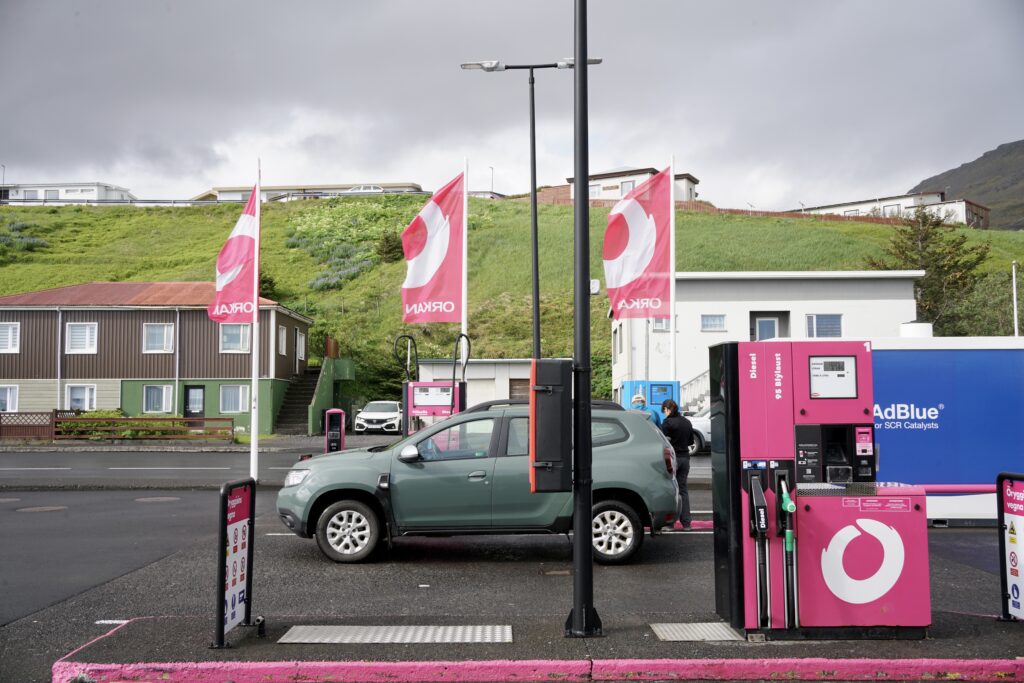
You can’t do a road trip without a car. Many people suggest a 4×4 car to go into the Highlands, but for this guide, you just need an SUV. It costs about 1,000 to 1,500 USD for a week-long car rental. Fuel for the car was about 300 USD (in summer 2025). Check with your rental provider if your car needs diesel or gas. Many 4×4 SUVs require diesel, which is actually a bit cheaper and fuel-efficient.
When you land at the airport, there are some rental car companies in the terminal and others about a 5-10 minute walk away. Avis, Hertz, and Europcar are in the terminal, but you’ll likely pay more for the convenience. Alamo, Enterprise, National, Sixt, and Blue are more affordable and can be accessed by walking across a large parking lot or taking a free shuttle bus. To beat the crowds, you should just walk to the further rental car offices to avoid a long wait time to get your car.
Driving around Iceland
Driving on the Ring Road is pretty straightforward. It’s all paved, and during shoulder season (April-May, September-October,) the roads are pretty empty. Although it’s mostly a two-lane highway, the road is wide enough to feel safe.
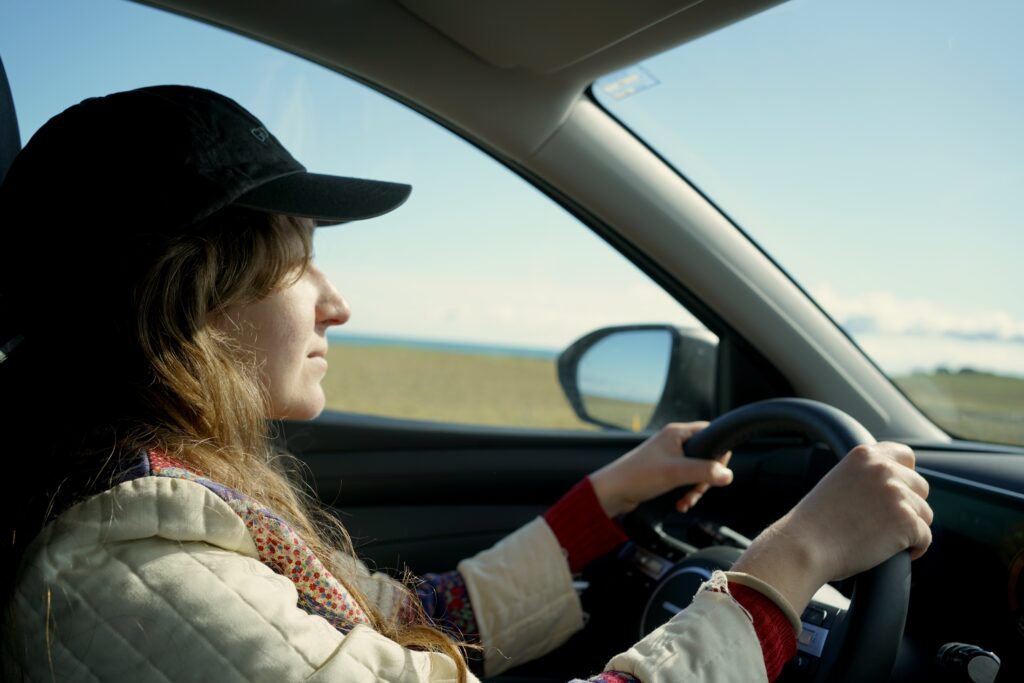
The longest drive time will be about five hours long, but this guide always accounts for stops on the way, so you aren’t driving nonstop.
Parking at most stops will be 1,000 ISK or about 8 USD. Download the Parka app to easily pay for parking from your phone. In Reykjavík and Akurerki, parking will be labeled P1-P5, with P1 being the most expensive and P5 being the least expensive. For overnight stays, you need to find P2-P3 parking.
Breakfast and lunch
In this guide, you’ll find dinner recommendations, but you might be wondering what about breakfast and lunch? It’s no secret that Iceland, like most islands, is an expensive destination. To save money and time, we ate breakfast on the road at gas stations and grocery stores.
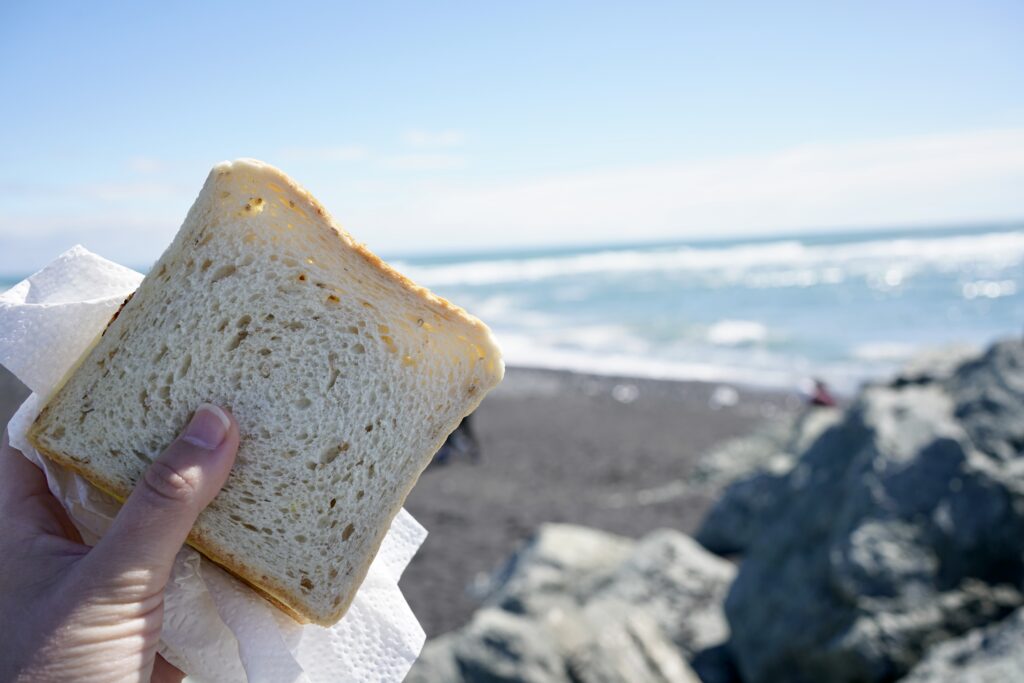
Icelandic yogurt or skyr is an affordable protein-packed option for breakfast. Everywhere sells single-serving Skyr packs, and we bought a bag of granola. For lunch, we also made our own sandwiches. Nettó and Bónus are two great grocery stores with lots of variety and good prices.
Wildlife on the way
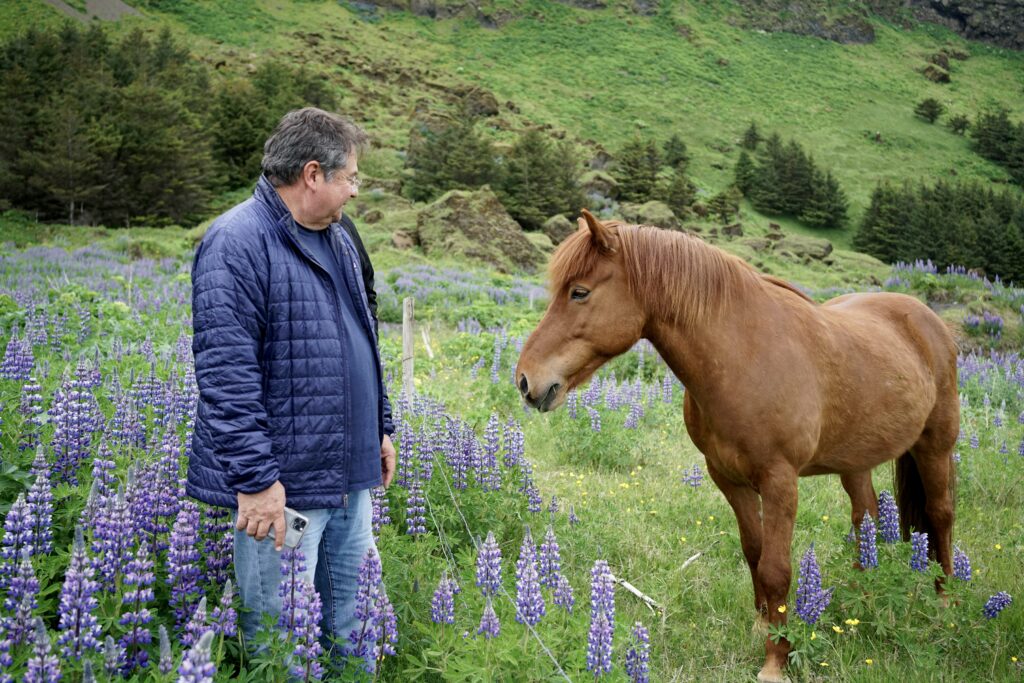
The Ring Road isn’t just about the stops but the scenery you see along the way. Keep your eyes peeled for wildlife (both domesticated and not) on the road. You’ll see plenty of sheep and horses, but you also might spot reindeer, foxes, seals, and puffins.
Icelandic cheat sheet
For the most part, everyone speaks English in Iceland, but knowing a bit of Icelandic can help you on the road. The end of words will usually tell you what something is:
“Foss” means waterfall
“Kirkja” means church
“Hofn” means harbor
“Gljúfur” means canyon
“Fjörður” means fjord
I’m happy to answer any questions about driving the Ring Road in the comments below. Check out all of the guides on ThatPlannerFriend.com to prepare for your big Icelandic adventure.
More Iceland guides


Reply