Unless you’re lucky enough to have ancient lava fields and glacial lagoons in your backyard, Iceland’s southern coast surprises you with landscapes you’ve probably never seen before. And it doesn’t stop at ashes and ice caps; there are waterfalls, canyons, and black sand beaches to explore along the southern part of Iceland’s Route 1.
Route 1 circles the entire country, but you don’t need to drive the full loop around the island to get a taste of some of Iceland’s most diverse landscapes and ecosystems. You can drive to the furthest point and work your way back, stopping at a new town each night, or base yourself in one town and take day trips.
The south coast is more popular than the northern part of the island because of its accessibility. It’s just under two hours to drive from Reykjavik to the first stop along the coast.
In this guide, we’ll go over the must-visit stops along the south coast, how to access them, and where to stay.
South coast stops
Seljalandsfoss + Gljufrabui
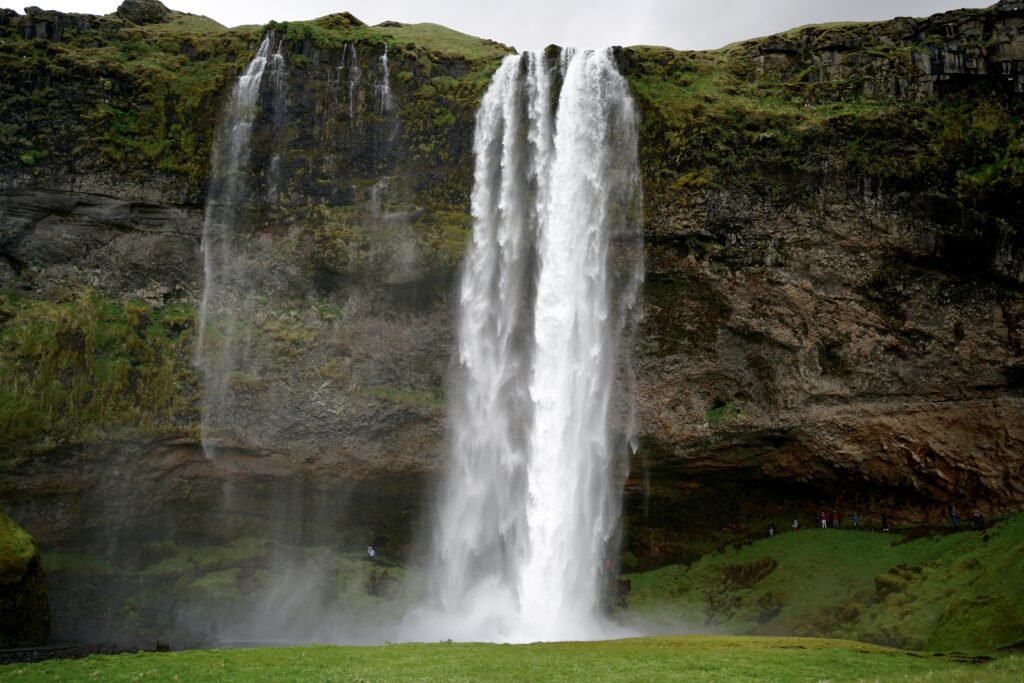
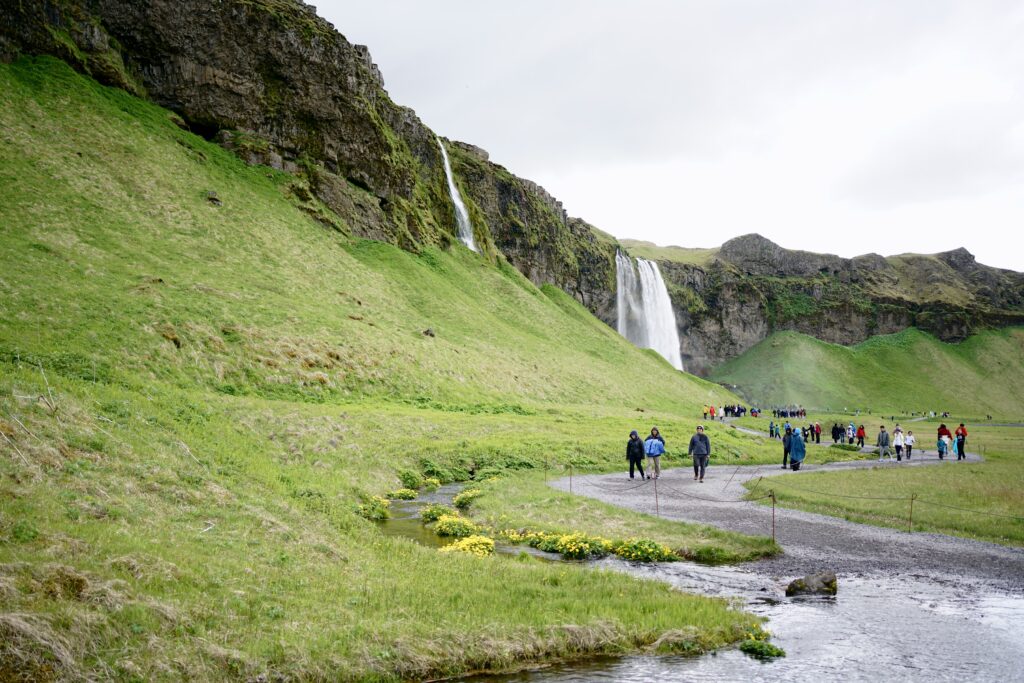
You’ll know you’ve made it to your first stop on the south coast when you look to your left and see water cascading from the cliffs.
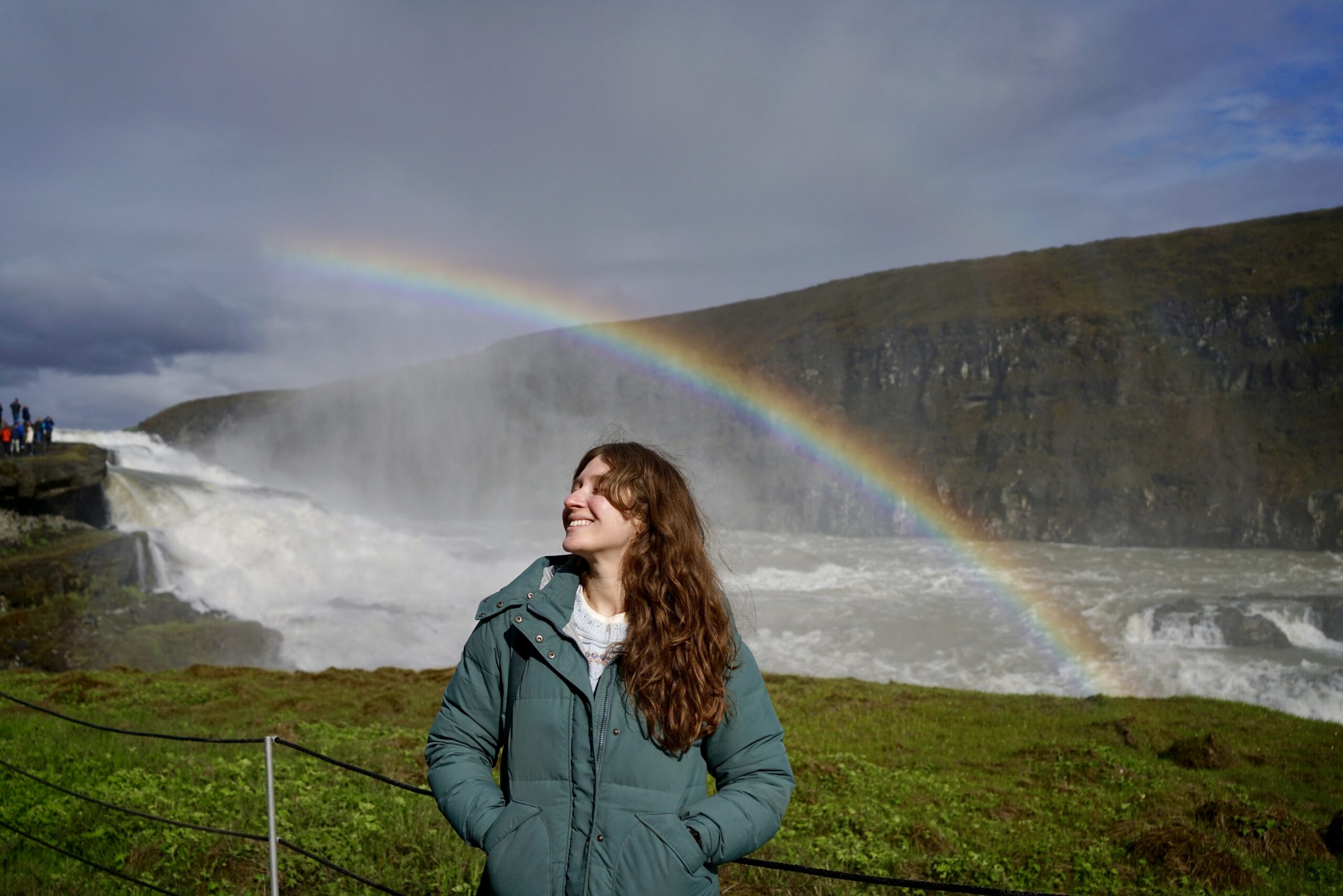
Seljalandsfoss can be seen from Route 1, and when you arrive, you can’t miss it. The waterfall is so big and powerful that it sprays a constant mist, wetting everyone who passes by.
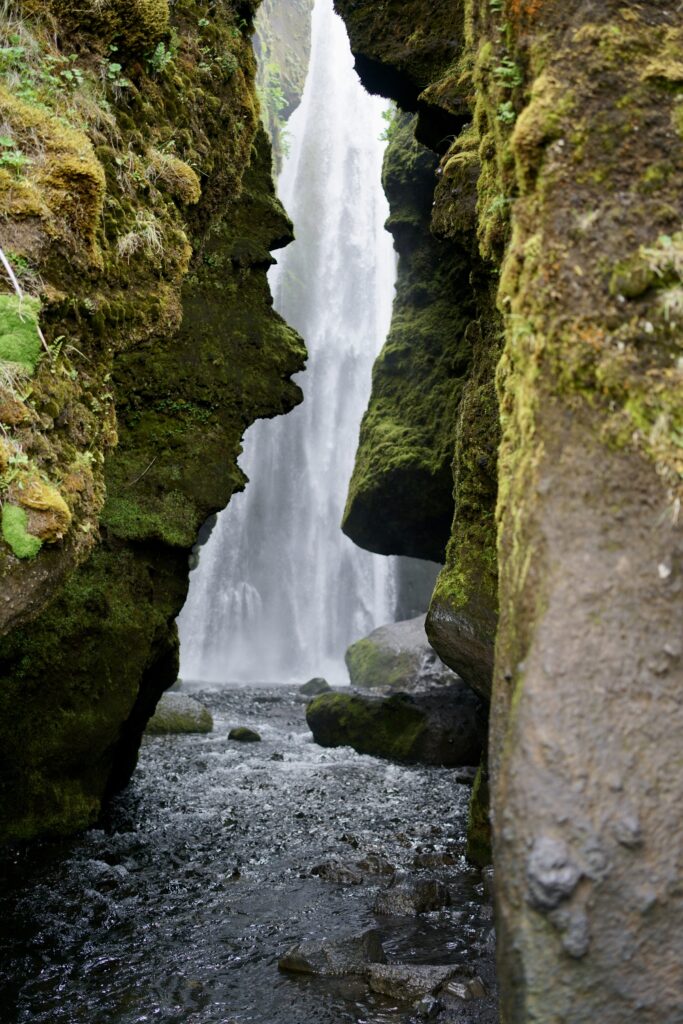
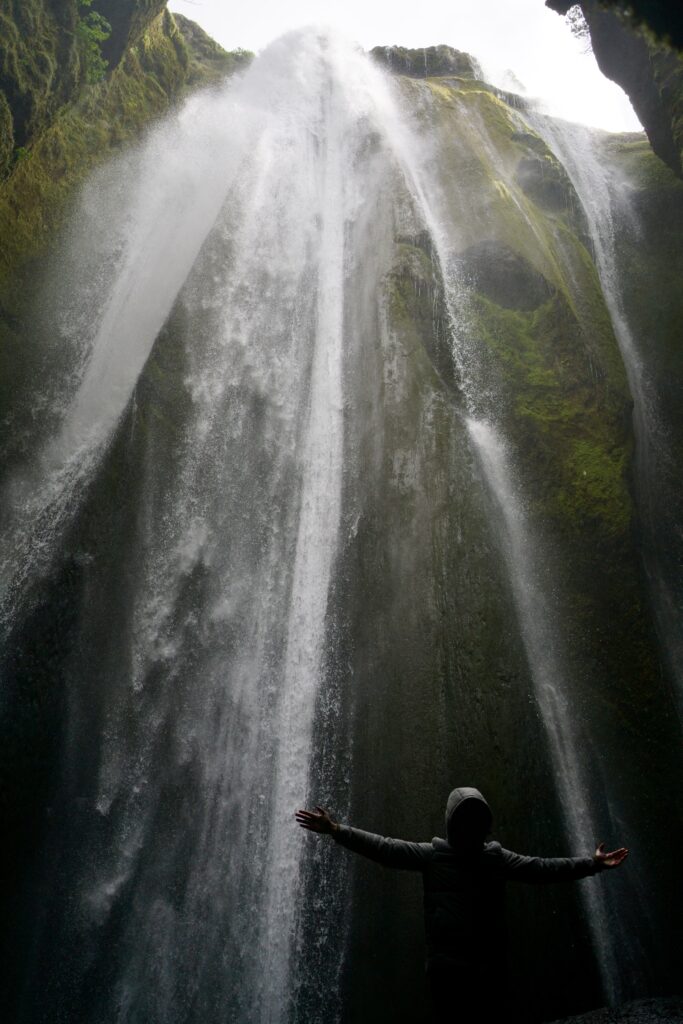
The real treasure at this stop is Gljufrabui (or Gljúfrafoss), a hidden waterfall in a canyon. To reach it, follow the path to the left of Seljalandsfoss until you reach the end. You’ll need to go down some stairs and hop from rock to rock in a creek to make it into the cavern.
ThatPlannerFriend Tip: It’s best to wear good waterproof hiking boots and a waterproof jacket because you’ll be essentially stepping in a river and getting sprayed by the falls.
Like many stops along the southern coast, it costs 1,000 ISK (or about 8 USD) to park and visit these two waterfalls. You can pay for parking at the kiosk.
Skógafoss
All the ice in Iceland eventually melts, and the water flows down to the south coast, which can only mean one thing: more waterfalls.
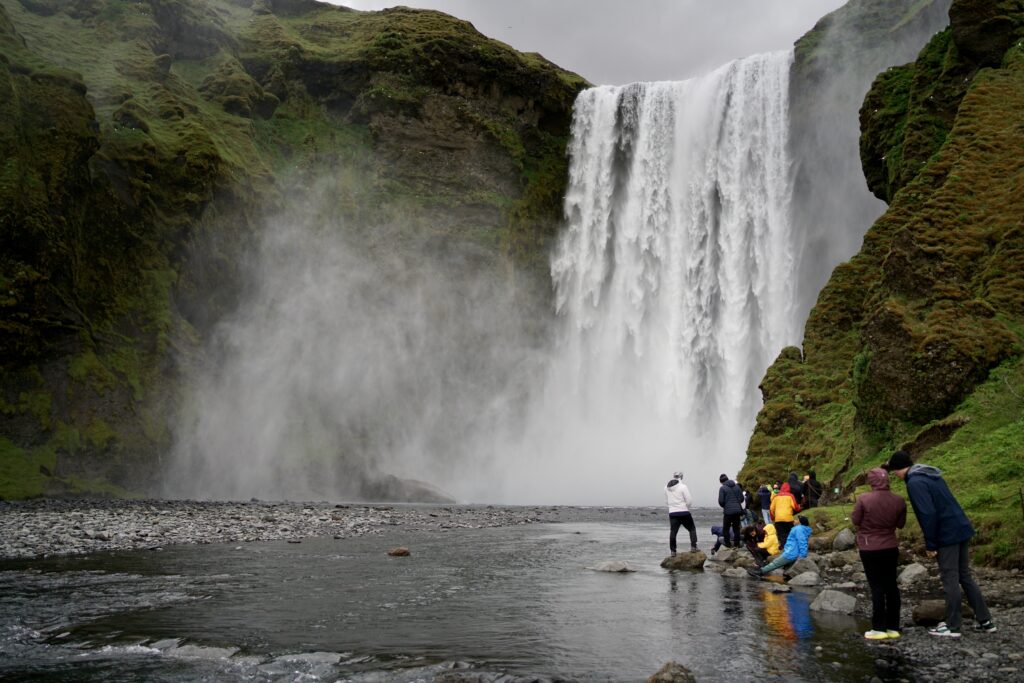
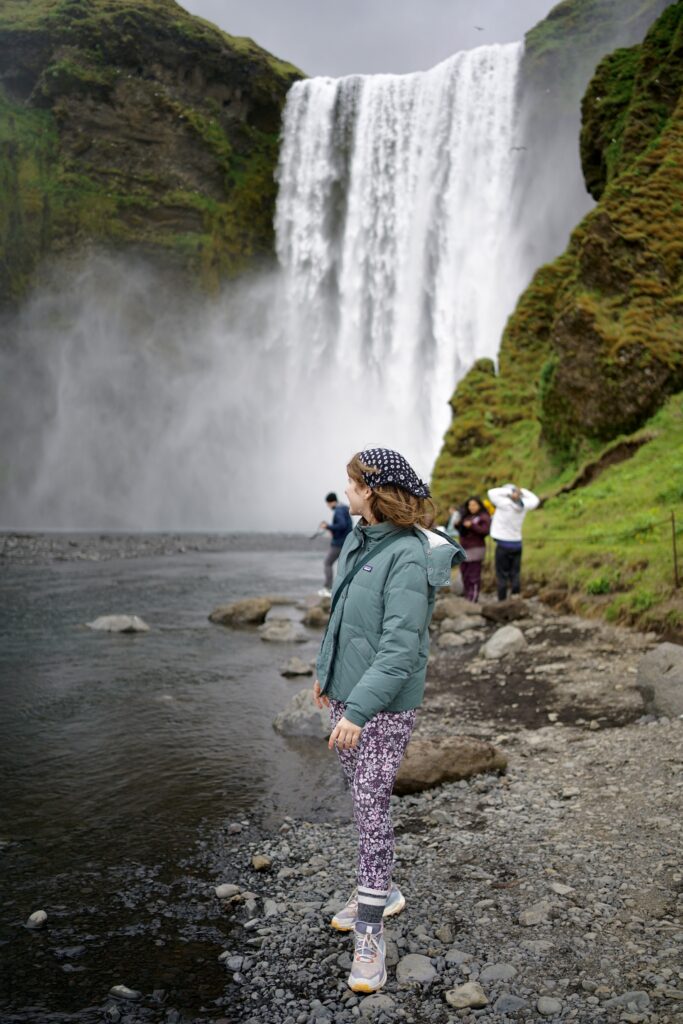
Skógafoss is one of the most popular waterfalls in Iceland. It just feels majestic. You can view the falls from the bottom, then hike the stairs to the top to see the Skóga River. Fair warning that the stairs to the top are brutal, but it’s a nice cardio workout.
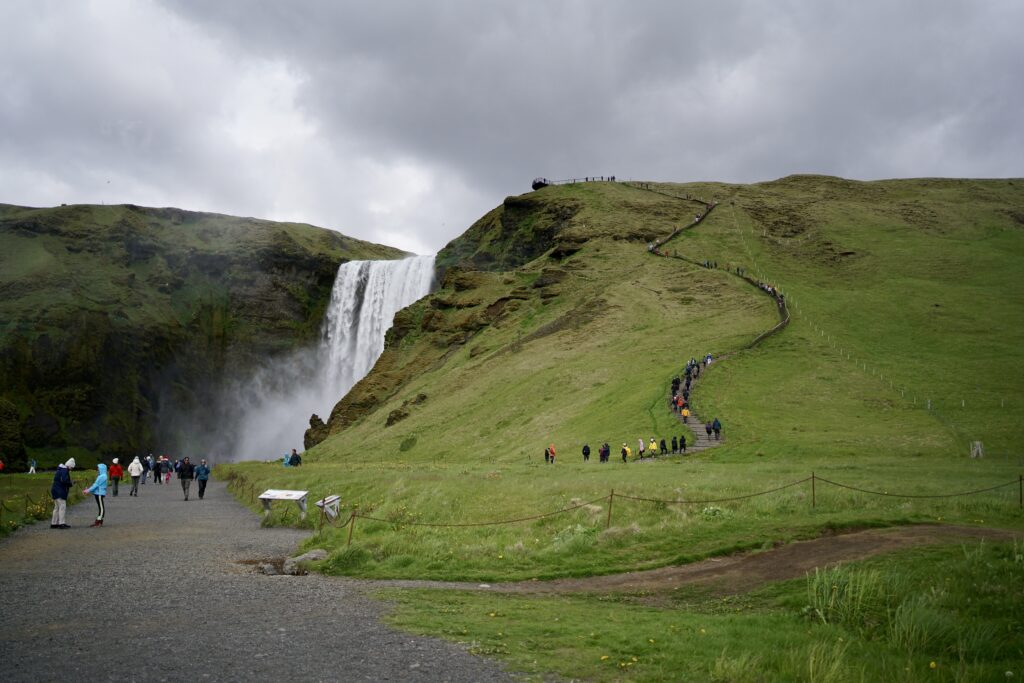
It costs 1,000 ISK to park, and you can (and should) pay on the Parka app. The Parka app is your ticket to many stops along the Ring Road.
Dyrhólaey Viewpoint
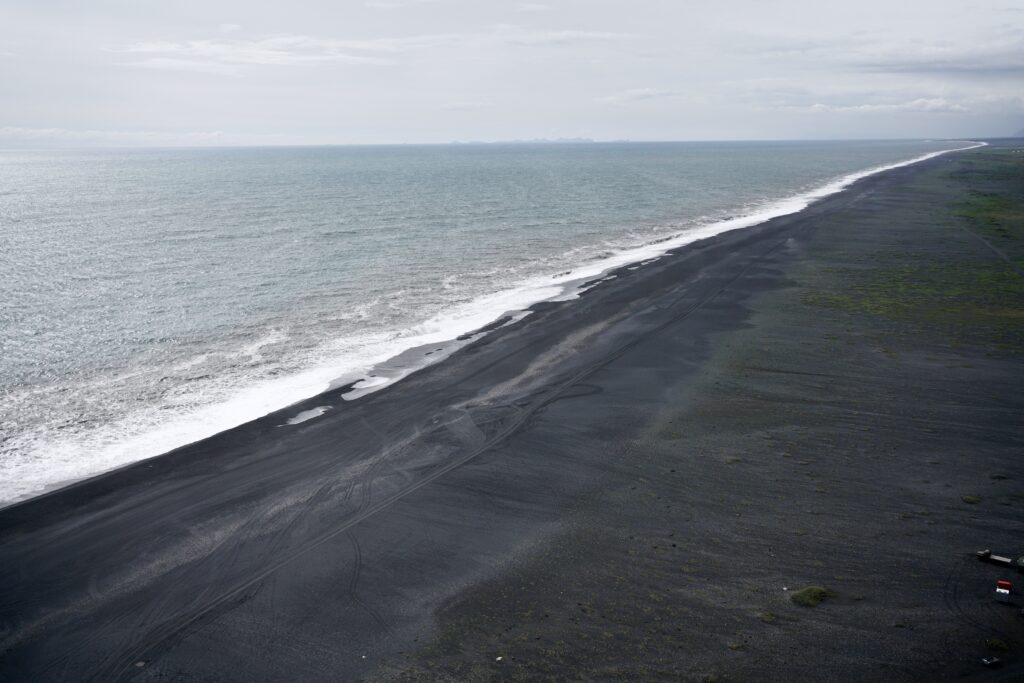
A short detour off Route 1 will lead you to the village of Dyrhólaey, where there’s likely more birds than people. It’s a must-stop for a bird’s-eye view of the black sand beaches that seem to go on for miles.
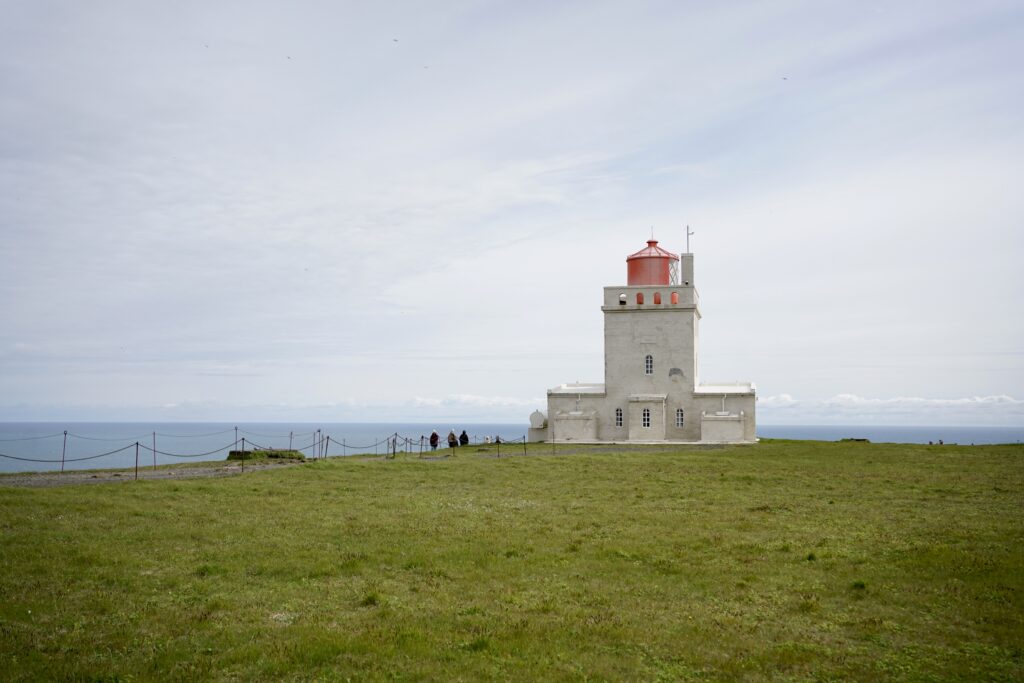
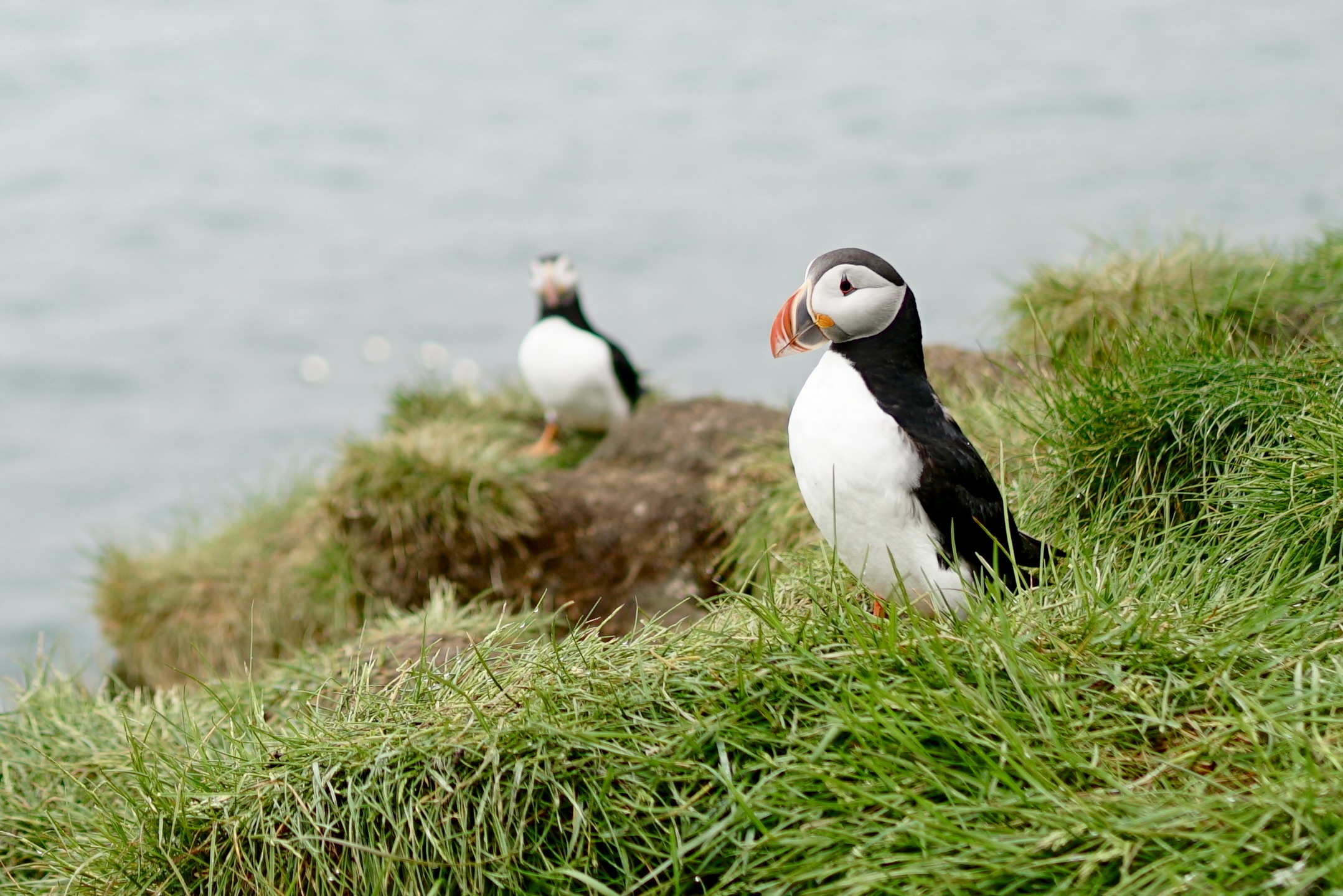
Here, you’ll also see the Dyrhólaey lighthouse and rock formations. If you’re lucky, you might even spot puffins on the cliffs.
Black sand beach of Vík
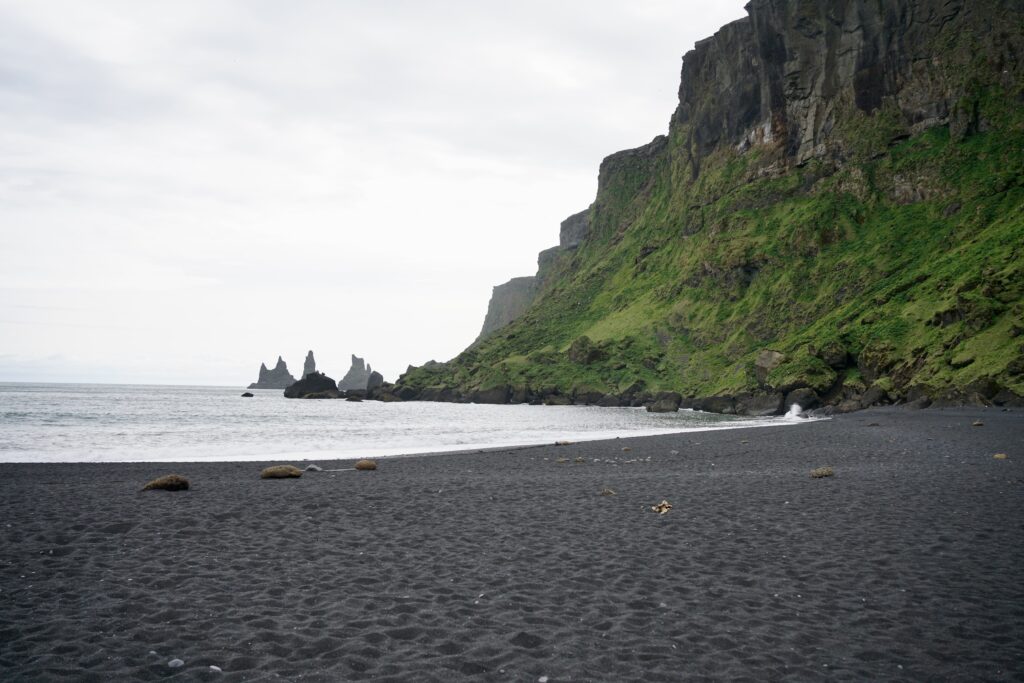
Many beaches around the world claim to have black sand beaches, but I’ve never seen sand as jet black as in Vík. In the town of Vík, you can walk along the black sand beach and see more rock formations. In the distance, you can see Reynisdrangar, basalt sea stacks that are offshore.
Lupine fields
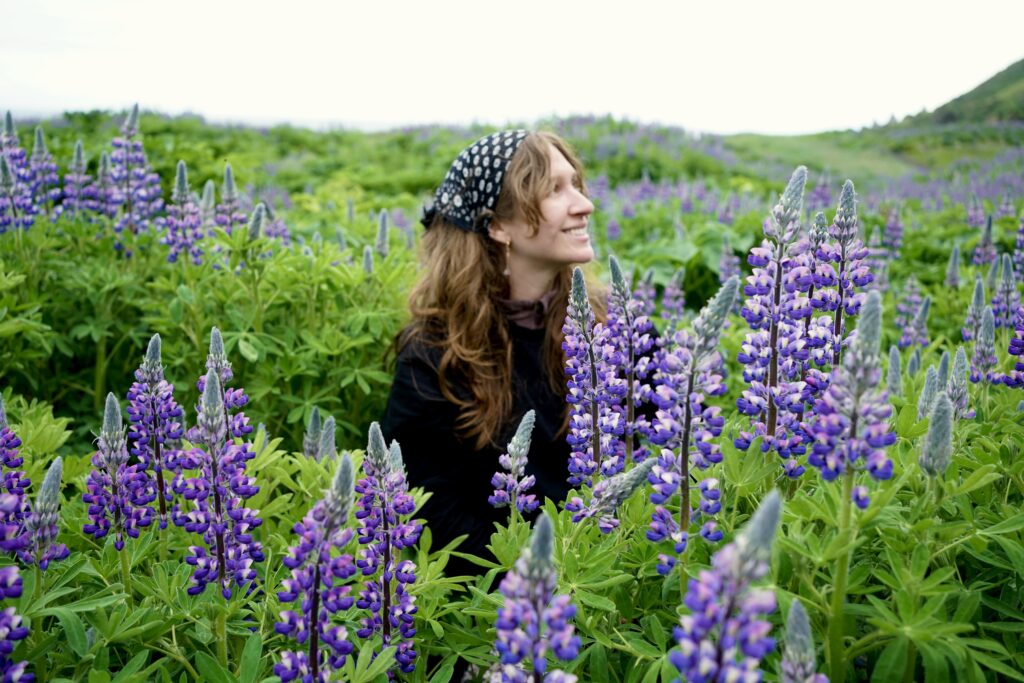
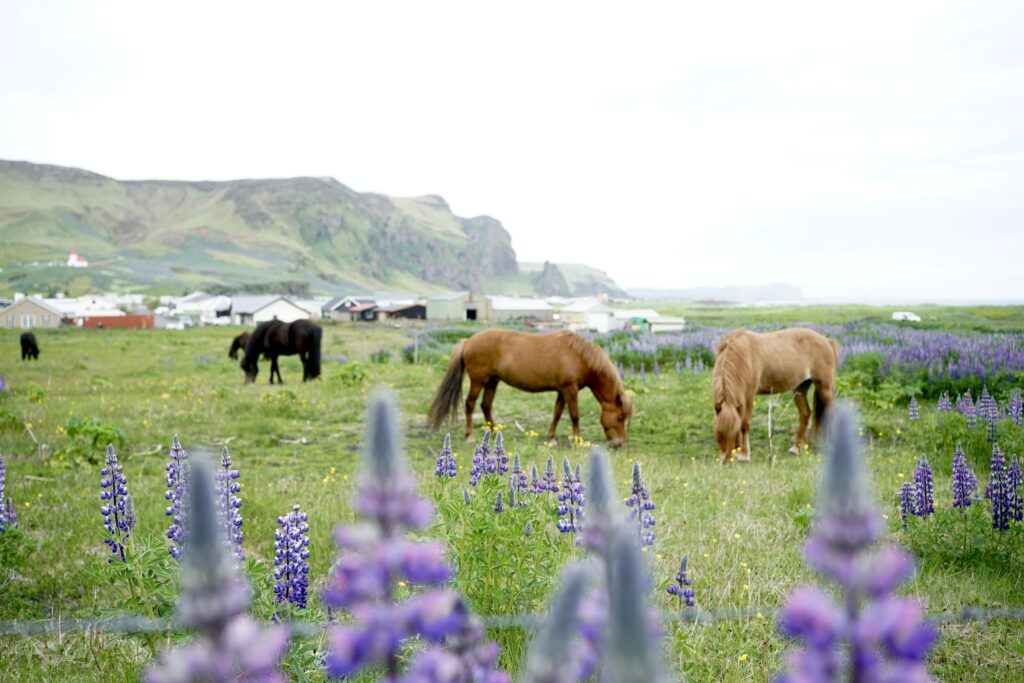
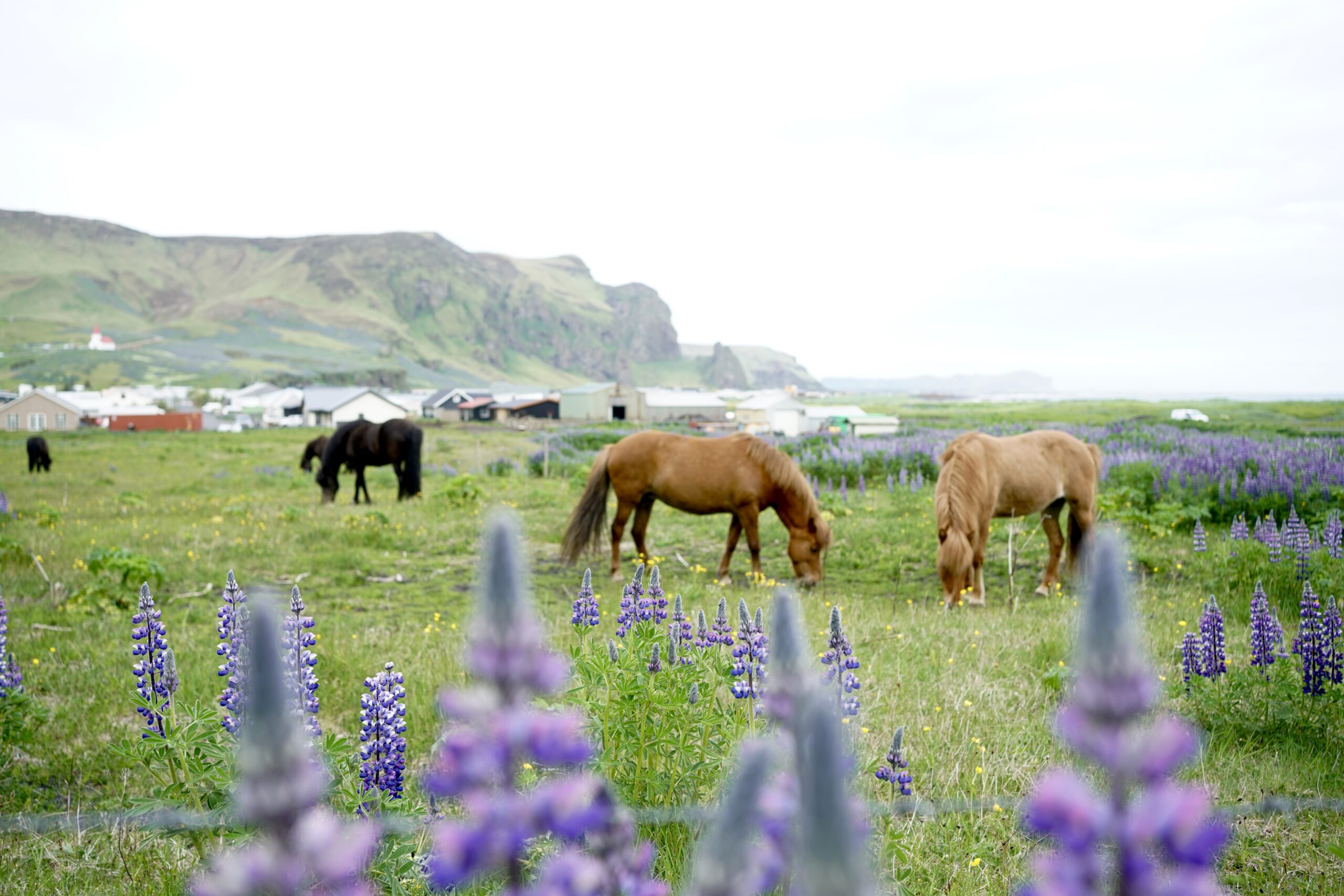
Next to the black sand beach in Vík is an enormous field of lupine flowers. The flowers only flourish from May to August, but if you’re in town during that time, make sure to park at the exact location here to see the lupine. There are short trails in this area, and you might even see horses.
Eldhraun lava field
The expansive lava fields of the south coast stretch for miles on either side of Route 1. This part of the south coast feels most like you’ve stepped on another planet.
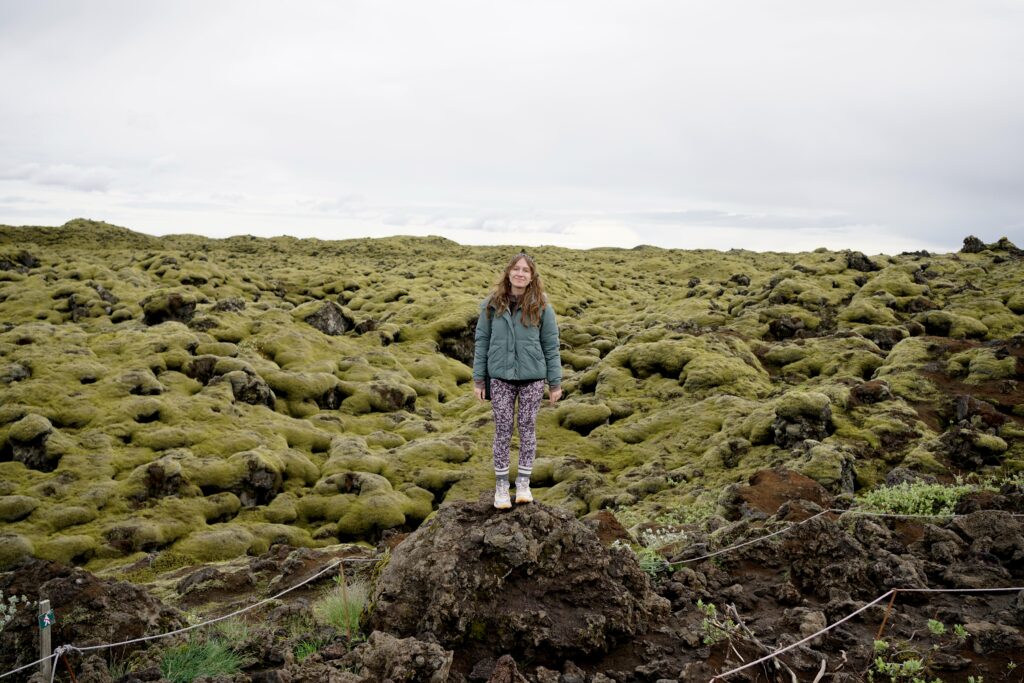
Make a quick stop at the Eldhraun lava field to get up close and personal with the ancient natural ruins. In Eldhraun, the volcanic rock has a thick green moss on top of it. Be sure to stay on the trail to not damage the fragile and fascinating ecosystem.
Fjaðrárgljúfur Canyon
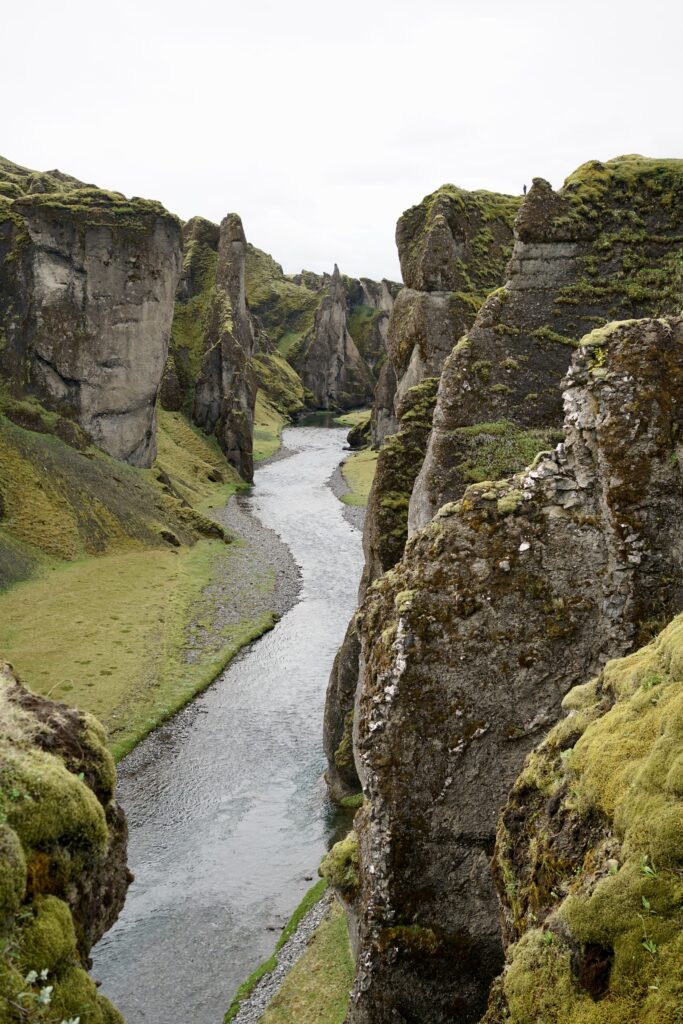
The Fjaðrá River carved out a deep, snake-like canyon with lush green hills, waterfalls, and breathtaking views. It takes about 30 minutes to walk to the end of Fjaðrárgljúfur Canyon on an out-and-back trail. While you can’t go into the canyon, there’s a viewing platform at the end and great views from above.
It costs 1,000 ISK to park here on the Parka app.
Svínafellsjökull Glacier
As you drive toward the glaciers in the southeast, you can feel the air getting cooler. The jagged Svínafellsjökull Glacier juts out of the landscape.
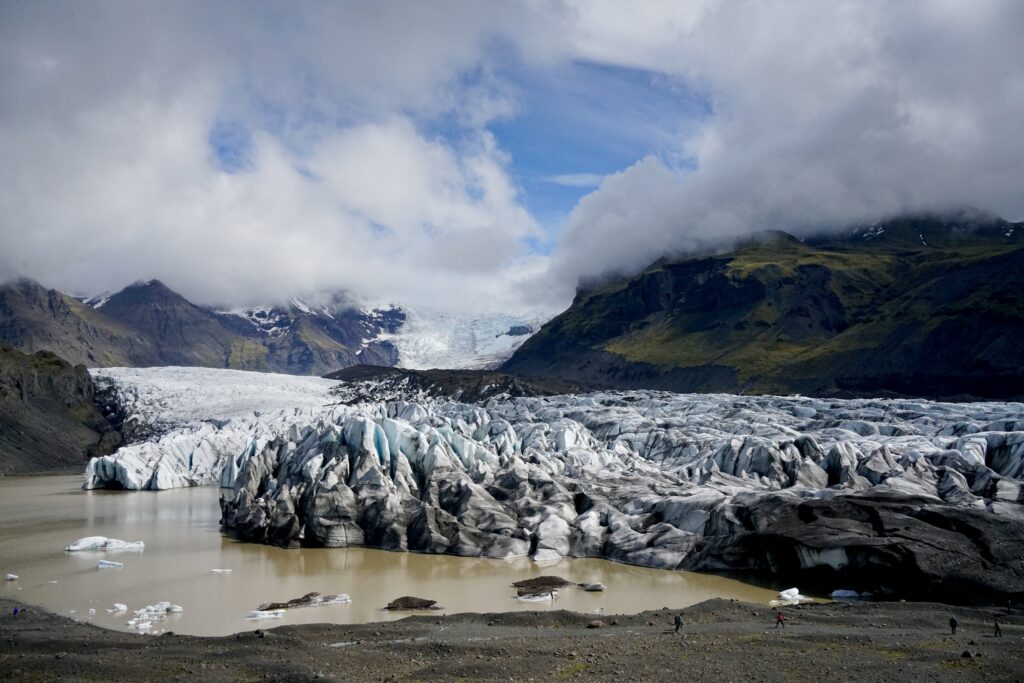
It’s a short 15-minute walk from the parking lot to be face-to-face with the giant glacier. You can book guided tours to actually hike the Svínafellsjökull Glacier and other glaciers on the island, but seeing the base of it is cool enough.
Jökulsárlón Glacier Lagoon + Diamond Beach
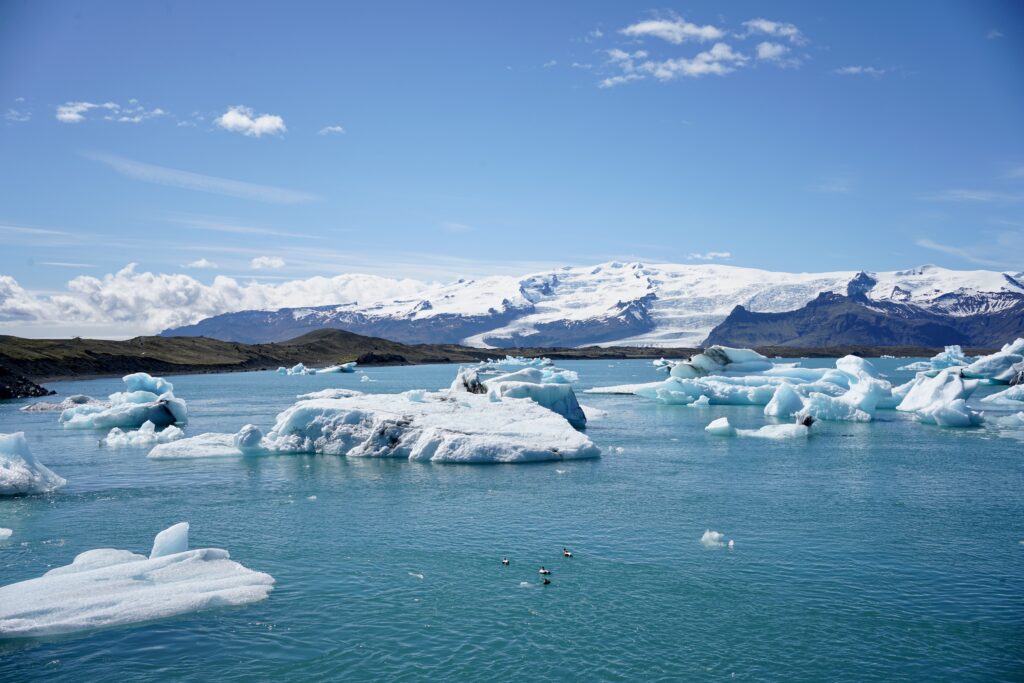
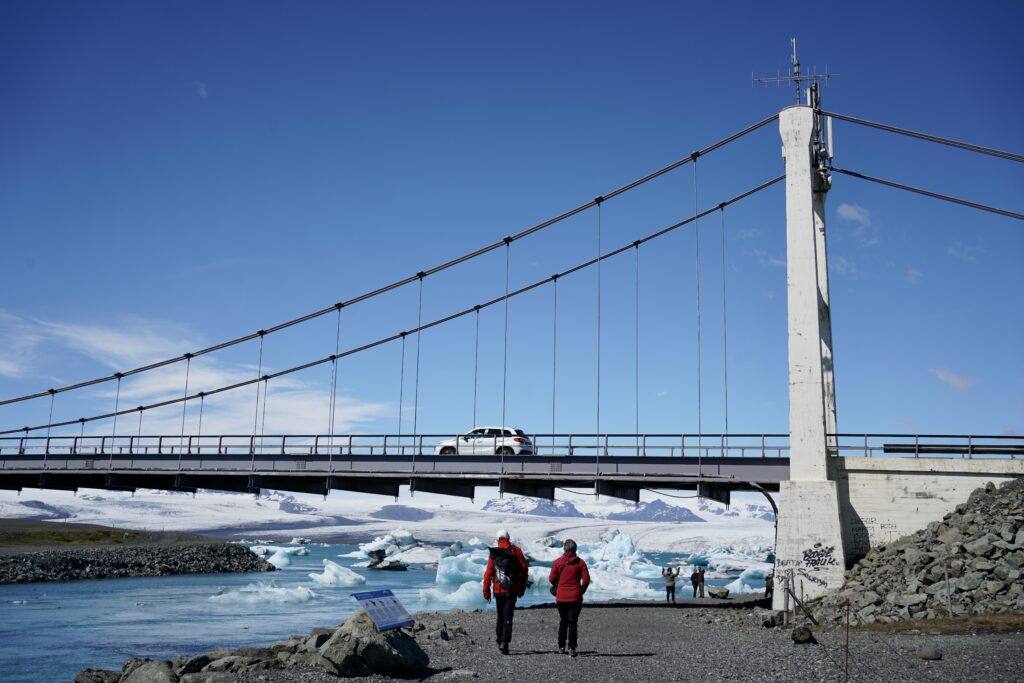
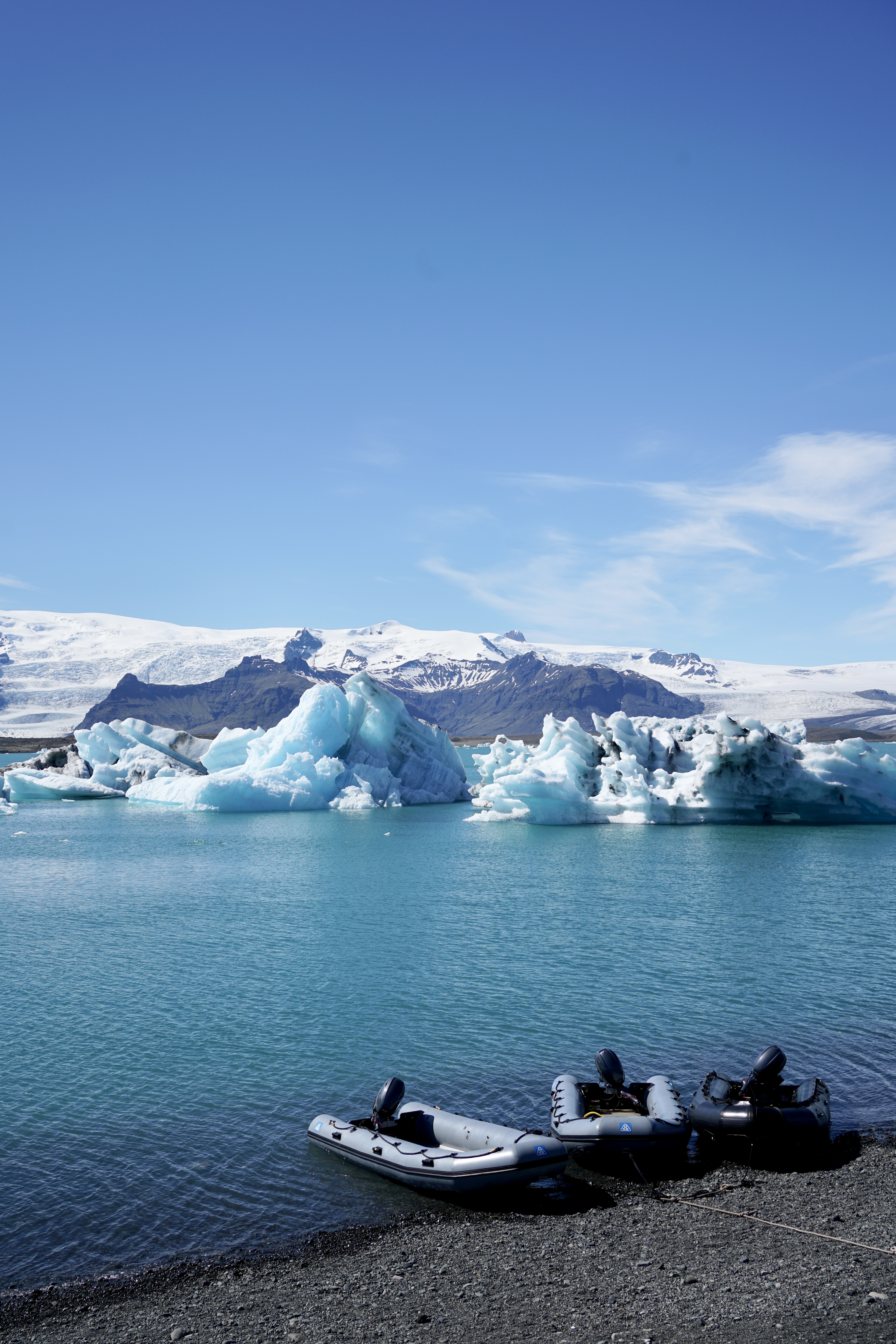
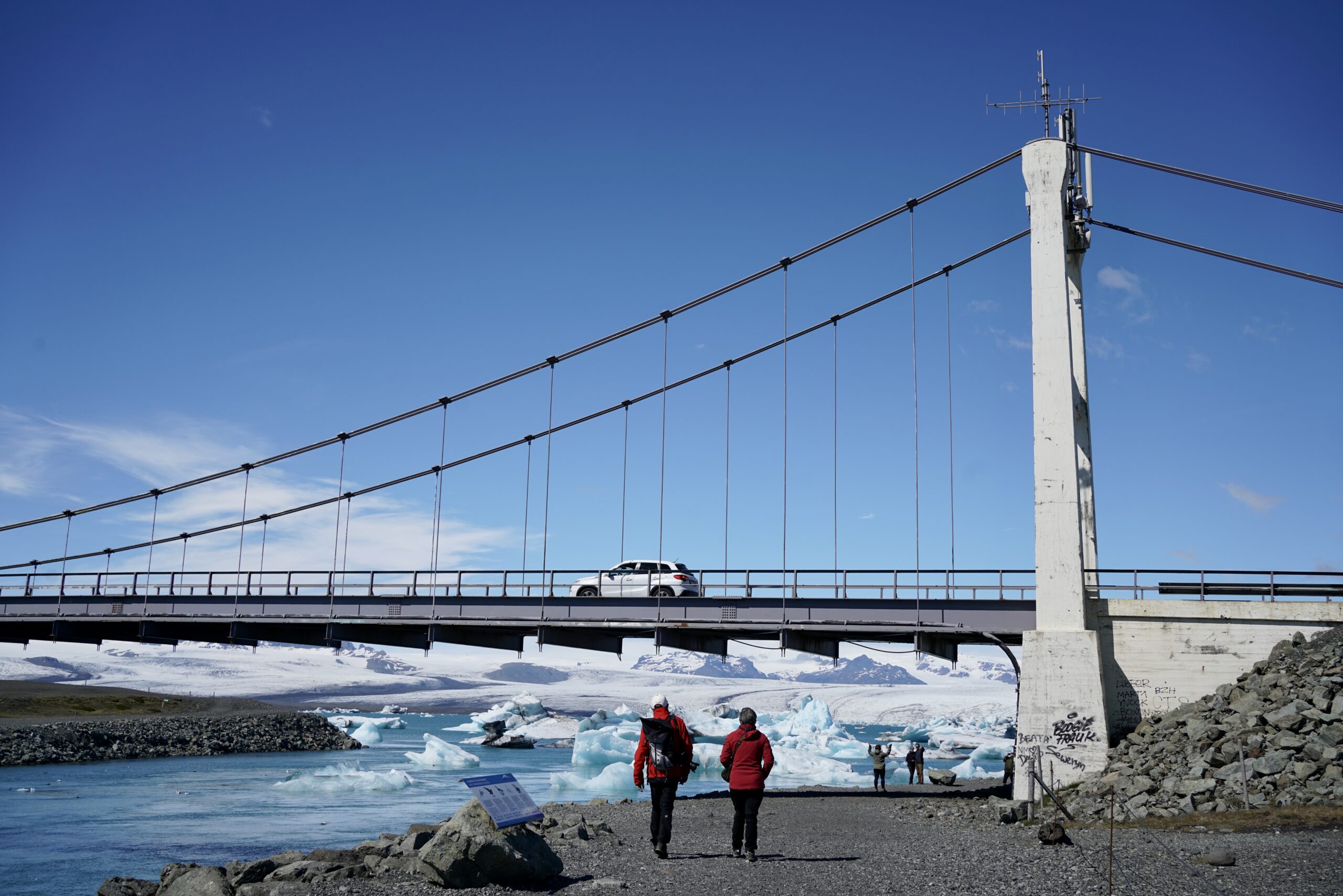
The highlight of a south coast adventure is a visit to the Jökulsárlón Glacier Lagoon and Diamond Beach. The lagoon looks like a scene out of a movie with giant icebergs floating in arctic blue water. (It was, in fact, featured in Batman Begins and other films.)
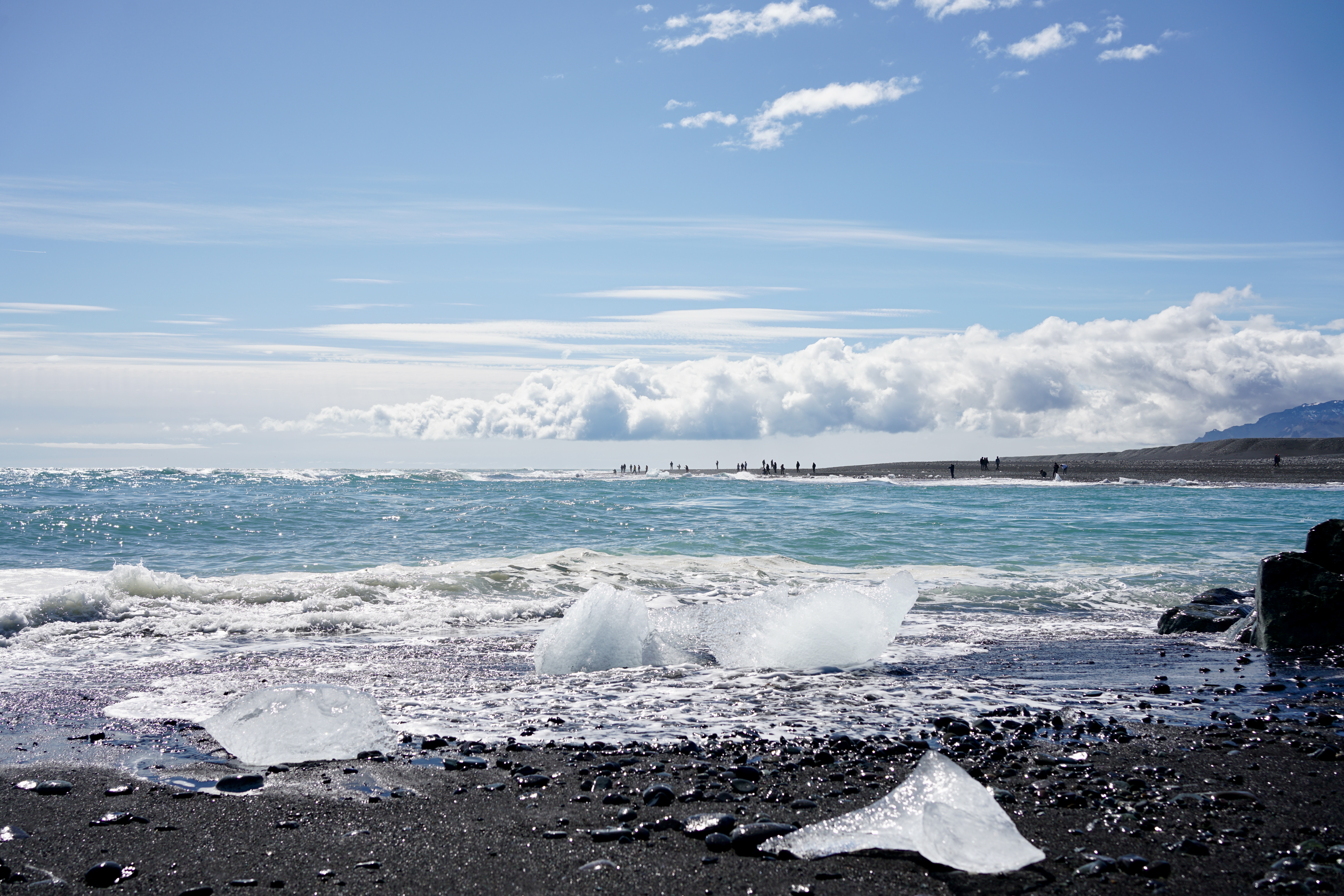
Seals swim between the icebergs and out of the channel to the ocean. The beach next to the glacial lagoon is known as Diamond Beach because icebergs float out to sea and wash up on the beach’s shore, looking like diamonds in the black sand. In the summer, the “diamonds” or icebergs on the beach are small because they melt quickly, but in the winter, they are much bigger and plentiful.
Bonus stop: Kerið Crater
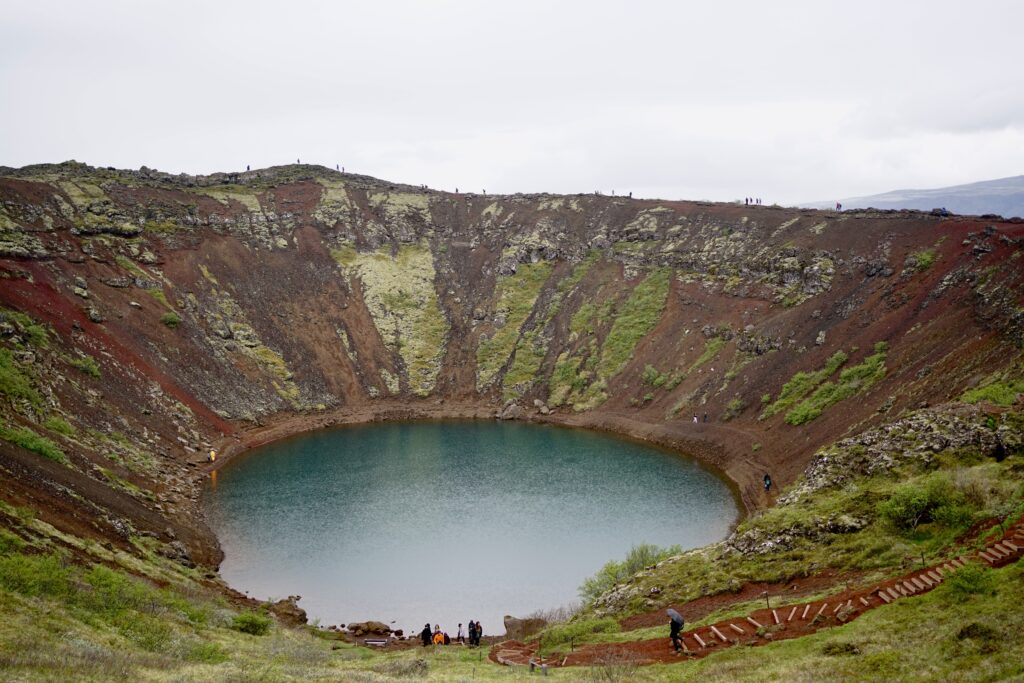
It’s debatable whether the Kerið Crater is a part of the Golden Circle or the south coast. In case you missed it while exploring the Golden Circle, it’s worth mentioning here. The Kerið Crater is a volcanic crater filled with bright turquoise water. You can walk around it to get views from the top or hike down to the lake.
It costs 600 ISK (about 5 USD) per person to visit the crater. You pay the attendant at a kiosk at the entrance of the crater.
How to visit
Unlike the Golden Circle or Snæfellsnes Peninsula, Iceland’s south coast isn’t just a day trip; it’s a multi-day adventure. It takes about five hours to drive the south coast without stopping. You’ll need to rent a car to get the best experience.
You can treat it like a road trip as a part of the Ring Road (the entire loop around the island), stopping to spend the night at different locations, or you can base yourself in one town and take it from there.
The south coast can be explored in two to three days. For a two-day adventure, visit the waterfalls, Dyrhólaey, Vík, the Eldhraun lava fields, and Fjaðrárgljúfur on the first day and the glaciers on your second day. To split this up by three days, you can save the lava fields and canyon for its own day.
Where to stay
Selfoss
At the base of the Golden Circle is Selfoss, a small town that you can reach in under an hour from Reykjavik. There are many accommodations here because it’s a jumping-off point for the South Coast and Golden Circle for many travelers.
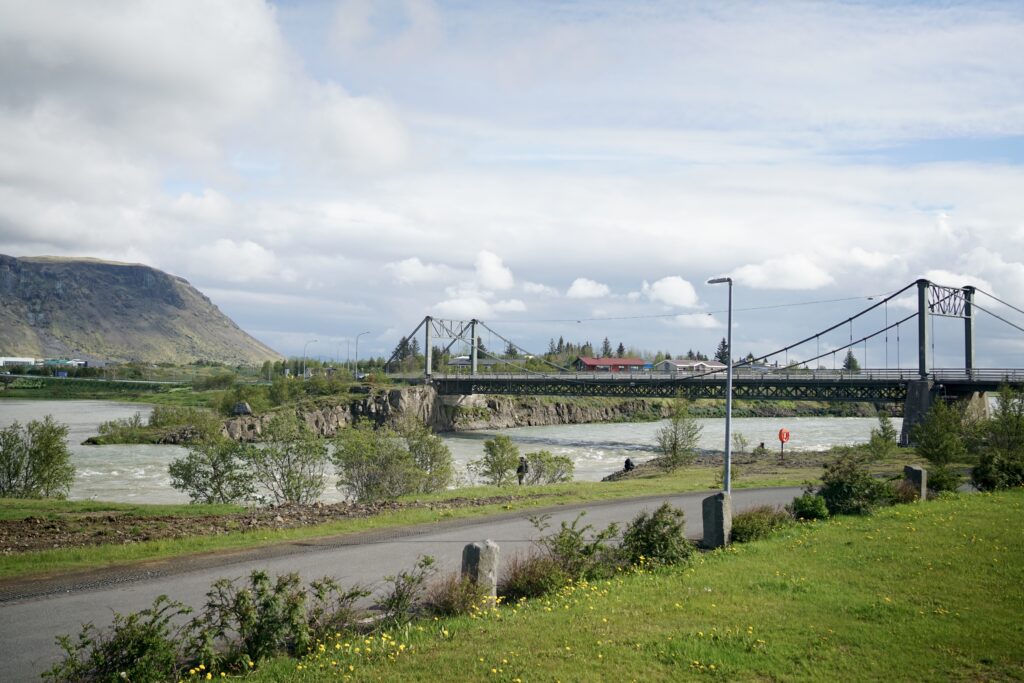
I recommend Hotel Selfoss. They have a great breakfast included with your stay, and the dining room has a nice view of the main bridge in the town.
Vík
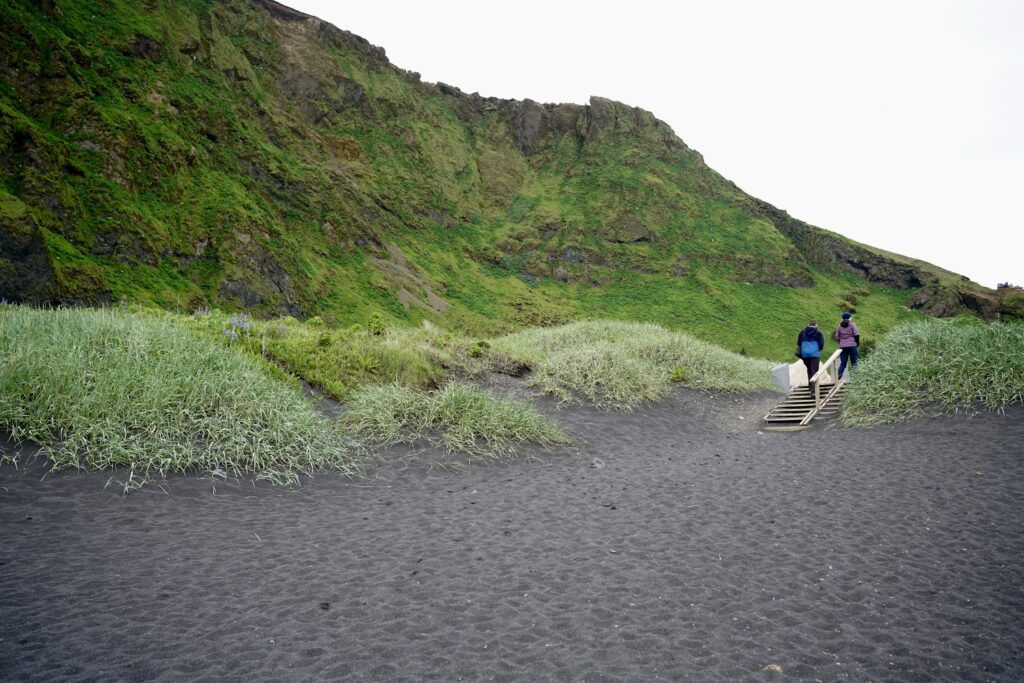
Many travel resources recommend staying in Vík, but I don’t think it’s far enough down the road from Selfoss or Reykjavík to make it worthwhile. Because it’s so popular, lodging is expensive here, but the price isn’t worth it because there’s not much to do in town.
Kirkjubæjarklaustur
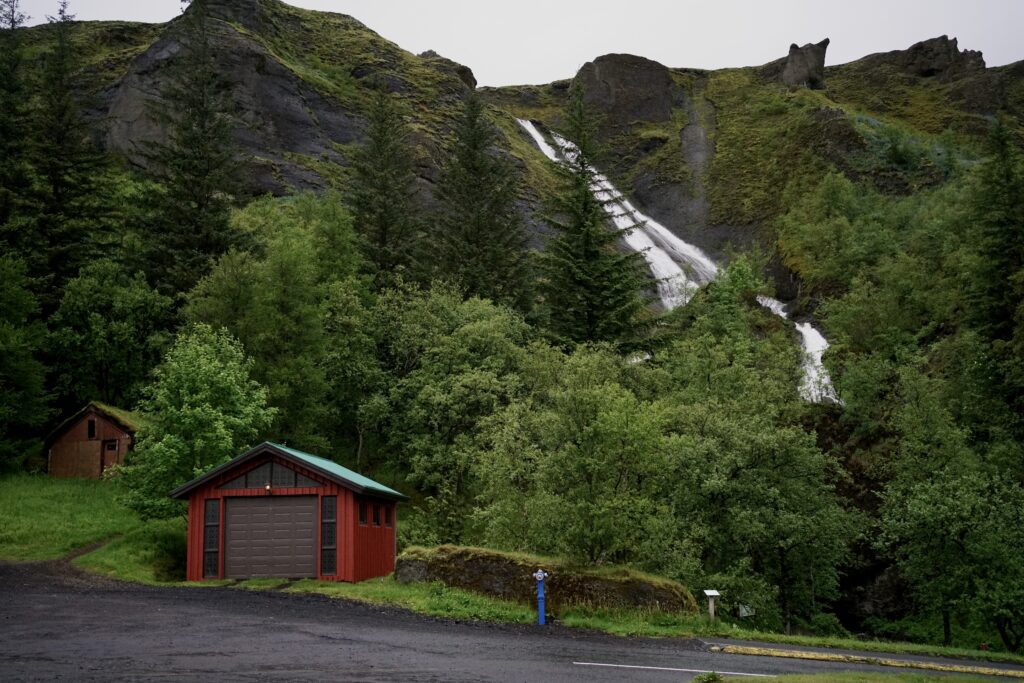
While it’s a very, very small village with only 150 inhabitants, Kirkjubæjarklaustur is a great place to stay with amazing dining options. My favorite meal in Iceland was at Kjarr, a small restaurant with a view of the waterfall.
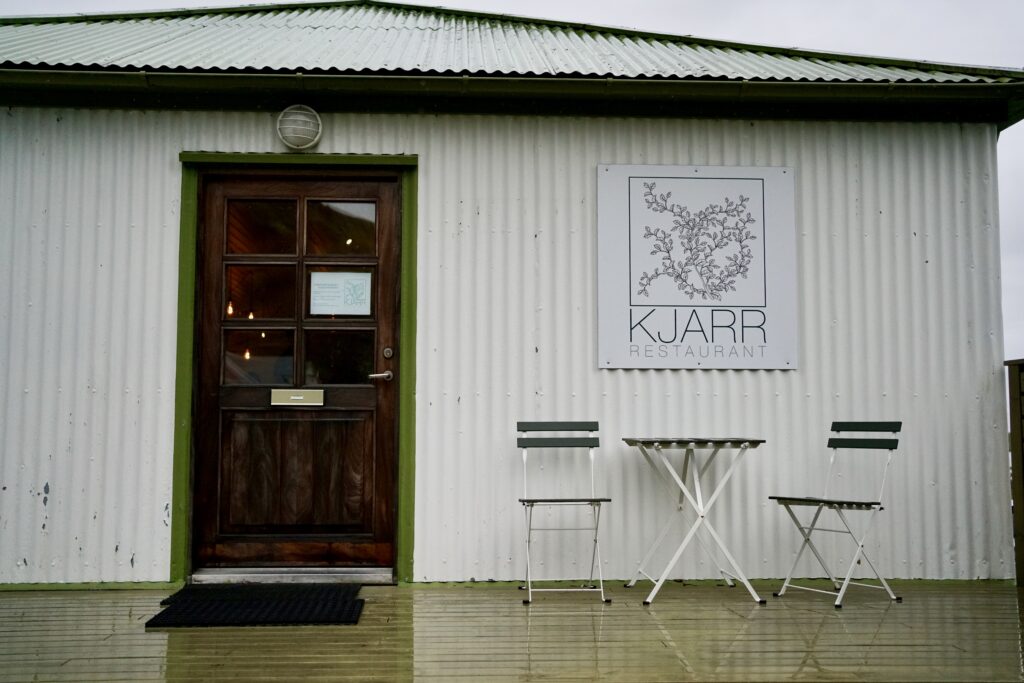
The village isn’t picturesque per se, but none of the towns in this area are. The beauty comes from the nature around it.
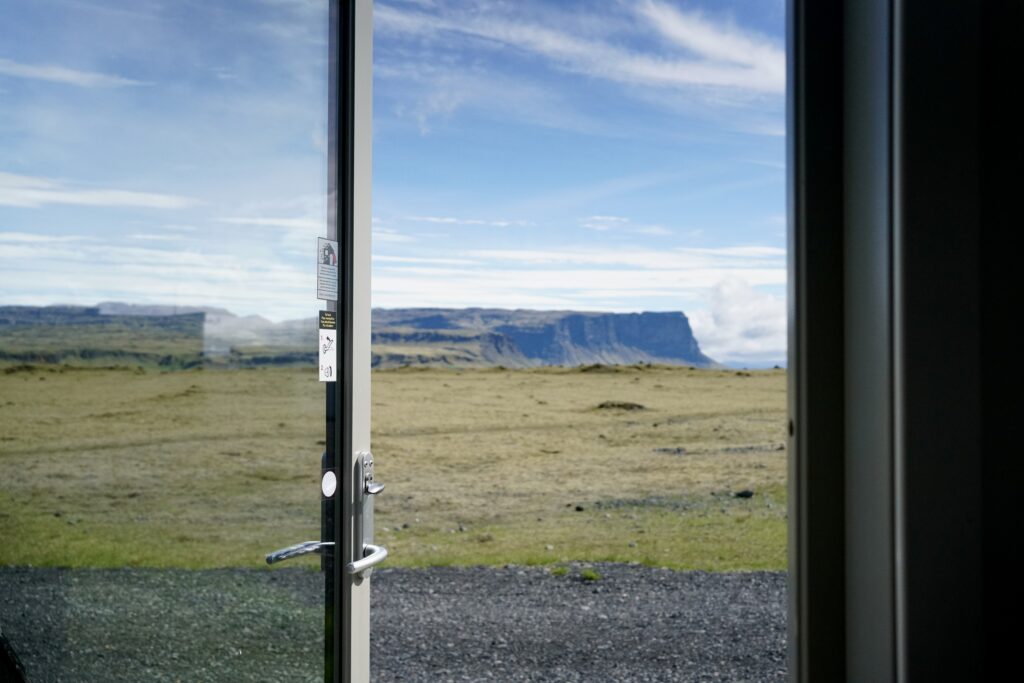
I stayed in the middle of nowhere at Fosshotel Núpar because accommodations were sold out near Vík and Kirkjubæjarklaustur. While the Fosshotel turned out great, I would have rather stayed in Kirkjubæjarklaustur to be closer to dining options.
Höfn
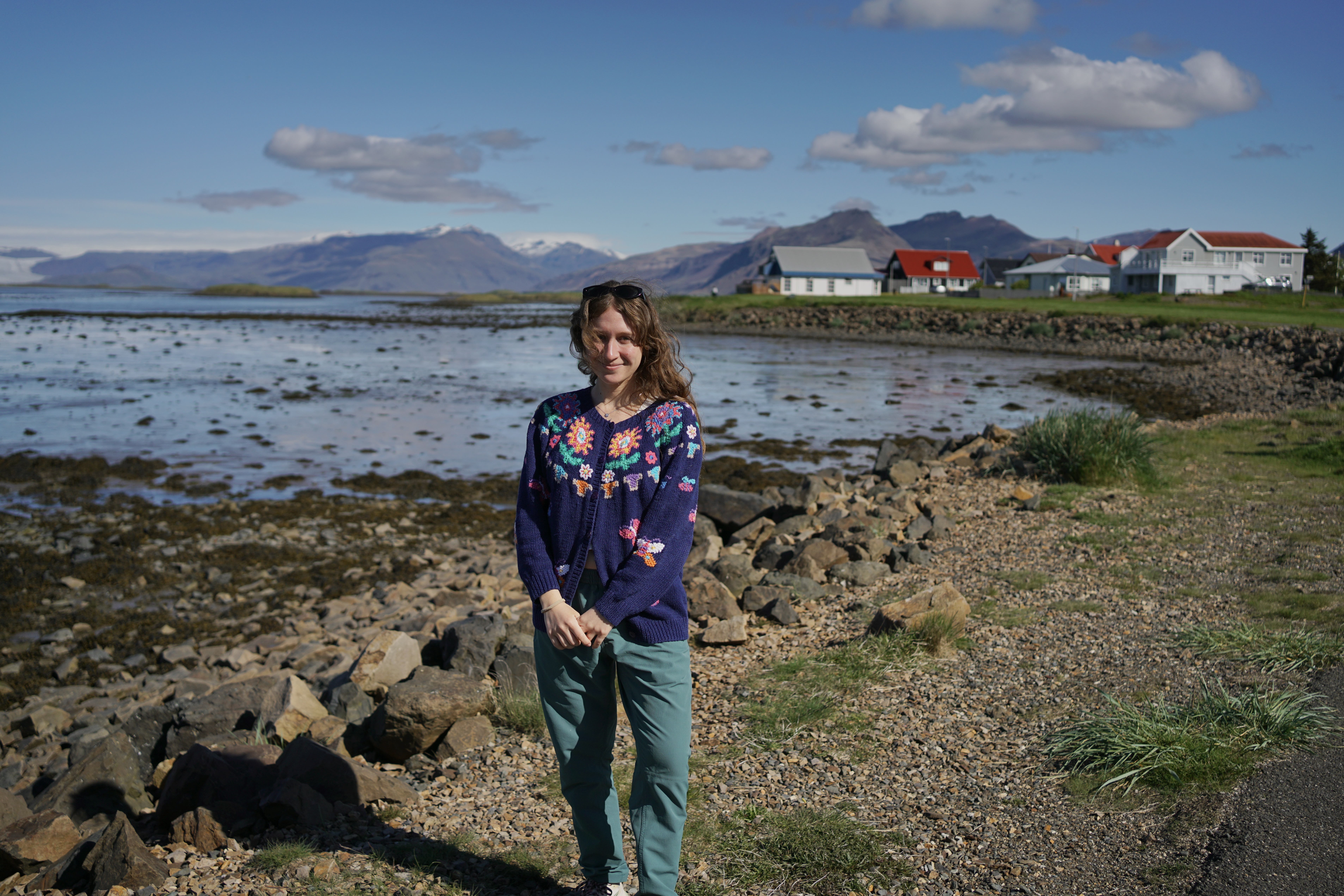
Höfn is a small fishing village on the coast where the south meets the east. It’s past the glaciers, so if you stay here, you’re likely going to continue your journey northward to complete the Ring Road loop. Höfn has a great view of the Vatnajökull, the largest glacier in Iceland and all of Europe, from its waterfront.
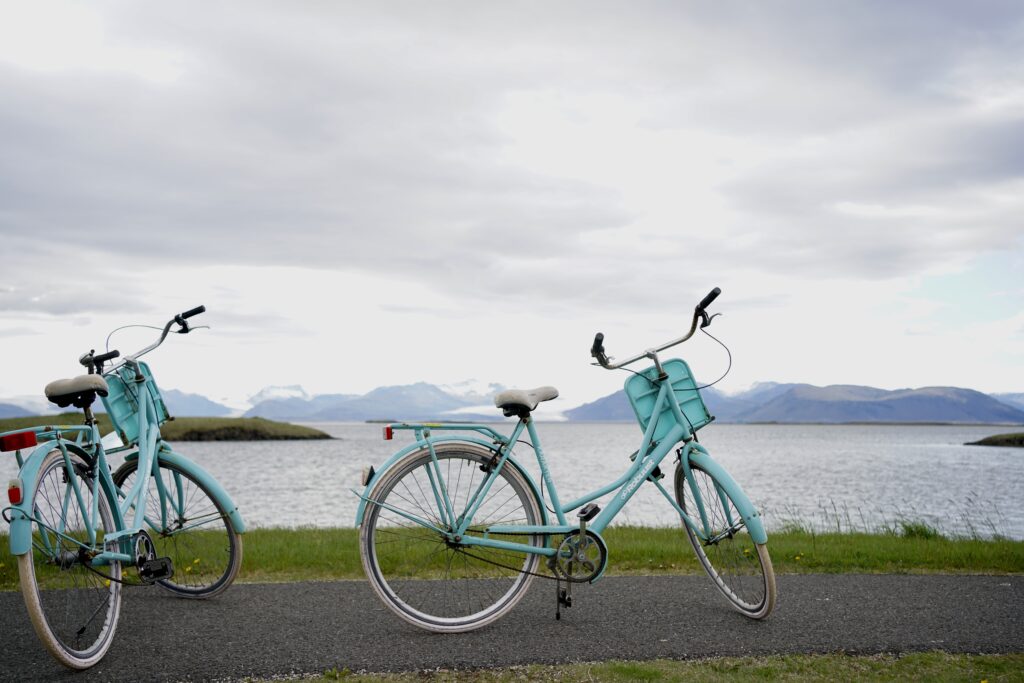
You can also stay in Höfn if you choose to do this journey backwards by starting at the furthest point and working your way back. I stayed at Hotel Höfn, where we were able to rent bikes to explore the waterfront and town.

Reply